Just over two months ago, the San Diego Argonauts issued a call to San Diego and Southern California robotics and STEM students.
Our original vision centered on the RoboBuoy Challenge: inviting students to design and build remotely operated or autonomous robotic racing buoys that could position themselves on the water, hold their location, and potentially reshape a racecourse between races.
That vision is still very much alive, however, after conversations with local educators, students, and fellow model boating enthusiasts, we realized that there was an important first step we could take.
Before students build the racecourse of the future, why not help them build the boats that will race around it?
Enter the MiniMax
The MiniMax is a remarkably small, lightweight, two-channel radio-controlled sailboat created by New Zealand designer Brett McCormack. Its hull and many of its components can be produced on an ordinary 3D printer.
At approximately 22 centimeters long and only about 120 grams when ready to sail, the MiniMax may be tiny, but it is a real sailboat. It has an adjustable mainsail and jib, separate rudder and sail controls, and enough performance to support both recreational sailing and organized fleet racing.
Most importantly for our purposes, it offers students an approachable and affordable introduction to:
- 3D printing and digital manufacturing
- Electronics and radio-control systems
- Mechanical assembly
- Materials and waterproofing
- Buoyancy, balance and stability
- Aerodynamics and hydrodynamics
- Sail design and tuning
- Troubleshooting and iterative engineering
- Teamwork, sportsmanship and racing strategy
From One Prototype to a School-Built Fleet
Our initial goal was simple: print one MiniMax, build it, sail it, and learn everything we could.
That first prototype has now been completed and successfully sailed. Along the way, we worked through the kinds of real-world challenges that make projects like this so valuable: selecting lightweight electronics, configuring the transmitter and receiver, reversing servo direction, fitting extremely small components, rigging the sails, sealing the hull, and testing the completed boat on the water.
Each challenge became part of the learning experience, and part of the knowledge we can pass along to students and future builders.
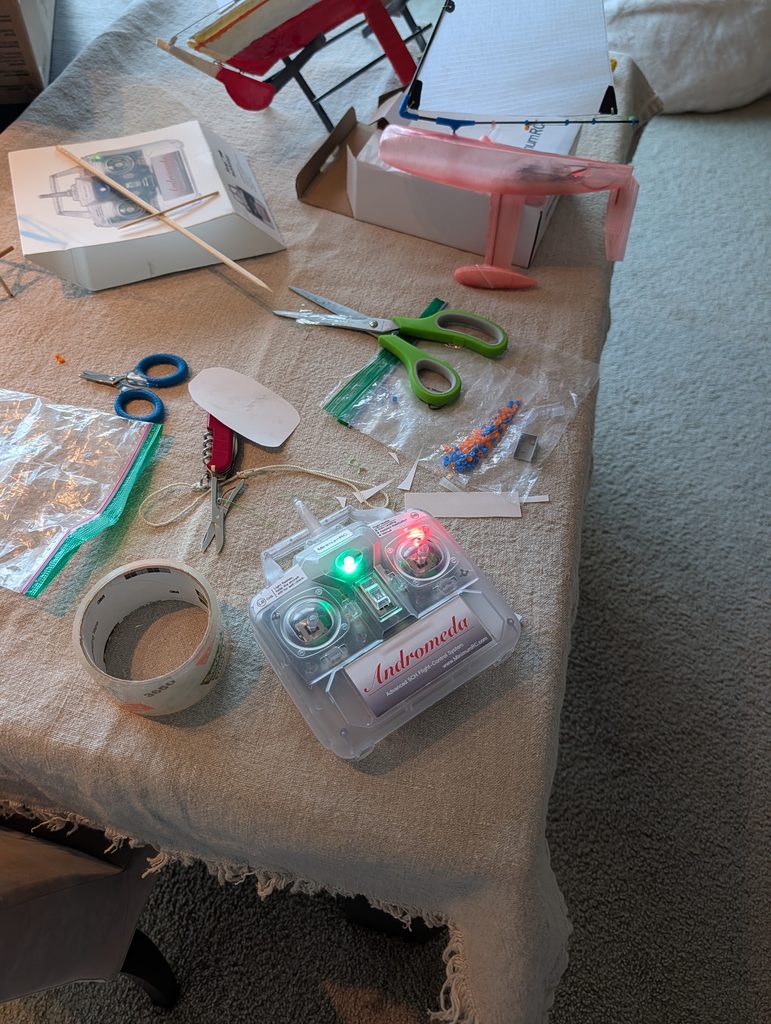
The first San Diego MiniMax taking shape—complete with radio equipment, rigging materials and plenty of hands-on problem-solving.
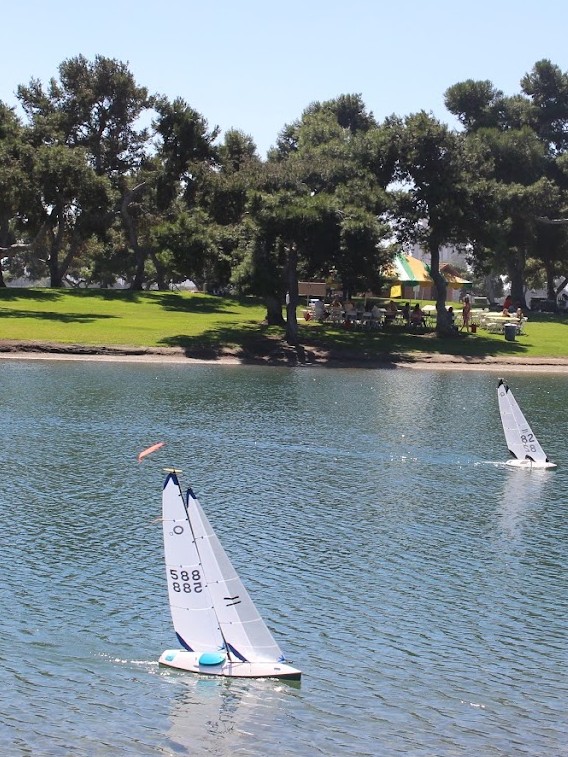
The MiniMax has already proven that it can sail alongside vessels many times its size. During one of its first outings at the Model Yacht Pond, our little pink prototype shared the water with two beautifully detailed scale schooners—a fitting image of the extraordinary range of model boating.
Small boat, big pond: our first MiniMax sails alongside two large-scale schooners.
Now Working with Two San Diego Schools
The initiative has quickly progressed beyond a single experimental boat. The San Diego Argonauts are now actively engaged with educators at two local San Diego schools to explore how MiniMax construction, sailing, and racing can become part of a practical STEM and robotics experience.
At University City High School, we have been working with engineering and robotics teacher Zach Scott, using the school’s impressive fabrication facilities to print and begin assembling the next boats.
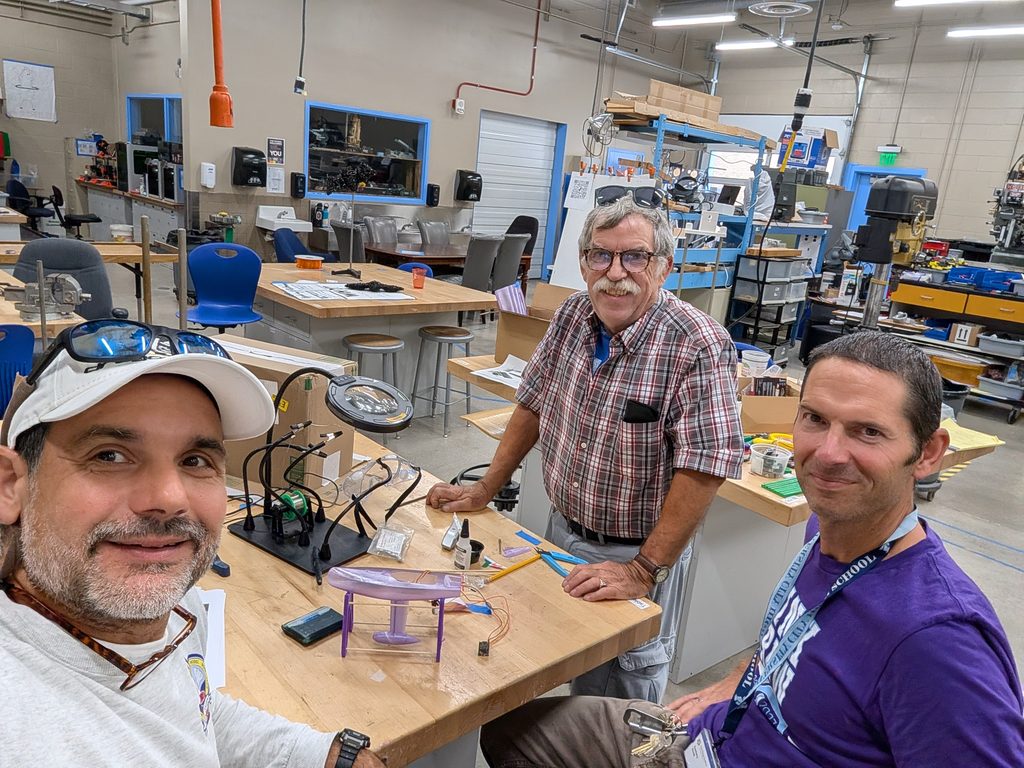
Jeff Sparksworthy and Kerim Baran from San Diego Argonauts with UCHS engineering and robotics teacher Zach Scott during a recent MiniMax work session.
The process begins with digital design files and rolls of filament. Hulls, keels, rudders, boat stands, and numerous small fittings emerge from the school’s 3D printers and are then cleaned, fitted, assembled and tested.
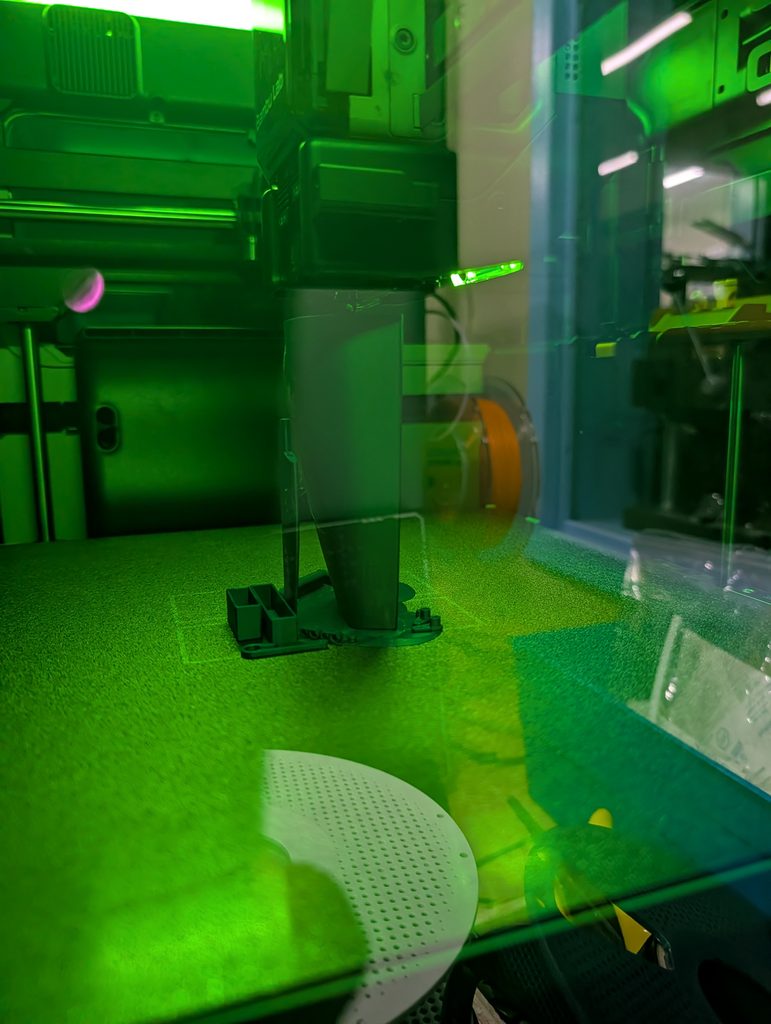
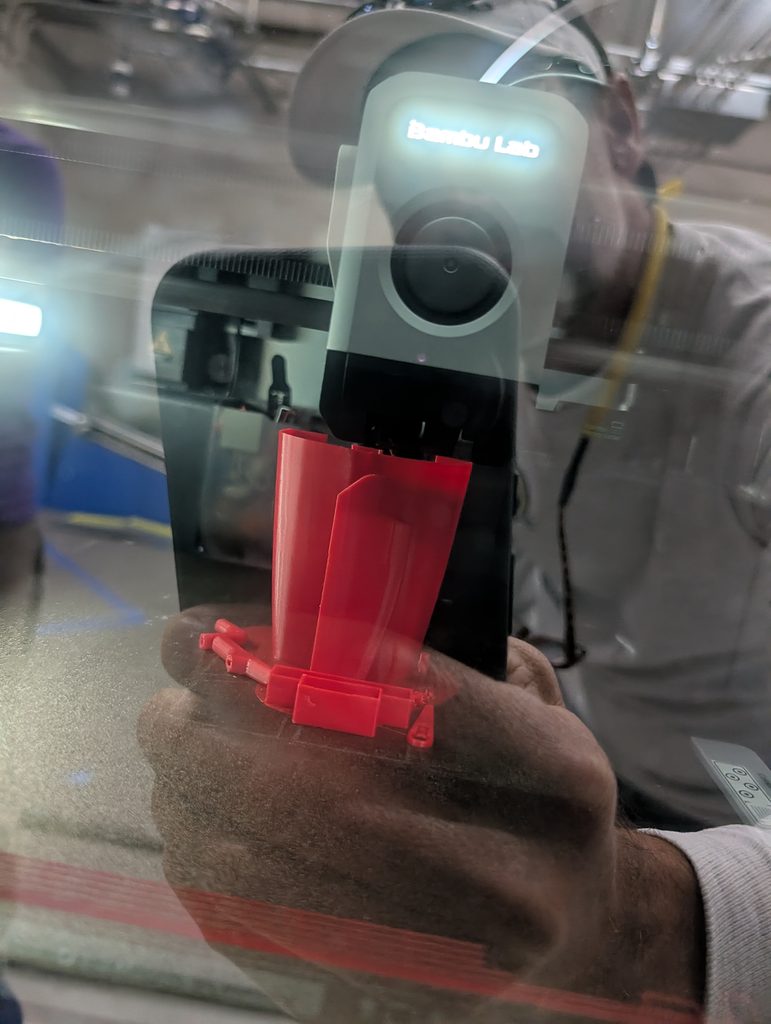
MiniMax components being produced on a school 3D printer
From there, we install the radio receiver, two tiny servos, and the linkages that control the rudder and sails.
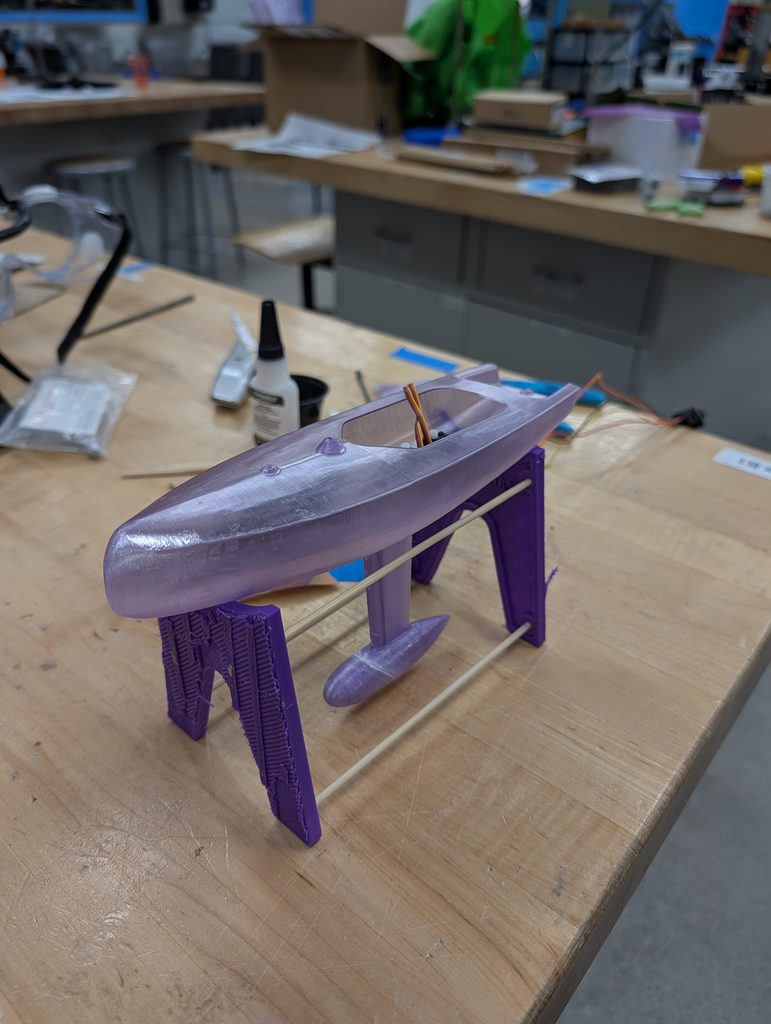
A newly printed MiniMax hull and stand during the early stages of assembly.
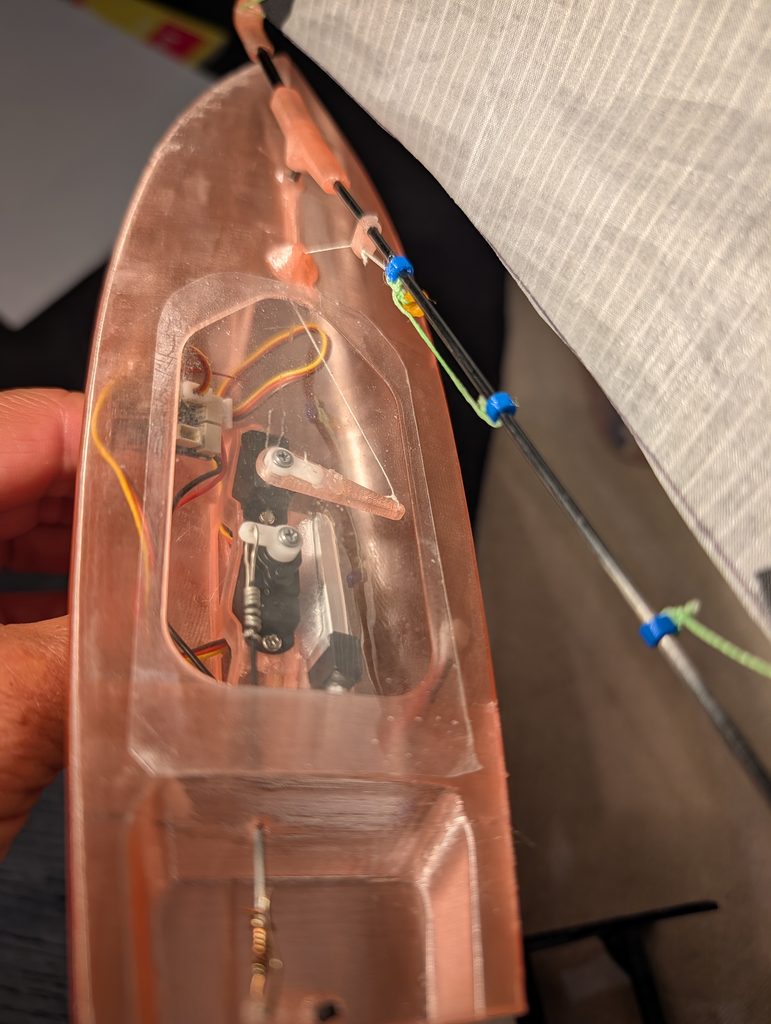
The transparent hull provides a clear view of the MiniMax’s compact radio receiver, rudder servo, sail servo, and control linkages.
The sail and rigging system introduce an entirely different set of skills. Students work with carbon-fiber rods, lightweight sail material, small fittings and carefully measured lines to create an adjustable sailing rig.
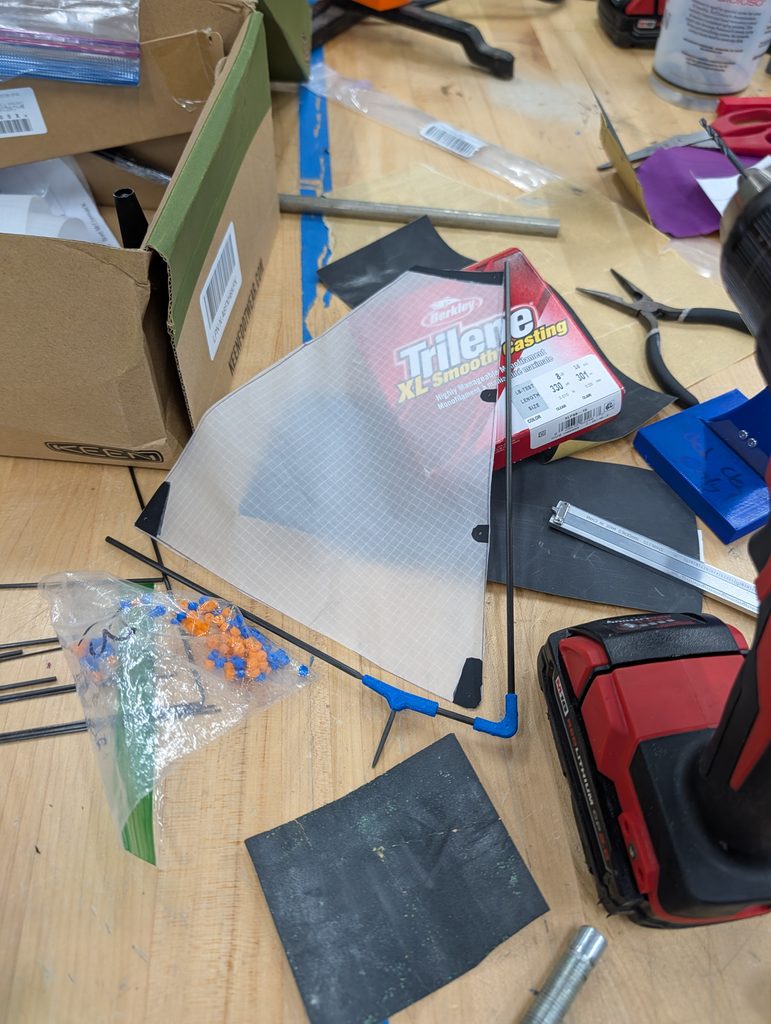
Constructing a MiniMax sail and rig from lightweight materials and 3D-printed fittings.
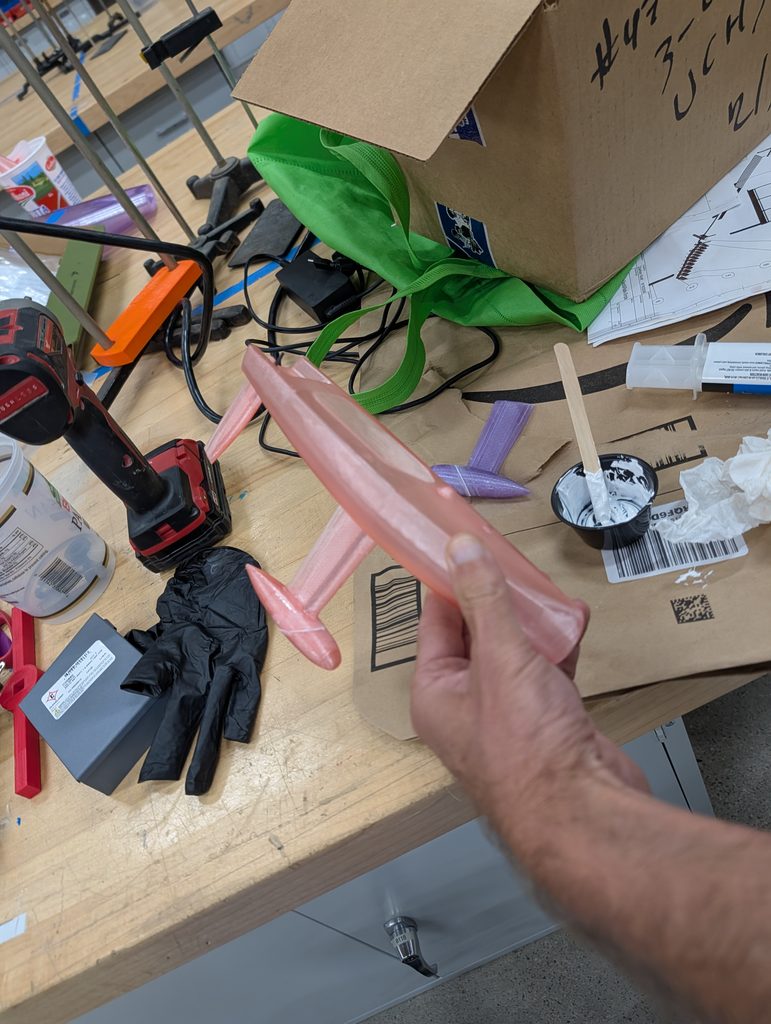
A freshly printed MiniMax hull and keel assembly during preparation and finishing.
The Program We Are Developing
The current concept is for students to work in small (2-3 person) teams, with each team responsible for building and preparing its own boat.
The program would progress through several practical stages:
- Understand the boat — Learn the basic parts of a sailboat and how wind creates motion.
- Print the components — Explore 3D-printing methods, materials, tolerances and quality control.
- Build the hull and appendages — Assemble, seal and test the hull, keel and rudder.
- Install the electronics — Connect the receiver and servos and configure the radio system.
- Build and tune the rig — Make the sails, assemble the spars and adjust the control lines.
- Test and improve — Conduct flotation and sailing trials, diagnose problems and make modifications.
- Learn to sail — Practice steering, sail control, starts, mark rounding, and basic racing rules.
- Race as a fleet — Conclude the program with an organized MiniMax regatta at the San Diego Model Yacht Pond.
Our working objective is to help students build a fleet of approximately 15 to 20 boats—enough for multiple teams to sail and compete together.
The final regatta will not simply be a race. It will be the culmination of an engineering process in which students see something move from a digital file, to a collection of printed parts to a functioning vessel they can control on the water.
Learning from the MiniMax Creator
We also recently recorded an in-depth conversation with MiniMax creator Brett McCormack. Brett explained the history of the boat, the thinking behind its design, how it is built and sailed, and how he hopes it can introduce more young people to model sailing.
This interview, and the lessons emerging from our local pilot, will help us develop clearer build instructions, teaching resources, and practical guidance for schools and model yacht clubs interested in creating similar programs.
Phase Two: Bringing Back the RoboBuoys—and Much More
The MiniMax fleet is our immediate focus, but it is not the end of the journey.
Once students have gained experience building, controlling and racing these boats, a likely second phase (perhaps beginning next semester) will return to the original RoboBuoy concept.
Students could design and construct remotely operated or autonomous racing marks capable of propulsion, station keeping and course positioning. More advanced teams could explore GPS, sensors, microcontrollers, cameras, wireless communication and autonomous navigation.
The program could then expand beyond identical MiniMax sailboats into modified and increasingly sophisticated marine vessels of many kinds, including:
- Autonomous and remotely operated RoboBuoys
- Sensor-equipped research boats
- Rescue and recovery vessels
- Camera and environmental-monitoring platforms
- Experimental sailboats
- Tugboats and workboats
- Submarines and underwater vehicles
- Hydrofoils and other high-performance designs
The MiniMax provides an ideal starting point: a manageable project that students can complete, sail and race while developing the skills needed to tackle more ambitious marine-robotics challenges.
Building Something Other Communities Can Use
The San Diego Argonauts are developing this program in collaboration with local educators and students. The experience gained through these first school partnerships will help us identify what works, what needs improvement and what resources teachers and volunteers need.
Our longer-term goal is to make the resulting knowledge useful well beyond San Diego. We hope that other schools, robotics programs, makerspaces and model-yacht clubs will be able to adapt the concept and build fleets of their own.
There is much more work ahead… but the project has already traveled a remarkable distance in a short time: from an idea for robotic buoys, to the first 3D-printed prototype, to active collaboration with two local schools and the beginnings of a student-built racing fleet.
And soon, if all goes according to plan, a collection of tiny sailboats will line up together on the San Diego Model Yacht Pond, with students holding the transmitters.
Want to Help?
We welcome participation from:
- Teachers and school administrators
- High-school and college students
- Robotics teams and engineering clubs
- 3D-printing and fabrication specialists
- Sailors and model-boat builders
- Electronics suppliers and hobby shops
- Corporate and community sponsors
- Volunteers interested in mentoring young people
If you would like to participate, support the program or explore bringing it to your school or club, please contact the San Diego Argonauts.
Together, we can introduce a new generation to engineering, robotics, sailing—and the remarkable possibilities that emerge when all three meet on the water.