🐠 Argonauts to Exhibit at the 5th Annual Walter Munk Day on Oct 3rd, 2026

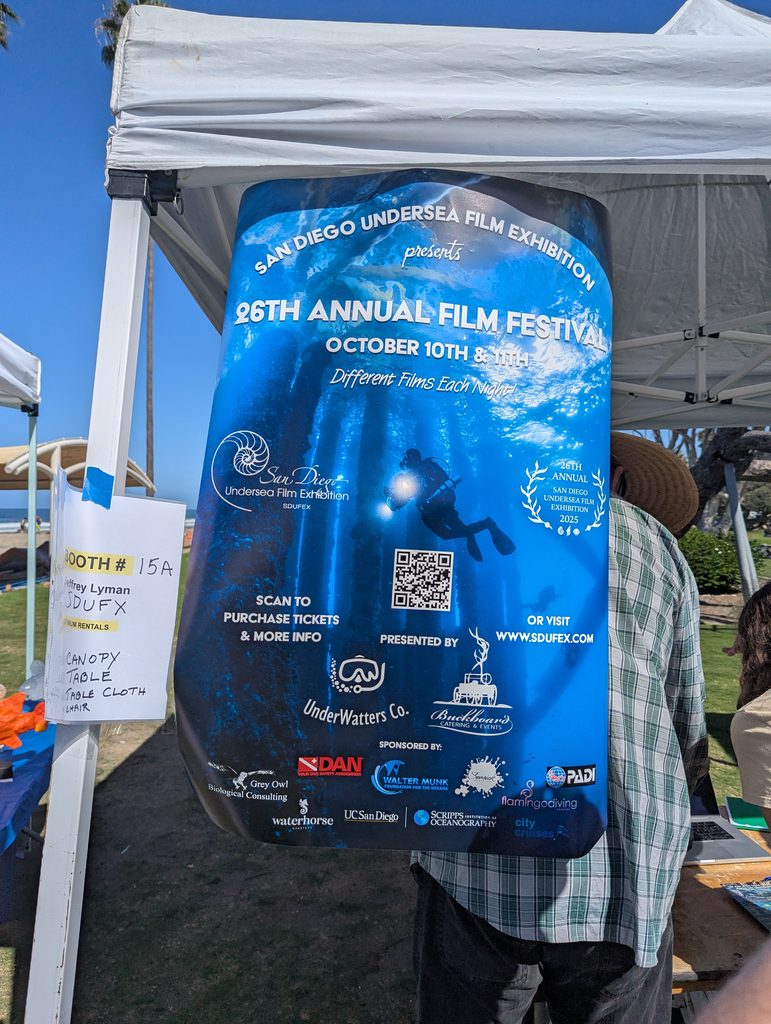
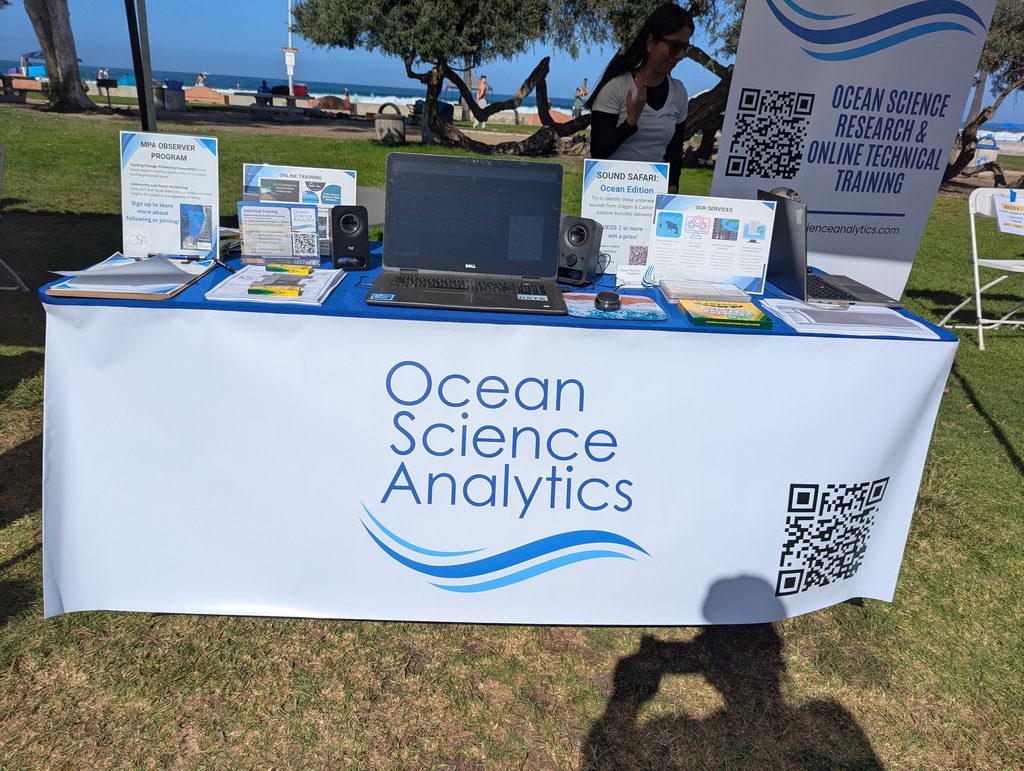
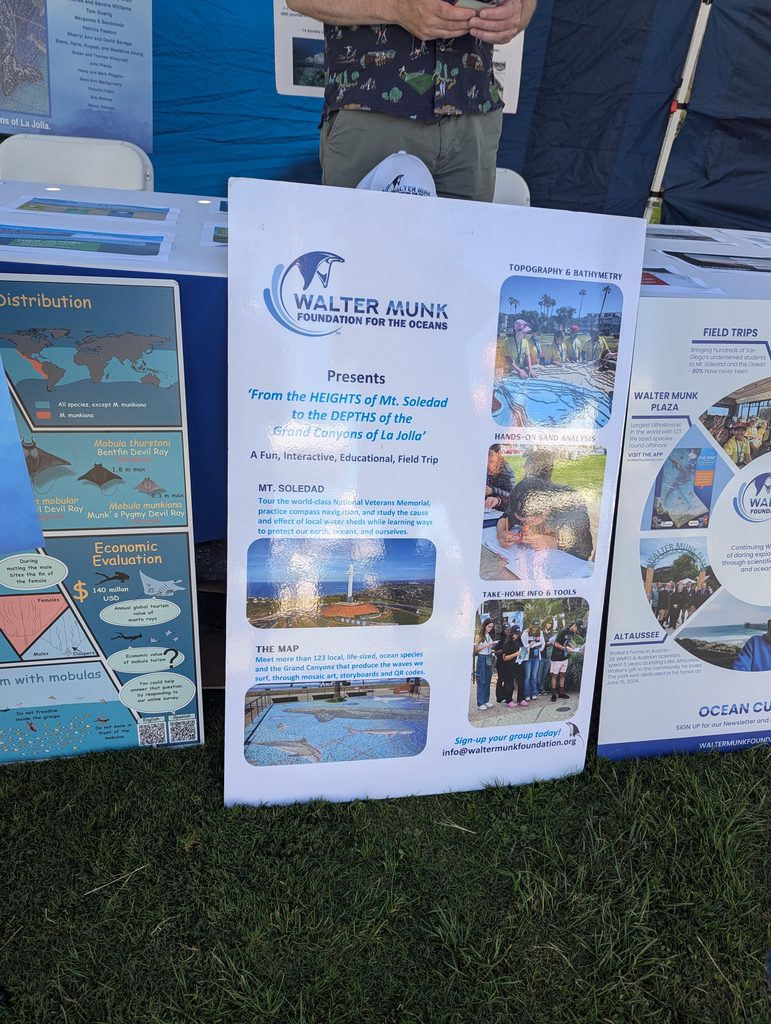
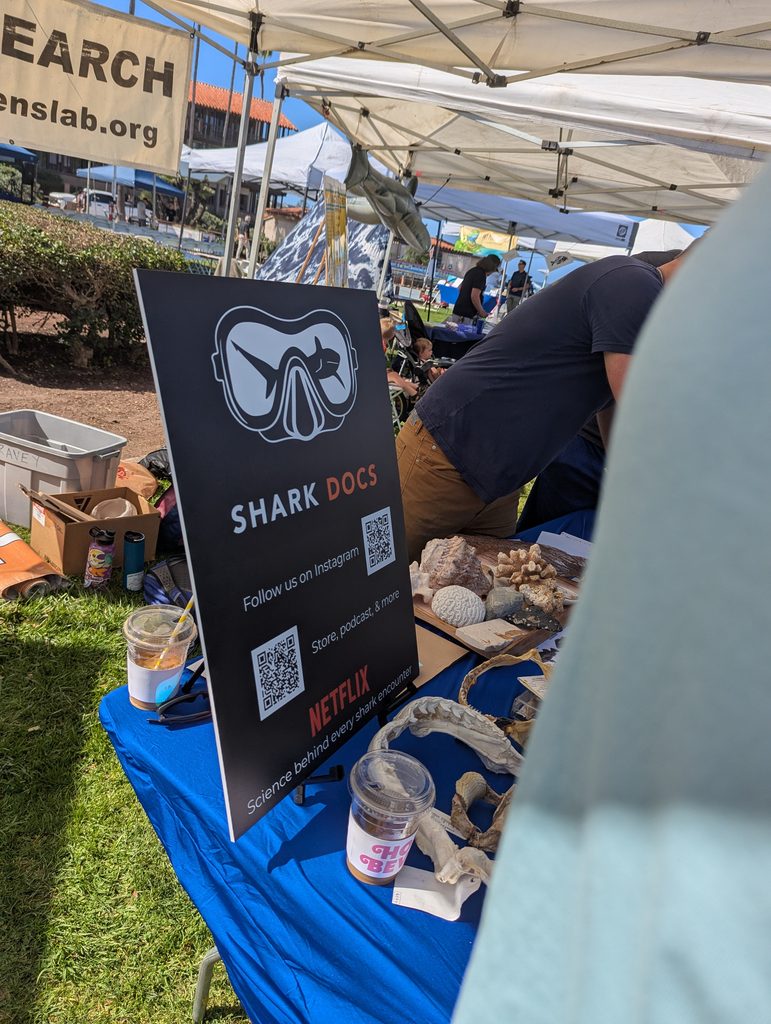
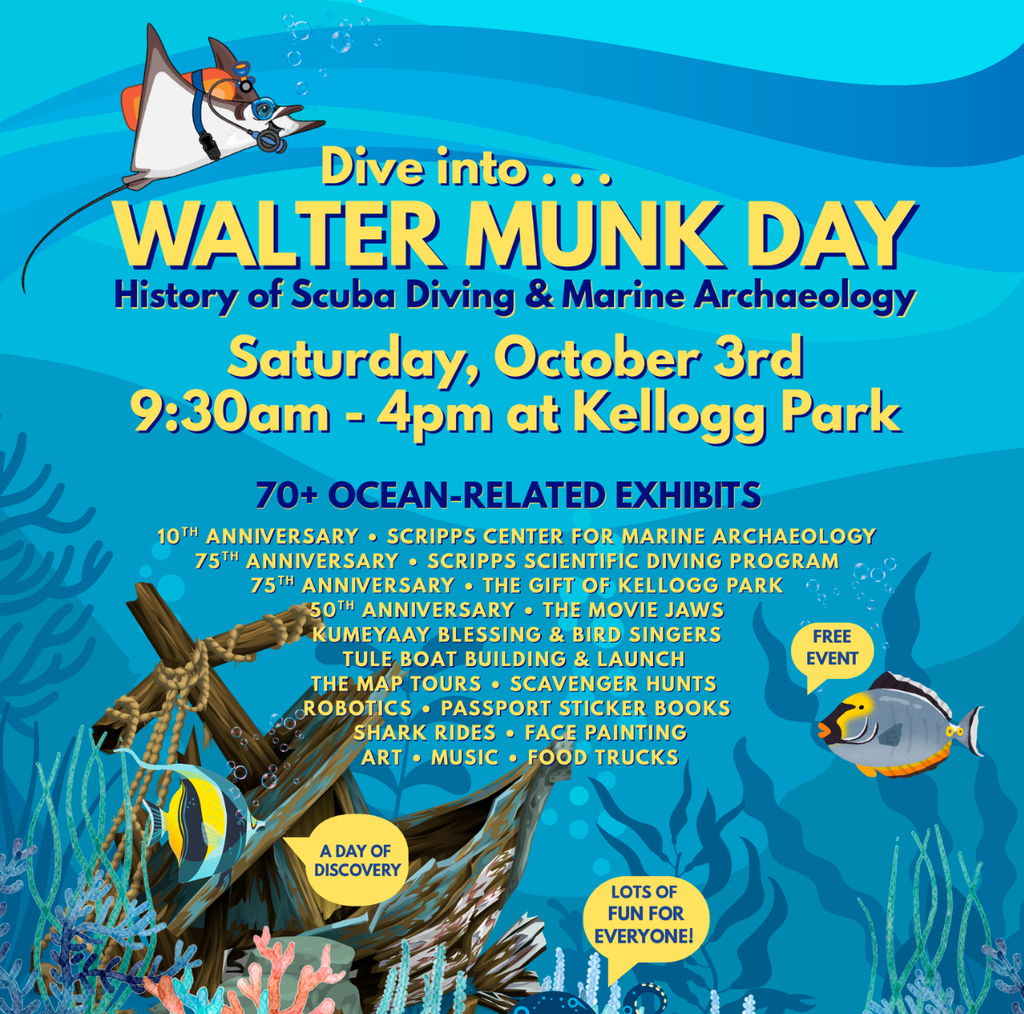
The San Diego Argonauts are excited to participate as an exhibitor at the 5th Annual Walter Munk Day — Celebrate Our Oceans, taking place on Saturday, October 3, 2026, at Kellogg Park in La Jolla Shores.

Walter Munk was one of the world’s most influential oceanographers. During his remarkable 80-year career at Scripps Institution of Oceanography, his pioneering work helped advance our understanding of ocean waves, tides, currents, climate and the sea floor. Walter Munk Day brings that legacy to life through interactive exhibits celebrating ocean science, exploration, education and conservation.

This year’s event will also recognize several important milestones:

  • The 75th anniversary of the Scripps Scientific Diving Program
  • The 10th anniversary of the Scripps Center for Marine Archaeology, founded by Walter Munk
  • The 75th anniversary of the gift of Kellogg Park to the City of San Diego
  • The 50th anniversary of the release of JAWS

The day begins with a Kumeyaay Smudge Ceremony and Bird Songs at 9:30 AM, followed by the official ribbon-cutting ceremony at 10:00 AM. Exhibits and activities will continue until 4:00 PM.
What Will the Argonauts Bring?

Our exhibit will introduce visitors to the many sides of the San Diego Argonauts, from radio-controlled sailing and scale-model boating to our growing STEM and robotics initiatives.

We expect to display a variety of RC boats, club photographs, videos, and educational materials. Computer monitors will help us show visitors our boats in action, while hands-on displays will give children and families a closer look at how radio-controlled boats are designed, built and operated.

We also plan to highlight our developing school-based STEM program, including our work with 3D-printed MiniMax sailboats. The program combines design, 3D printing, electronics, boatbuilding, sailing and team racing to give students a practical and memorable engineering experience.

Weather, space and event logistics permitting, we may also demonstrate selected boats at our booth and beyond.
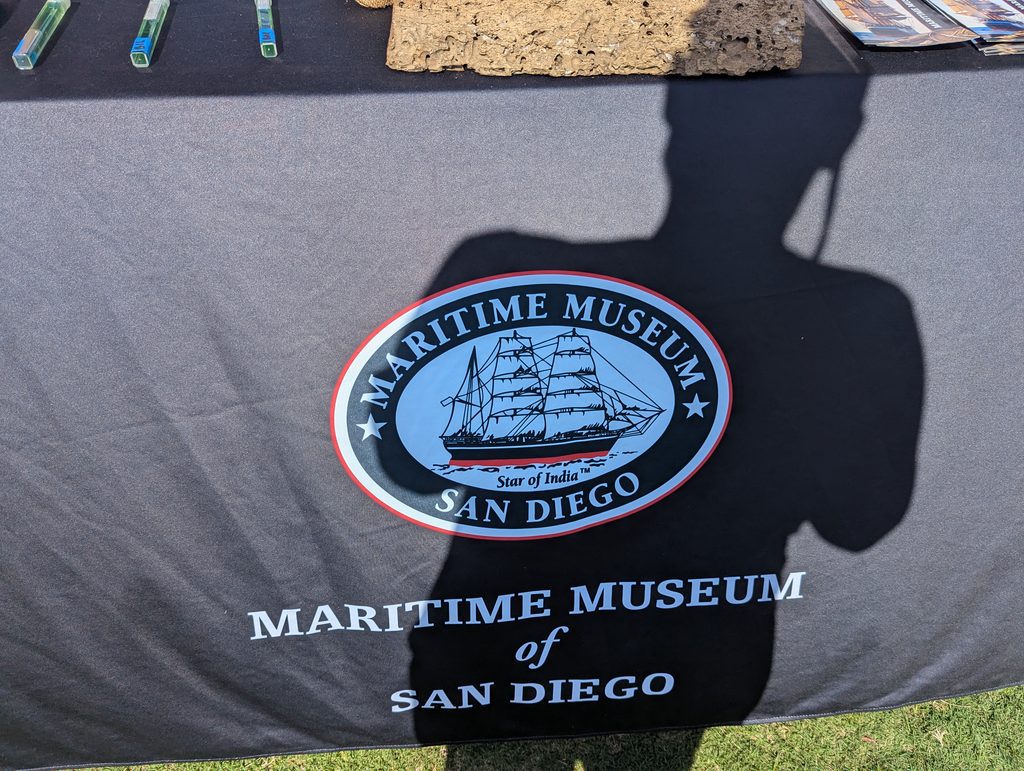
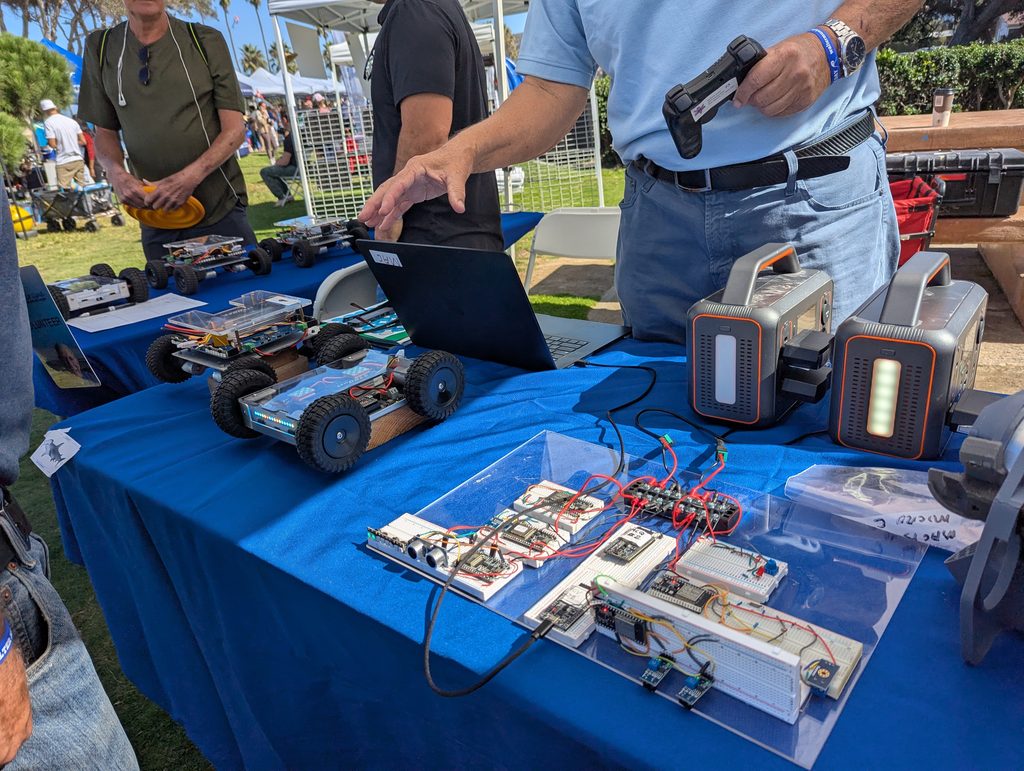
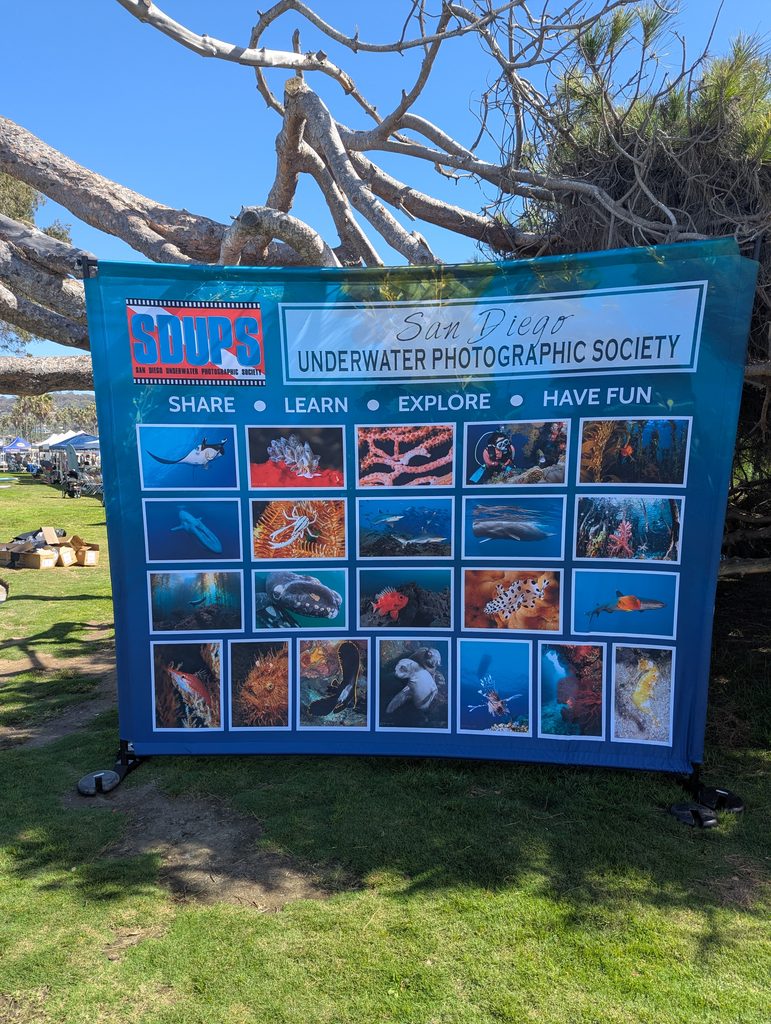
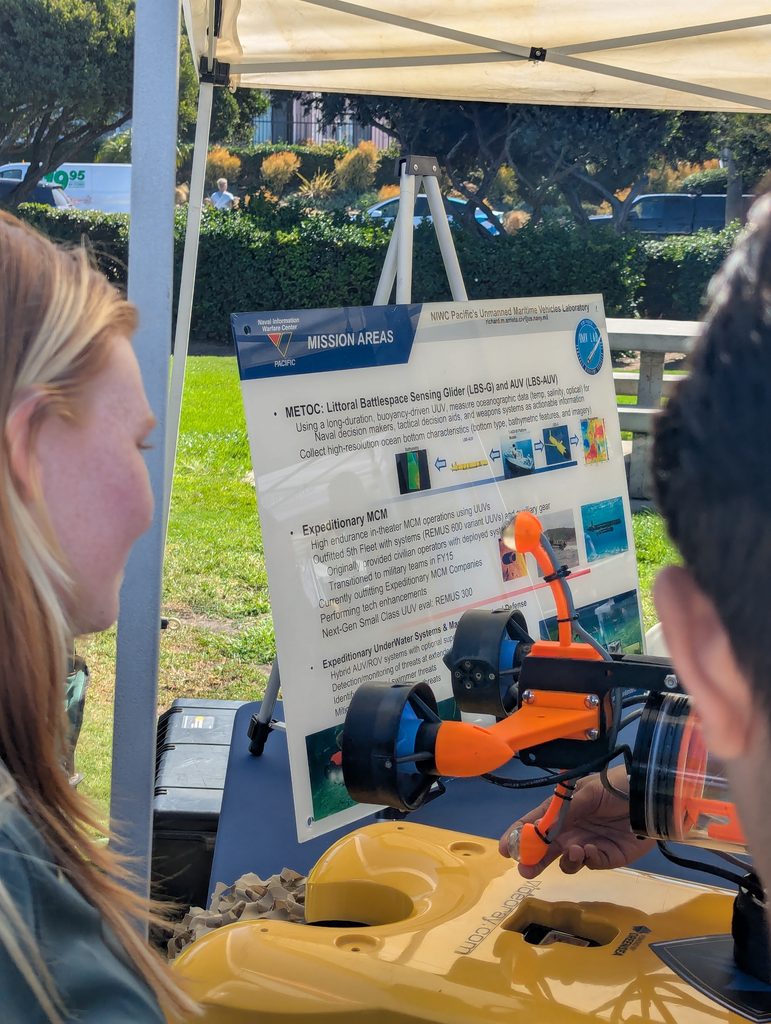
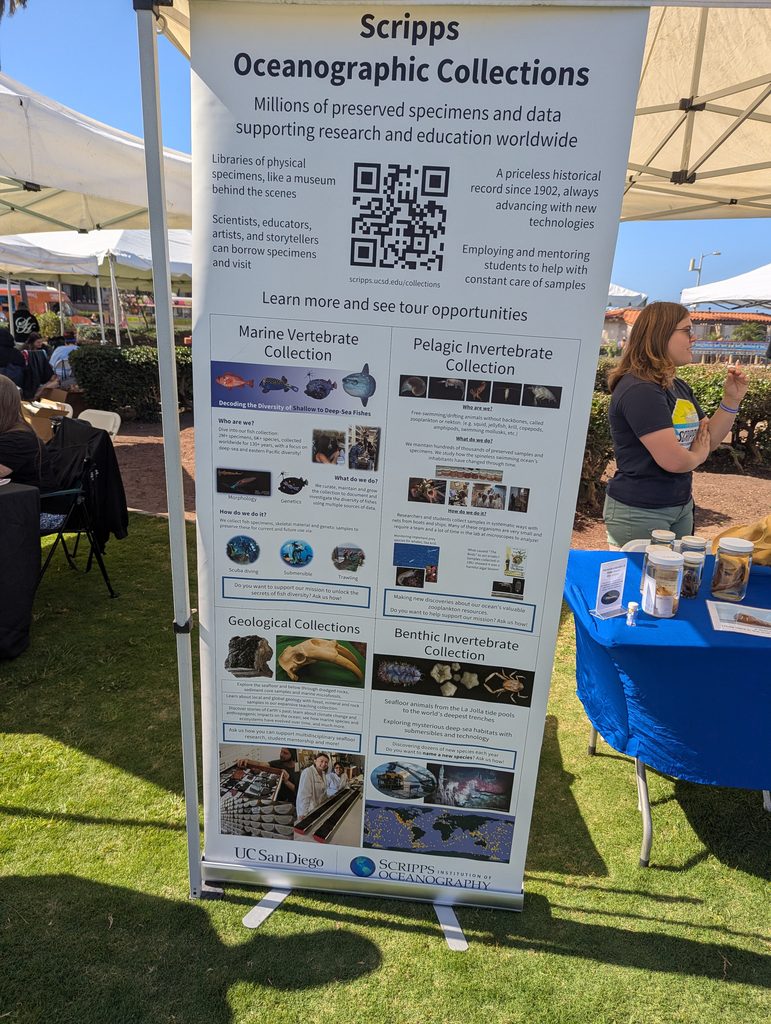
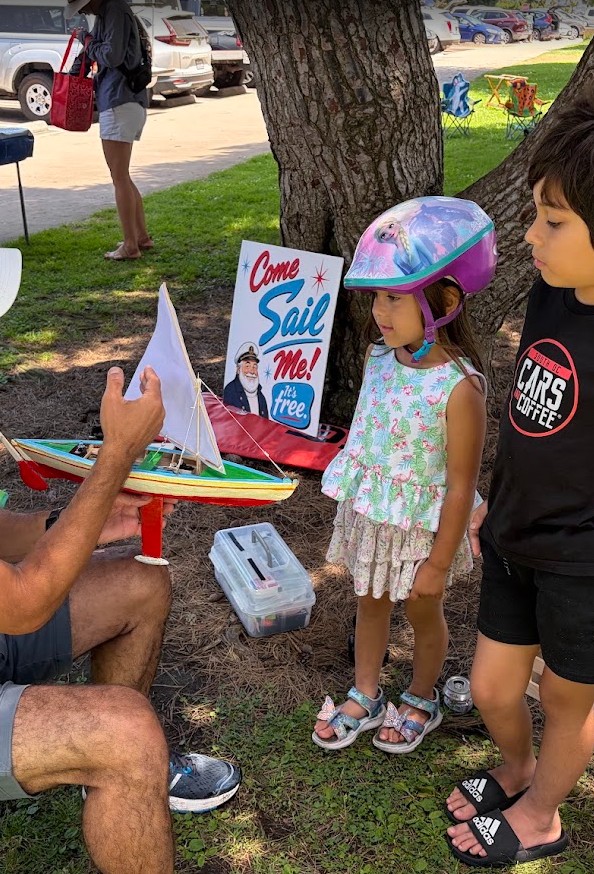
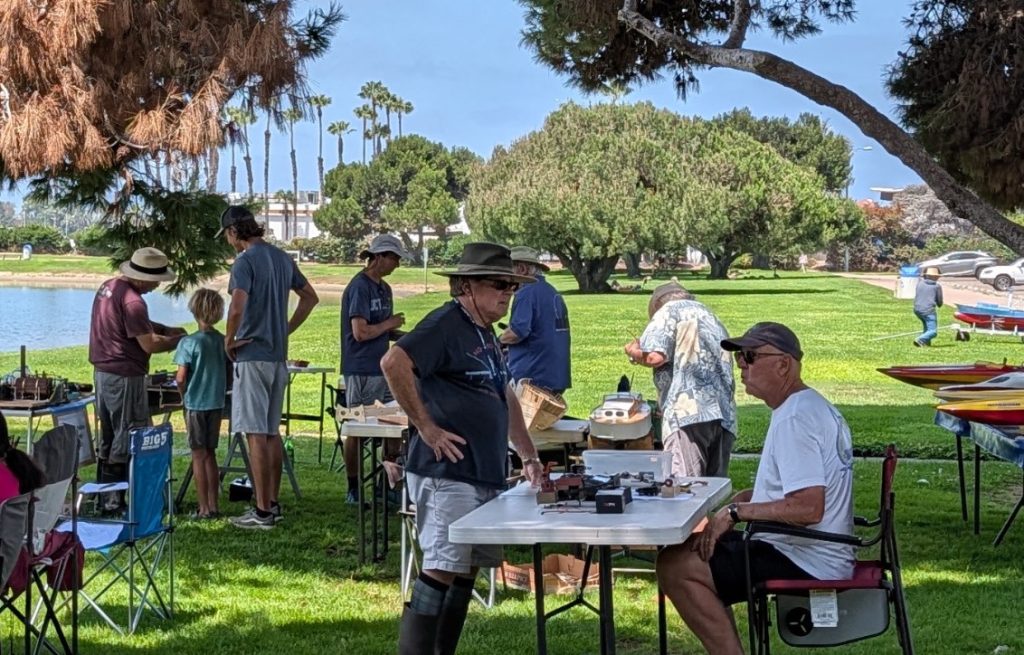
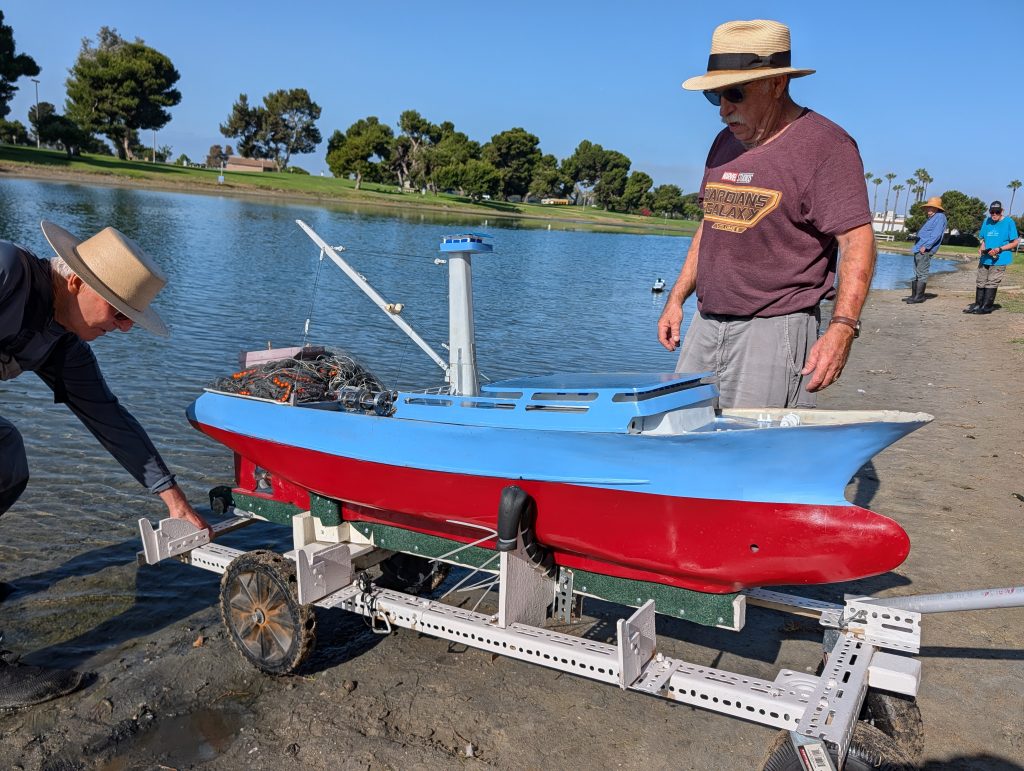
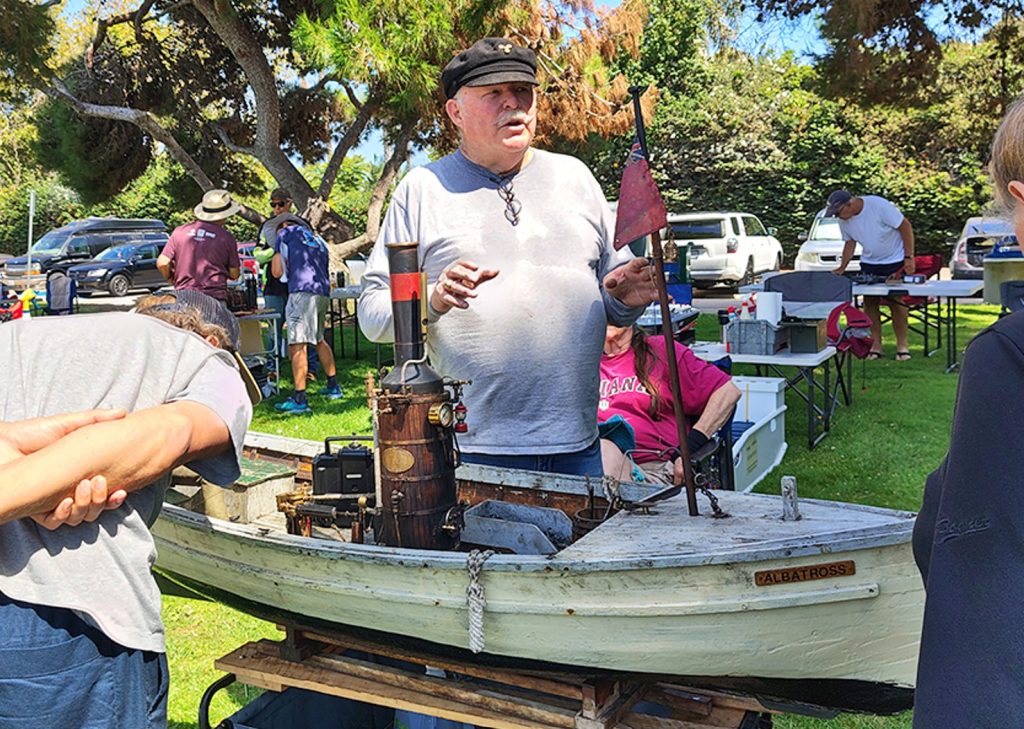
Hands-on robotics, engineering and ocean-science exhibits were among the highlights of Walter Munk Day in 2025.

A Great Match for the Argonauts

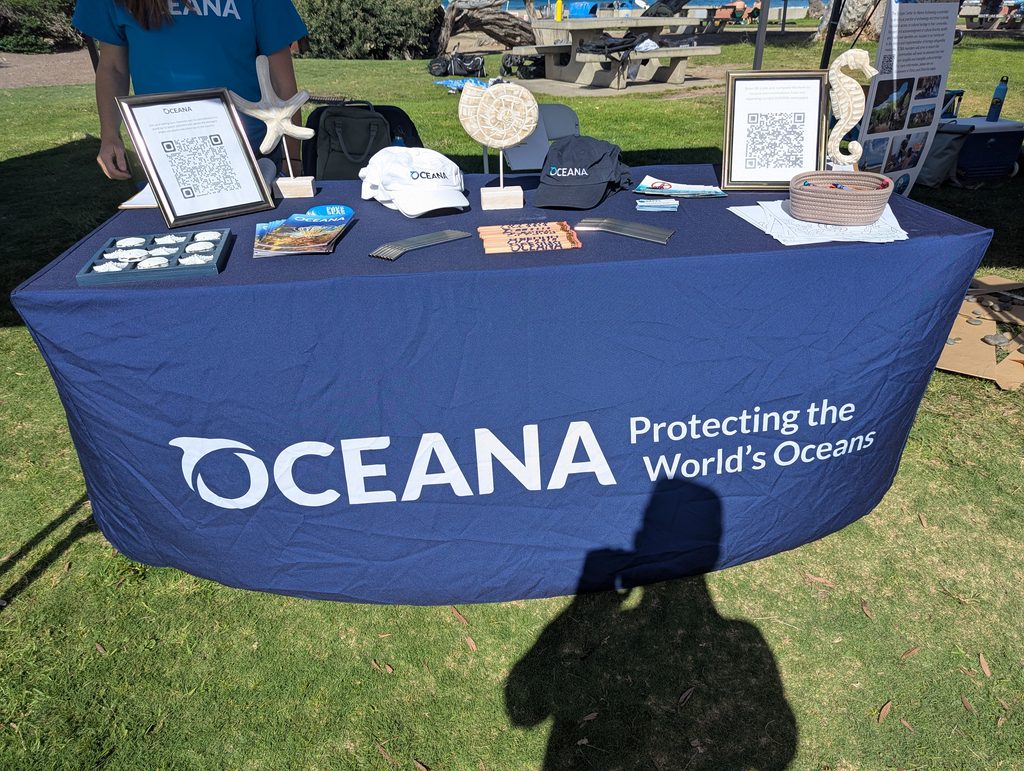
Walter Munk Day brings together scientists, educators, conservation organizations, students, engineers, ocean enthusiasts, and families from across San Diego. Last year’s exhibitors included organizations involved in oceanographic research, marine robotics, underwater exploration, environmental education, marine wildlife and ocean conservation.

It is a perfect environment for the Argonauts. Model boating naturally brings together water, wind, engineering, electronics, craftsmanship, competition, and fun, and it gives us a wonderful way to introduce young people to the science and technology of the marine world.
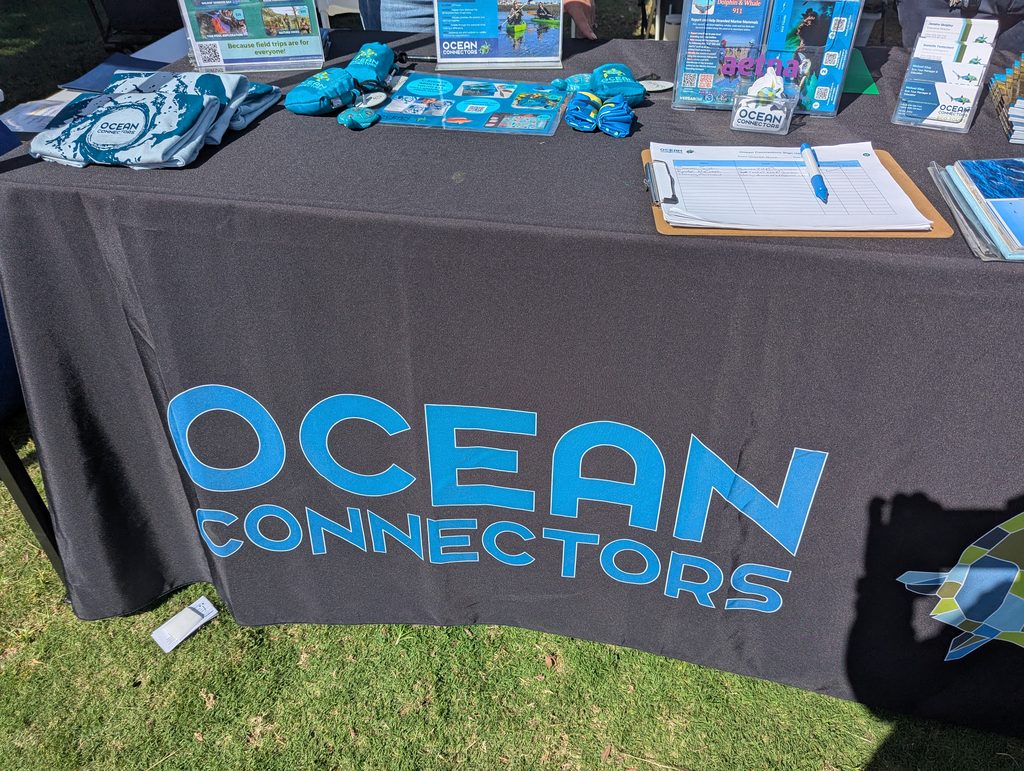
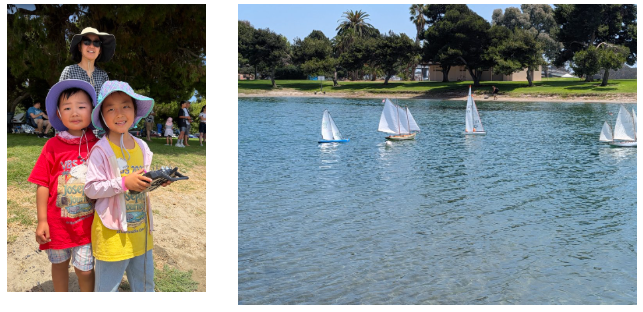
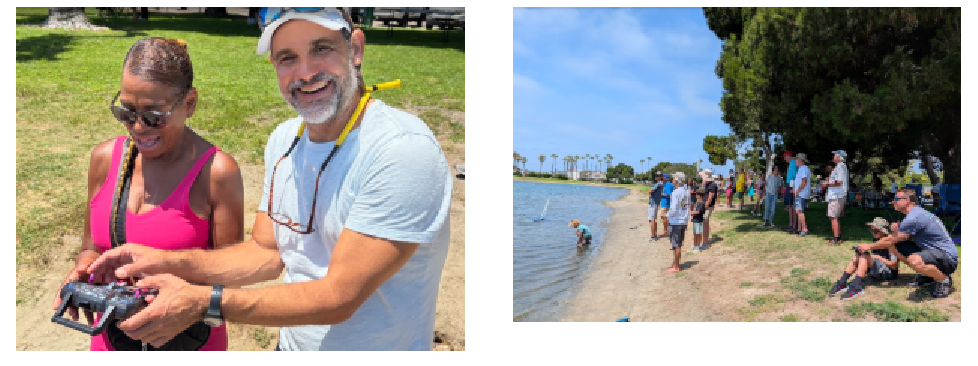
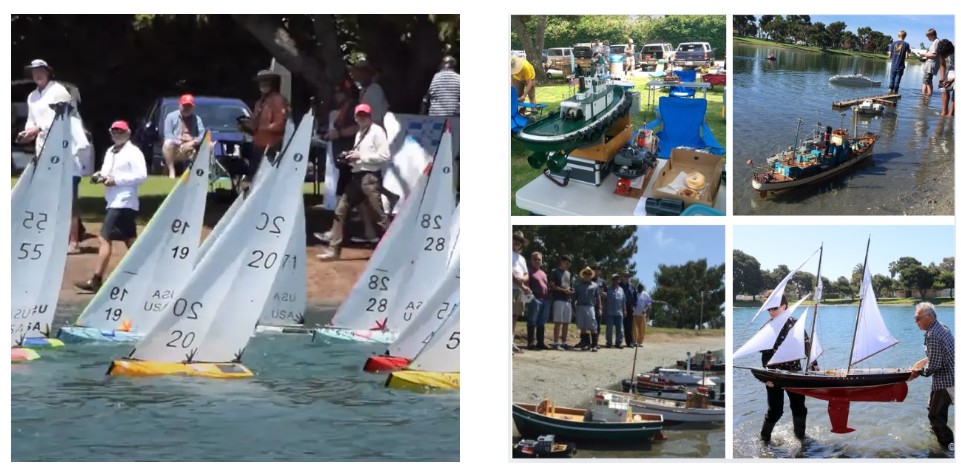
Scenes from the 2025 Walter Munk Day celebration at Kellogg Park in La Jolla Shores.

Watch Highlights from Last Year

The following video offers a look at the exhibits, activities and atmosphere of the 2025 Walter Munk Day celebration:

Argonauts: We Need Your Help!

We are looking for several San Diego Argonauts members and friends to help us staff the booth throughout the day.

Volunteers can help with:

  • Setting up our tables and displays
  • Transporting and displaying RC boats
  • Greeting visitors and introducing them to the club
  • Explaining how our sailboats, scale boats, and other models work
  • Demonstrating radios, electronics and hands-on activities
  • Talking about our sailing classes, public events and STEM programs
  • Supervising boats and equipment
  • Taking photographs and video
  • Breaking down the exhibit at the end of the day

You do not need to stay for the entire event. Even helping for a two or three hour shift would be extremely valuable. Setup begins at 8:00 AM and must be completed by 9:15 AM. Breakdown begins at 4:00 PM.

We would especially appreciate members who can bring interesting boats or displays, including sailboats, scale boats, submarines, unusual powered boats, works in progress, electronics, 3D-printed components, portable power stations to power the laptops & monitors, or other items that can help us tell the Argonauts’ story.

If you can volunteer, lend equipment, or provide a boat for the exhibit, please contact Kerim Baran or speak with us at the Model Yacht Pond.

This is an excellent opportunity to introduce thousands of San Diegans to the San Diego Argonauts, promote our activities and help inspire the next generation of sailors, builders, engineers and ocean stewards.

Please save the date: Saturday, October 3, 2026. We hope you will join us at Kellogg Park!

Learn more about Walter Munk Day and the Walter Munk Foundation at:

1) https://www.eventbrite.com/e/dive-into-walter-munk-day-tickets-1989020483810
2) https://www.waltermunkfoundation.org/walter-munk-day

⚓⛵ From RoboBuoys to 3D-Printed Sailboats: Our STEM Program Takes Shape

Just over two months ago, the San Diego Argonauts issued a call to San Diego and Southern California robotics and STEM students.

Our original vision centered on the RoboBuoy Challenge: inviting students to design and build remotely operated or autonomous robotic racing buoys that could position themselves on the water, hold their location, and potentially reshape a racecourse between races.

That vision is still very much alive, however, after conversations with local educators, students, and fellow model boating enthusiasts, we realized that there was an important first step we could take.

Before students build the racecourse of the future, why not help them build the boats that will race around it?

Enter the MiniMax

The MiniMax is a remarkably small, lightweight, two-channel radio-controlled sailboat created by New Zealand designer Brett McCormack. Its hull and many of its components can be produced on an ordinary 3D printer.

At approximately 22 centimeters long and only about 120 grams when ready to sail, the MiniMax may be tiny, but it is a real sailboat. It has an adjustable mainsail and jib, separate rudder and sail controls, and enough performance to support both recreational sailing and organized fleet racing.

Most importantly for our purposes, it offers students an approachable and affordable introduction to:

  • 3D printing and digital manufacturing
  • Electronics and radio-control systems
  • Mechanical assembly
  • Materials and waterproofing
  • Buoyancy, balance and stability
  • Aerodynamics and hydrodynamics
  • Sail design and tuning
  • Troubleshooting and iterative engineering
  • Teamwork, sportsmanship and racing strategy

From One Prototype to a School-Built Fleet

Our initial goal was simple: print one MiniMax, build it, sail it, and learn everything we could.

That first prototype has now been completed and successfully sailed. Along the way, we worked through the kinds of real-world challenges that make projects like this so valuable: selecting lightweight electronics, configuring the transmitter and receiver, reversing servo direction, fitting extremely small components, rigging the sails, sealing the hull, and testing the completed boat on the water.

Each challenge became part of the learning experience, and part of the knowledge we can pass along to students and future builders.


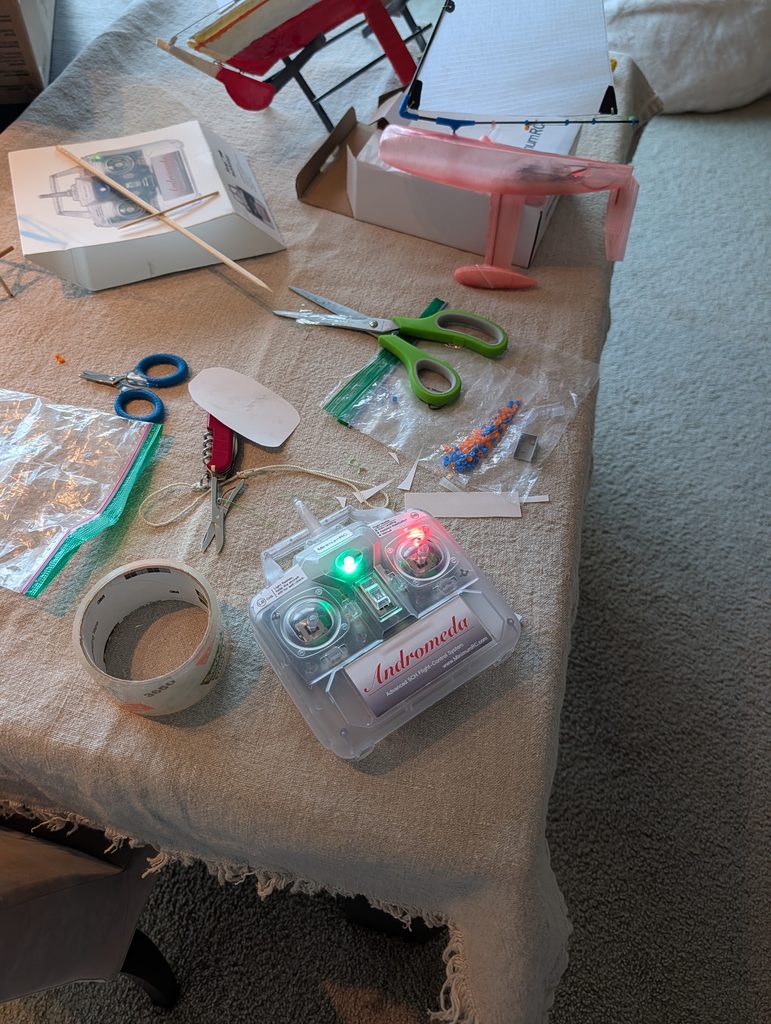
The first San Diego MiniMax taking shape—complete with radio equipment, rigging materials and plenty of hands-on problem-solving.

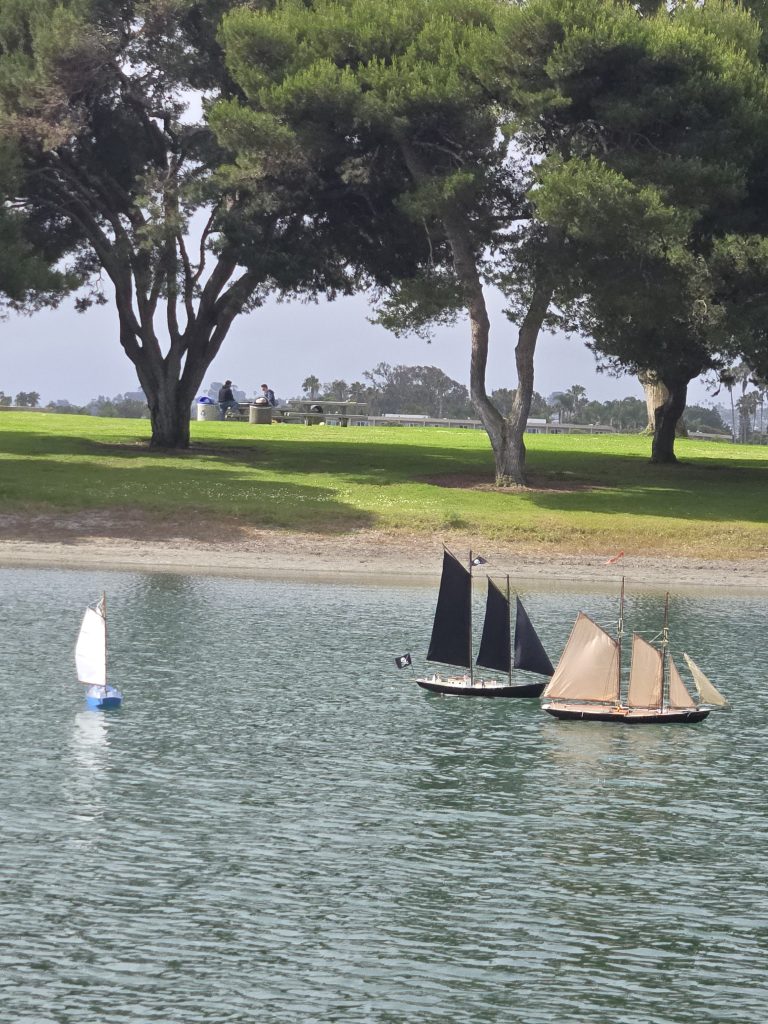
The MiniMax has already proven that it can sail alongside vessels many times its size. During one of its first outings at the Model Yacht Pond, our little pink prototype shared the water with two beautifully detailed scale schooners, a fitting image of the extraordinary range of model boating.

Small boat, big pond: our first MiniMax sails alongside two large-scale schooners.

Now Working with Two San Diego Schools

The initiative has quickly progressed beyond a single experimental boat. The San Diego Argonauts are now actively engaged with educators at two local San Diego schools to explore how MiniMax construction, sailing, and racing can become part of a practical STEM and robotics experience.

At University City High School, we have been working with engineering and robotics teacher Zach Scott, using the school’s impressive fabrication facilities to print and begin assembling the next boats.


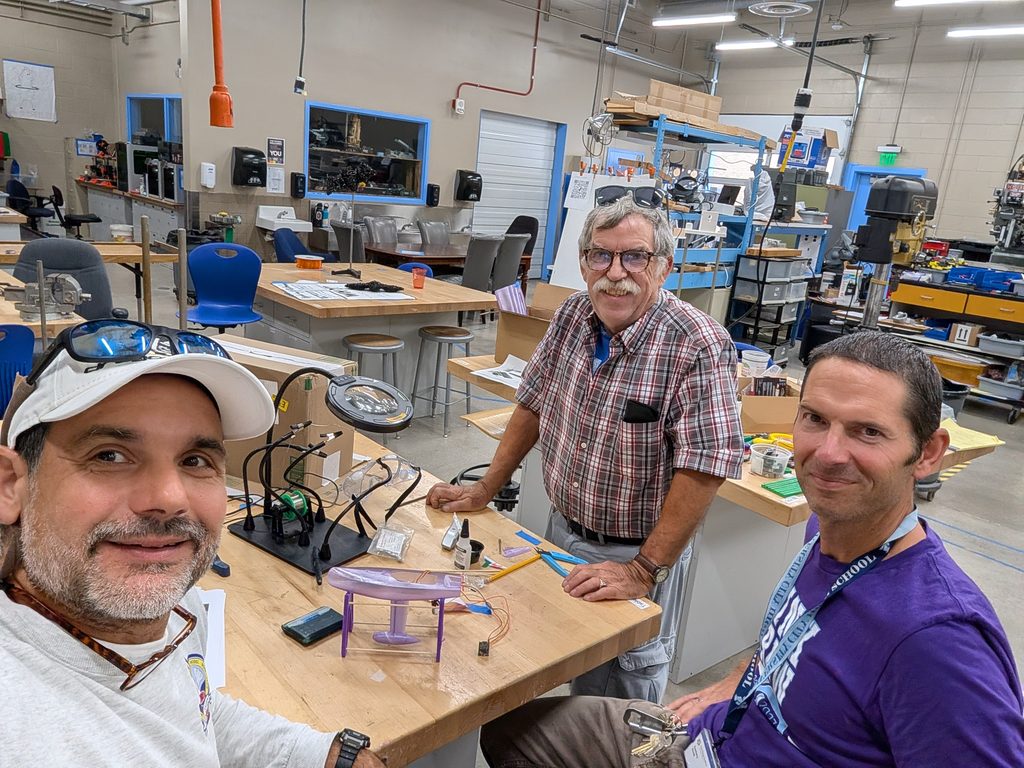
Jeff Sparksworthy and Kerim Baran from San Diego Argonauts with UCHS engineering and robotics teacher Zach Scott during a recent MiniMax work session.

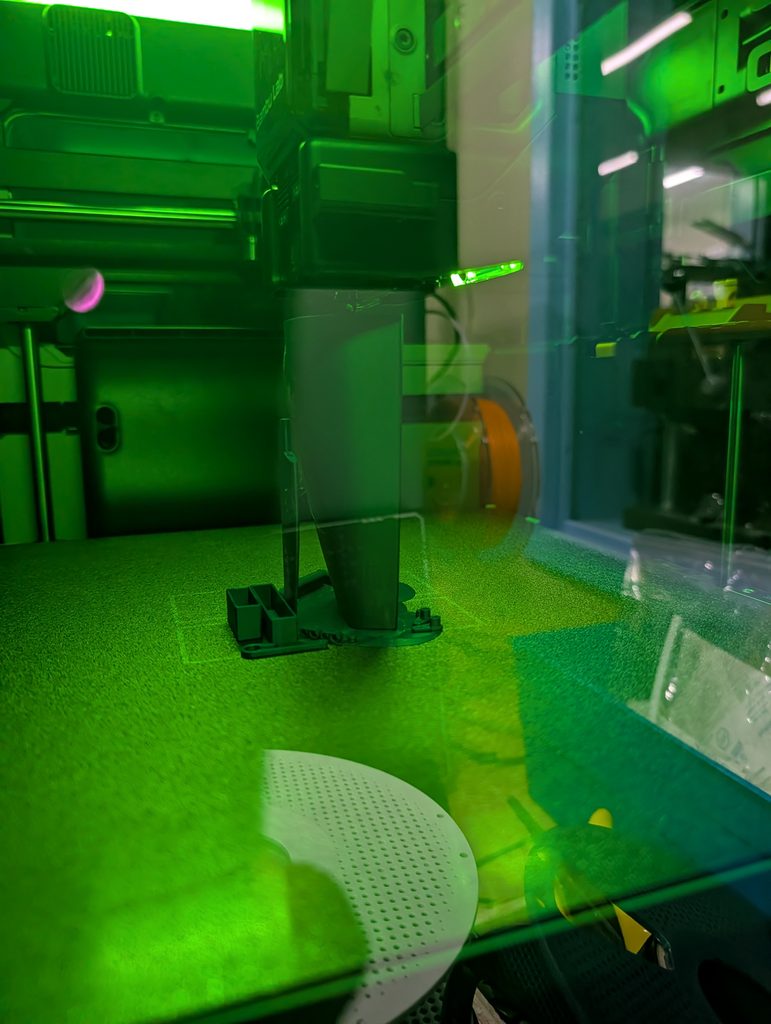
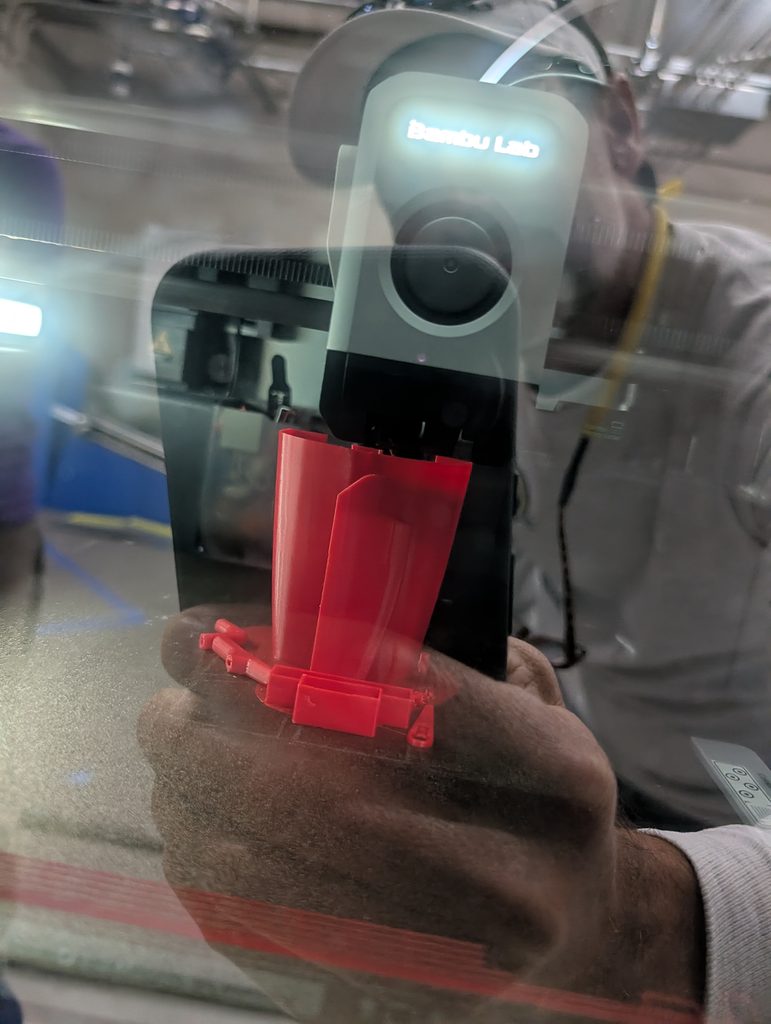
The process begins with digital design files and rolls of filament. Hulls, keels, rudders, boat stands, and numerous small fittings emerge from the school’s 3D printers and are then cleaned, fitted, assembled, and tested.

MiniMax components being produced on a school 3D printer

From there, we install the radio receiver, two tiny servos, and the linkages that control the rudder and sails.

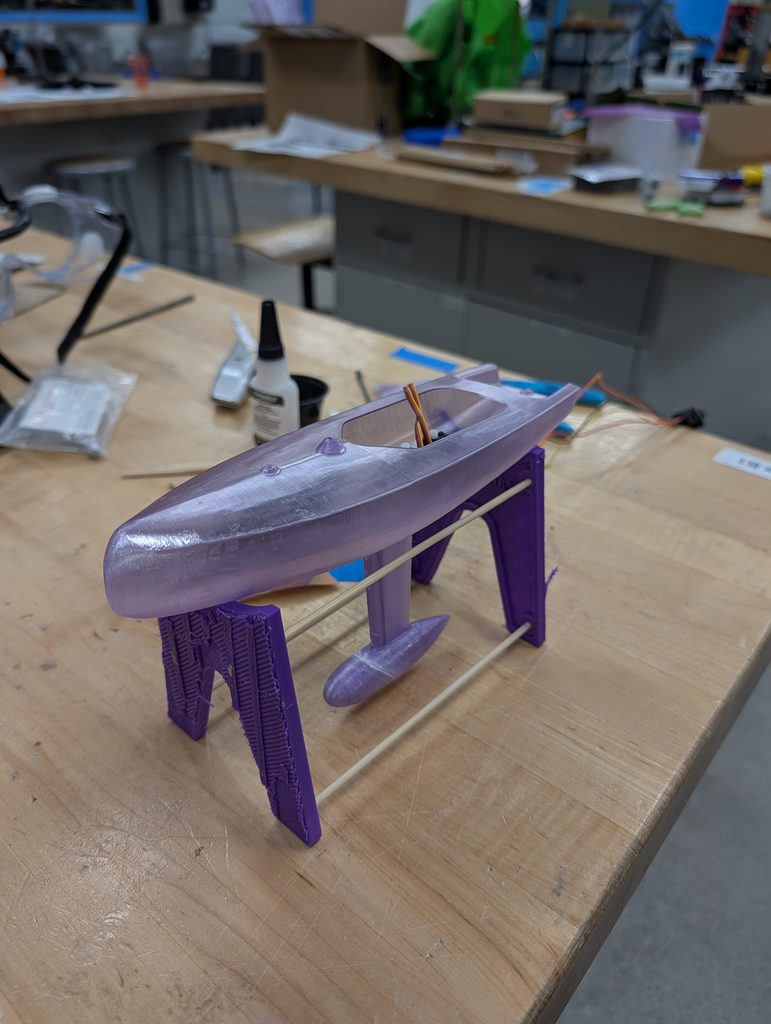
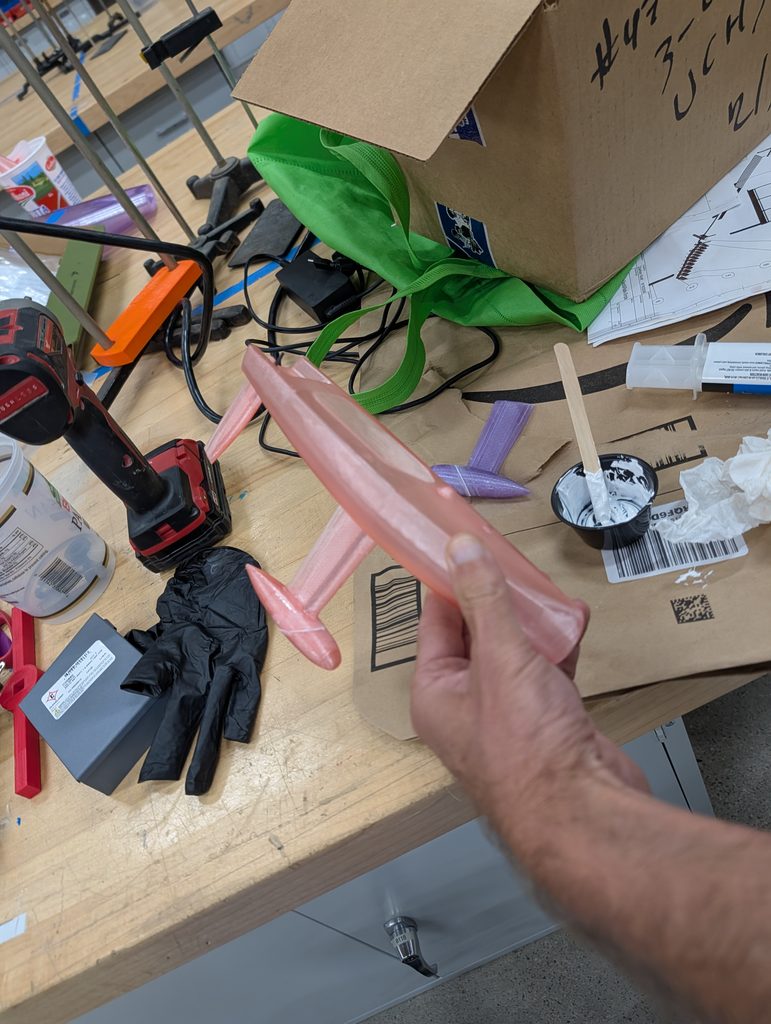
A newly printed MiniMax hull and stand during the early stages of assembly.

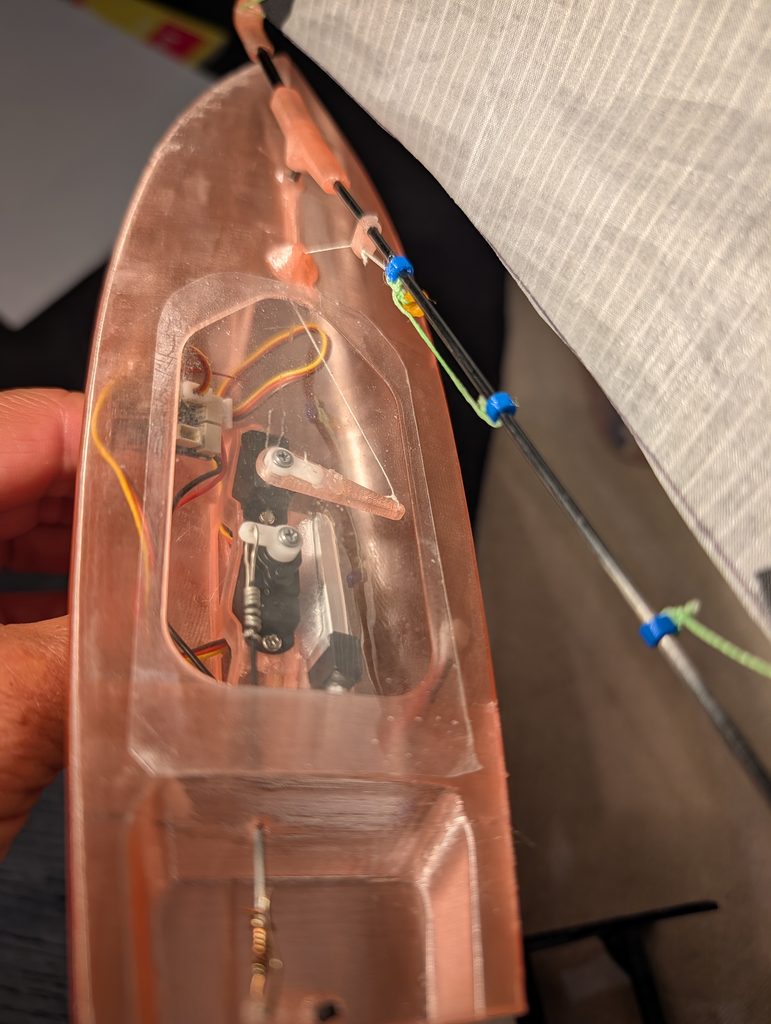
The transparent hull provides a clear view of the MiniMax’s compact radio receiver, rudder servo, sail servo, and control linkages.

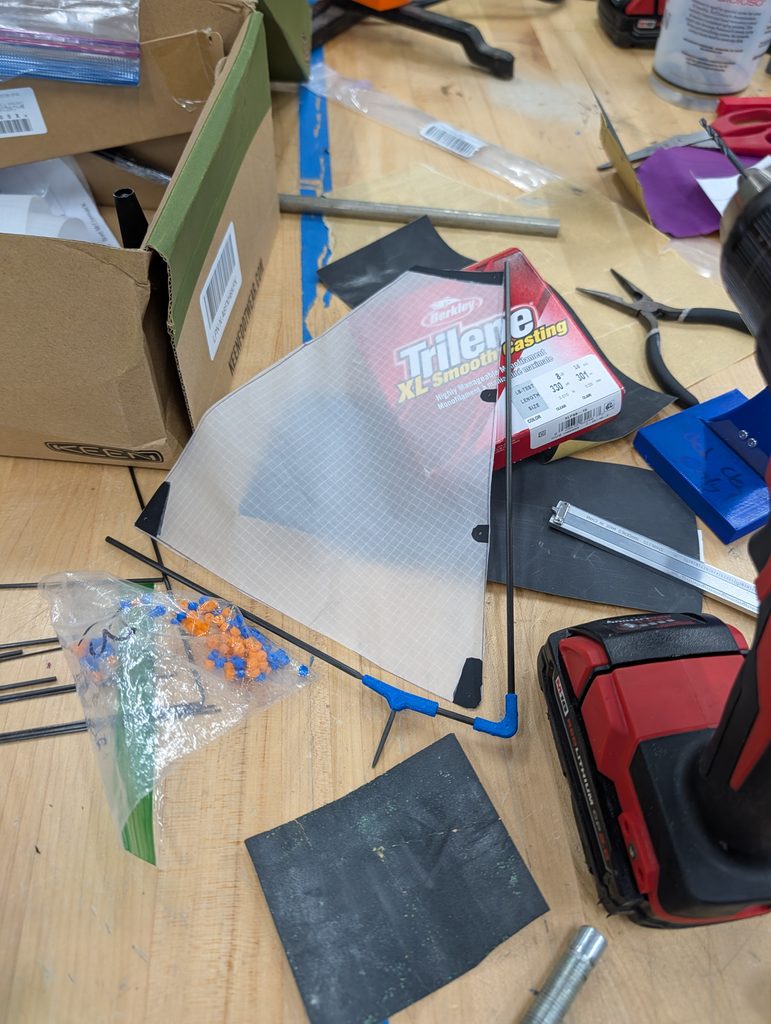
The sail and rigging system introduce an entirely different set of skills. Students work with carbon-fiber rods, lightweight sail material, small fittings, and carefully measured lines to create an adjustable sailing rig.

Constructing a MiniMax sail and rig from lightweight materials and 3D-printed fittings.

A freshly printed MiniMax hull and keel assembly during preparation and finishing.

The Program We Are Developing

The current concept is for students to work in small (2-3 person) teams, with each team responsible for building and preparing its own boat.

The program would progress through several practical stages:

  1. Understand the boat — Learn the basic parts of a sailboat and how wind creates motion.
  2. Print the components — Explore 3D-printing methods, materials, tolerances, and quality control.
  3. Build the hull and appendages — Assemble, seal and test the hull, keel and rudder.
  4. Install the electronics — Connect the receiver and servos and configure the radio system.
  5. Build and tune the rig — Make the sails, assemble the spars and adjust the control lines.
  6. Test and improve — Conduct flotation and sailing trials, diagnose problems, and make modifications.
  7. Learn to sail — Practice steering, sail control, starts, mark rounding, and basic racing rules.
  8. Race as a fleet — Conclude the program with an organized MiniMax regatta at the San Diego Model Yacht Pond.

Our working objective is to help students build a fleet of approximately 15 to 20 boats—enough for multiple teams to sail and compete together.

The final regatta will not simply be a race. It will be the culmination of an engineering process in which students see something move from a digital file to a collection of printed parts to a functioning vessel they can control on the water.

Learning from the MiniMax Creator

We also recently recorded an in-depth conversation with MiniMax creator Brett McCormack. Brett explained the history of the boat, the thinking behind its design, how it is built and sailed, and how he hopes it can introduce more young people to model sailing.

This interview, and the lessons emerging from our local pilot, will help us develop clearer build instructions, teaching resources, and practical guidance for schools and model yacht clubs interested in creating similar programs.

Phase Two: Bringing Back the RoboBuoys and Much More

The MiniMax fleet is our immediate focus, but it is not the end of the journey.

Once students have gained experience building, controlling, and racing these boats, a likely second phase (perhaps beginning next semester) will return to the original RoboBuoy concept.

Students could design and construct remotely operated or autonomous racing marks capable of propulsion, station keeping and course positioning. More advanced teams could explore GPS, sensors, microcontrollers, cameras, wireless communication and autonomous navigation.

The program could then expand beyond identical MiniMax sailboats into modified and increasingly sophisticated marine vessels of many kinds, including:

  • Autonomous and remotely operated RoboBuoys
  • Sensor-equipped research boats
  • Rescue and recovery vessels
  • Camera and environmental-monitoring platforms
  • Experimental sailboats
  • Tugboats and workboats
  • Submarines and underwater vehicles
  • Hydrofoils and other high-performance designs

The MiniMax provides an ideal starting point: a manageable project that students can complete, sail, and race while developing the skills needed to tackle more ambitious marine-robotics challenges.

Building Something Other Communities Can Use

The San Diego Argonauts are developing this program in collaboration with local educators and students. The experience gained through these first school partnerships will help us identify what works, what needs improvement, and what resources teachers and volunteers need.

Our longer-term goal is to make the resulting knowledge useful well beyond San Diego. We hope that other schools, robotics programs, makerspaces, sailing schools & clubs, and (model) yacht clubs will be able to adapt the concept and build fleets of their own.

There is much more work ahead… but the project has already traveled a remarkable distance in a short time: from an idea for robotic buoys, to the first 3D-printed prototype, to active collaboration with two local schools and the beginnings of a student-built racing fleet.

And soon, if all goes according to plan, a collection of tiny sailboats will line up together on the San Diego Model Yacht Pond, with students holding the transmitters.

Want to Help?

We welcome participation from:

  • Teachers and school administrators
  • High-school and college students
  • Robotics teams and engineering clubs
  • 3D-printing and fabrication specialists
  • Sailors and model-boat builders
  • Electronics suppliers and hobby shops
  • Corporate and community sponsors
  • Volunteers interested in mentoring young people

If you would like to participate, support the program, or explore bringing it to your school or club, please contact the San Diego Argonauts.

Together, we can introduce a new generation to engineering, robotics, sailing, other marine vessels, and the remarkable possibilities that emerge when all three meet on the water.

🎥 San Diego Argonauts Featured on Hafu Go’s 20-Million-Subscriber YouTube Channel

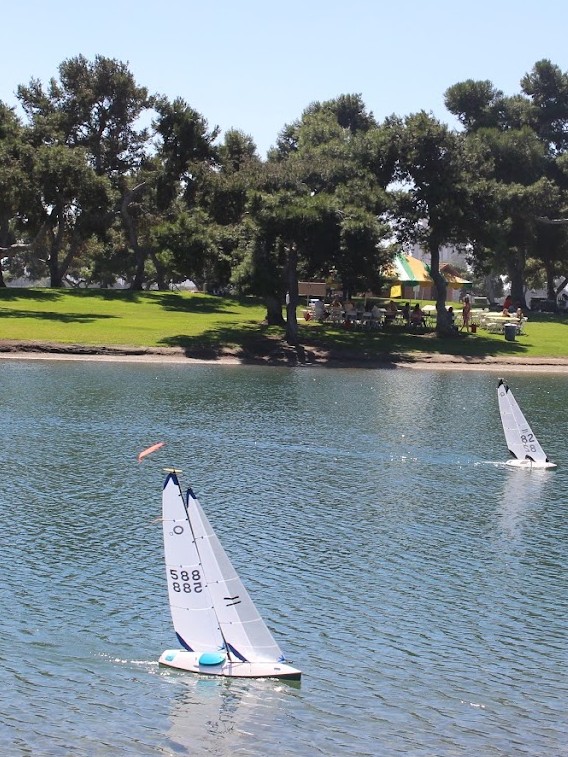
From DF95 sailboats and scale warships to submarines and a one-of-a-kind hovercraft, our pond took center stage for a worldwide audience

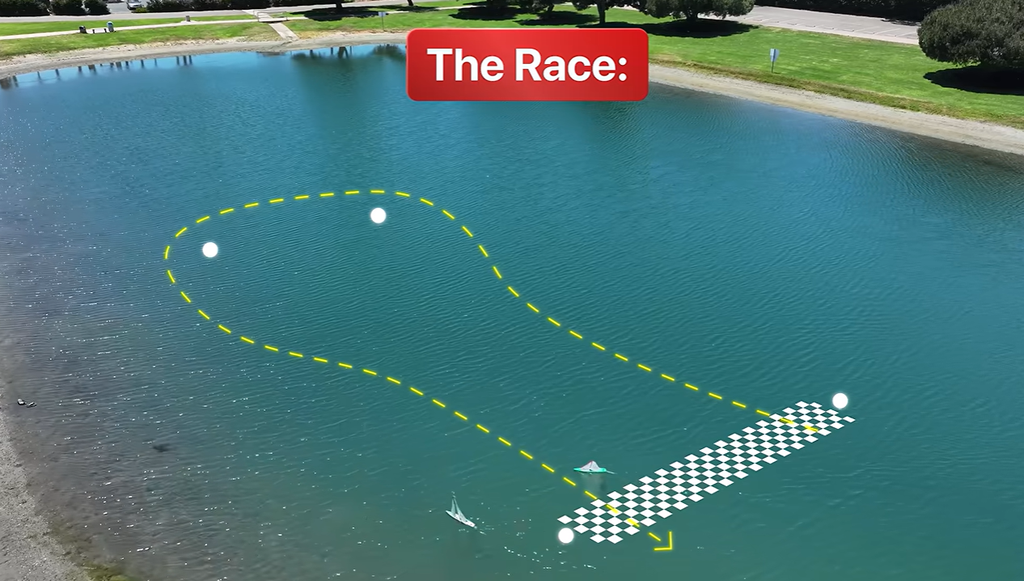
About six weeks ago, popular YouTube creator Hafu Go and his production team visited the San Diego Model Yacht Pond to film a video featuring some of the most unusual and impressive radio-controlled boats they could find.

The finished video has now been released—and it attracted more than 1 million views in its first 48 hours.

With approximately 20 million YouTube subscribers, Hafu Go has built a huge global audience through fast-paced videos exploring extraordinary vehicles, machines and experiences. His latest production compares RC boats ranging from a homemade $1 steam-powered “pop-pop” boat to an extremely powerful custom RC speedboat valued at approximately $10,000.

Along the way, several San Diego Argonauts members—and a wonderfully diverse collection of vessels—received their moment in the spotlight.

From the Slowest “Pop-Pop” to a 130-MPH Speed Demon

The video showcases an astonishing range of RC boats, beginning with a homemade $1 “pop-pop” boat powered by a tiny candle and steam—possibly the slowest and simplest vessel ever launched at our pond. From there, Hafu tests fishing boats, self-righting speedboats, hydrofoils, hovercraft, sailboats, submarines and museum-quality scale ships. At the opposite extreme is a highly customized, approximately $10,000 speed demon capable of exceeding 130 miles per hour. Seeing such radically different vessels together—from a gently puttering tin boat to a carbon-reinforced rocket skimming across the water—beautifully captures the extraordinary variety found within the world of radio-controlled boating.

Hafu Learns to Sail a DragonFlite 95

One of the highlights begins when Hafu is introduced to the DragonFlite 95, or DF95, one of the most popular radio-controlled racing sailboats in the world.

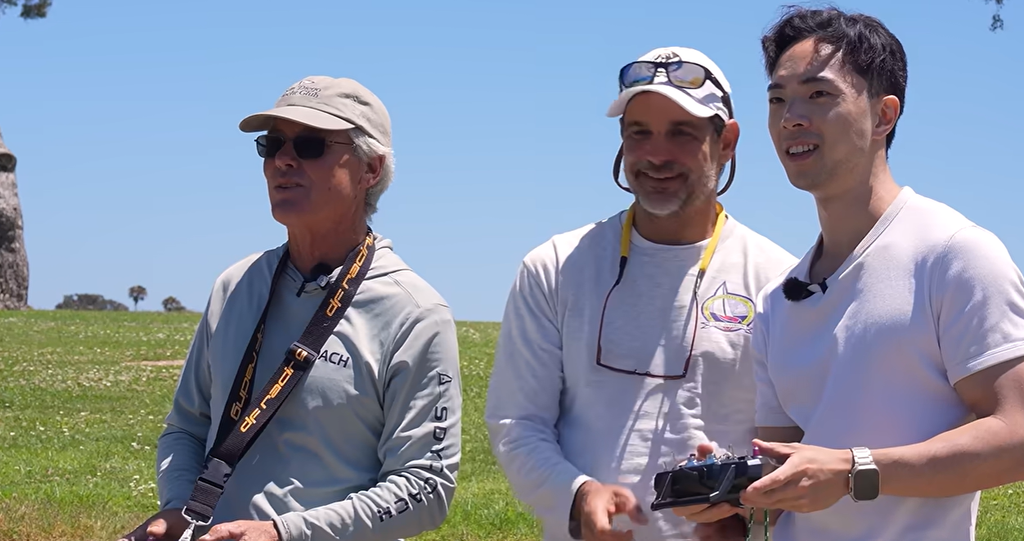
San Diego Argonauts members Jon Rogers & Kerim Baran gives Hafu a quick introduction to the controls and explains some basic sailing concepts—including tacking, jibing, sail trim and how to recover when a sailboat gets caught “in irons.”

Hafu then takes control of Kerim’s bright-green DF95 and races against longtime sailor and fellow Argonaut Jon Rogers, who tells him he has been sailing for 49 years.

With Kerim coaching from the shore, Hafu learns remarkably quickly. Jon even introduces him to a little sailboat-racing strategy by attempting to block his wind. Hafu ultimately crosses the finish first—although, as he readily admits in the video, Jon may have helped make that victory possible!

The short sequence offers millions of viewers a fun and approachable introduction to radio sailing. It demonstrates that these boats are not simply toys: they require an understanding of wind, strategy, boat handling and racing tactics.

A Submarine Beneath the Pond

The video then moves below the surface with a Thunder Tiger Neptune RC submarine, demonstrated by submarine expert Bob Martin of Nautilus Drydocks.

Bob explains how the submarine’s ballast system takes in water to make the vessel heavier and dive, then expels the water to become buoyant and return to the surface.

As the submarine slowly disappears beneath the pond, Hafu comments on how peaceful and fishlike it looks. Bob agrees that operating an RC submarine can be a surprisingly relaxing experience.

It is a wonderful demonstration of another fascinating corner of the model-boating world—one that combines craftsmanship, electronics, radio systems, propulsion, buoyancy and careful underwater navigation.

Museum-Quality Bismarck

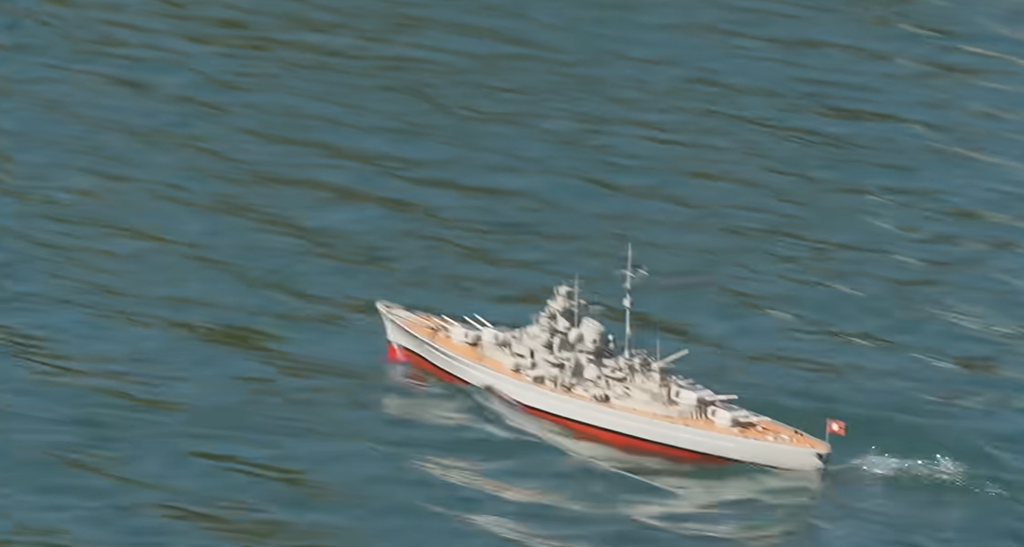
The scale-model side of the hobby is represented by another Argonaut and his highly detailed RC model of the German battleship Bismarck.

Hafu explains that scale modeling is not primarily about achieving the greatest speed. Instead, the goal is to reproduce a real vessel with as much accuracy and detail as possible.

The Bismarck glides across the pond while the camera captures its intricate fittings and realistic appearance. Mateo describes it as looking like a museum piece—and Hafu readily agrees.

For viewers who may associate RC boating only with small, fast powerboats, this segment provides a glimpse into the historical research, patience and model-building skill involved in producing a fine-scale vessel.

Robin’s One-of-a-Kind Hovercraft

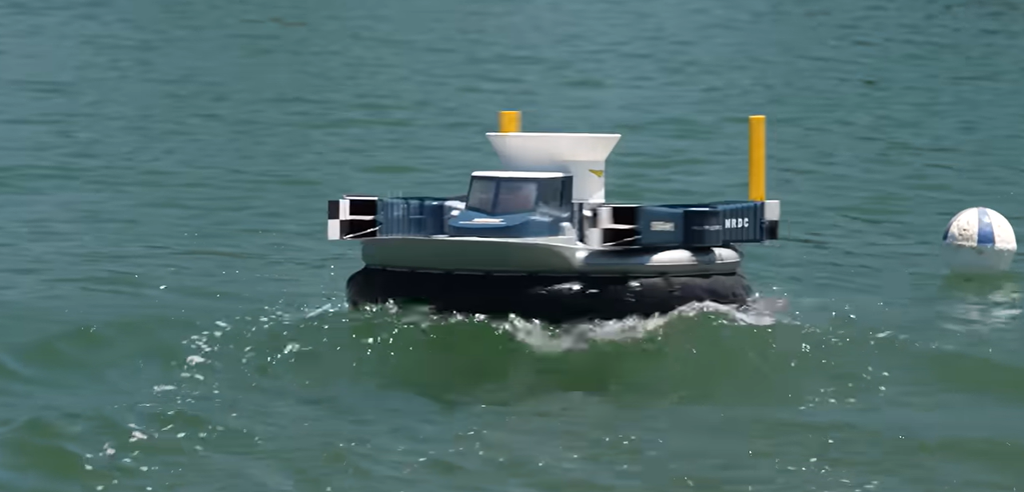
Perhaps the most unusual San Diego Argonauts vessel in the entire video is Robin Cahill Simpson’s custom-built hovercraft.

The model is approximately one-tenth scale and is based on the first full-sized hovercraft to cross the English Channel. Robin explains that the project took approximately two or three years to build, followed by another year of solving technical problems and getting it to operate properly.

The result is spectacular.

The hovercraft travels across the pond on a cushion of air, transitions onto land and even performs a spin for the camera. Hafu describes it as looking like a UFO and calls it one of the coolest vessels in the video.

It is believed to be the only operating model of its kind in the world—a wonderful example of the ingenuity, perseverance and craftsmanship found within the San Diego Argonauts.

More Than Boats: Sharing the Hobby With a New Generation

The video is entertaining, energetic and often very funny. But for organizations such as the San Diego Argonauts and all American Model Yachting Association (AMYA) Clubs, it also illustrates something important.

Millions of people—especially young people—may never have seen a competitive RC sailboat, an operating scale warship, a functional RC submarine or a scratch-built hovercraft. A single well-produced YouTube video can introduce the hobby to an audience far larger than any club could reach through a traditional event or advertisement.

In this instance, Hafu Go found the San Diego Argonauts. His team was searching for interesting boats and knowledgeable people, and our members were delighted to welcome them to the pond, provide vessels and help bring the production to life.

But this same opportunity may exist for many other AMYA and model-boating clubs.

There are thousands of YouTube, TikTok, Instagram and other digital creators looking for unusual stories, visually interesting machines, talented builders and authentic experiences. Model-boating clubs have all of those things—as well as colorful personalities, remarkable history and members who love sharing what they know.

Clubs do not necessarily need to wait to be discovered. They can identify creators in their regions, invite them to a sailing day, offer them an opportunity to operate a boat, introduce them to an experienced builder or arrange a friendly race. The strongest collaborations allow creators to tell the story in their own style while club members provide the knowledge, equipment and welcoming environment that make the experience possible.

One creator visit could introduce radio sailing and model boating to hundreds of thousands—or even millions—of potential new enthusiasts.

Welcome to Our Pond

We congratulate Hafu Go and his team on the release and thank them for visiting the San Diego Model Yacht Pond. We also thank the San Diego Argonauts members and other model-boating experts who contributed their time, knowledge and extraordinary vessels to the production.

For our club, it was a memorable day at the pond. For viewers around the world, we hope it will be an invitation to discover the creativity, engineering, camaraderie and sheer fun of model boating.

And for our fellow AMYA clubs, perhaps it will inspire the next great collaboration.

Sometimes the best way to grow our hobby is simply to place a transmitter in someone’s hands—and let the wind, the water and the boats do the rest.

🎙️Argonauts Radio – Episode 14: Are Marbleheads Making a Comeback?

Are Marbleheads making a comeback?

In the latest episode of San Diego Argonauts Radio, Commodore Jess Atkinson sits down with Bruce Andersen, U.S. Marblehead Class Secretary and Chairman of the International Radio Sailing Association (IRSA), for a fascinating conversation about one of the oldest, fastest, and most technologically advanced classes in radio sailing.

Also available on Apple Podcasts:
https://podcasts.apple.com/us/podcast/marbleheads-are-making-a-comeback-trend-or-here-to-stay/id1874110517?i=1000779643020

The Marblehead has a history stretching back nearly a century. Originally developed in Marblehead, Massachusetts, the class evolved from free sailing to vane sailing and eventually radio control. Today’s Marbleheads bear little resemblance to those early boats. At 50 inches long with 800 square inches of sail, modern Marbleheads are lightweight, carbon-fiber, deep-keel racing machines capable of remarkable acceleration and speed.

As Bruce puts it, if tightly controlled classes such as the IOM and DragonForce are the NASCAR of radio sailing, the Marblehead is Formula One.

Jess and Bruce explore the evolution of the class—from the home-built boats that once dominated American radio sailing, through legendary designs such as the Scalpel, to today’s extremely narrow and sophisticated Grunge and Red Ant designs.

They also discuss why Marblehead racing declined in the United States as sailors migrated toward the more easily transported IOM and, later, the DF classes—and why that trend may now be starting to reverse.

New fleets and renewed interest are appearing on both coasts, with experienced IOM sailors increasingly adding Marbleheads to their boat sheds. Regattas are beginning to combine IOM and Marblehead racing, and the Marblehead will be one of the featured classes at San Diego Argonauts Race Week 2027.

And there is a reason sailors keep coming back to them.

They are fast.

Really fast.

Modern Marbleheads feature sophisticated rigs—including their distinctive swing rigs—and acceleration unlike almost anything else in radio sailing. As Jess describes it, sheet in the sail and the boat can take off “like a rocket.”

Bruce and Jess also talk about how newcomers can get involved. Their advice is simple: don’t buy one first—sail one. Come to a Marblehead regatta, introduce yourself, and chances are someone will happily put a transmitter in your hands.

Also in this episode, Jess gives a big shout-out to everyone who helped make the 2026 San Diego Argonauts Open House such a successful “party at the park,” and wraps up with results and highlights from recent ODOM, DF95, and IOM points racing at the Mission Bay Model Yacht Pond.

If you’ve ever wondered why Marblehead sailors become so enthusiastic about these extraordinary boats—or you’re simply curious about the history and evolution of high-performance radio sailing—this is an episode you’ll want to hear.

Are Marbleheads simply enjoying another moment in the spotlight, or are they truly making a comeback?

Give the episode a listen and decide for yourself.

🎪 SDA OPEN HOUSE 2026: A Fantastic Day

Our 2026 San Diego Argonauts Open House is in the books, and what a day it was!

First and foremost, thank you to everyone who volunteered, brought boats, shared their expertise, cooked food, helped with setup and cleanup, or simply spent time welcoming visitors. This event was a tremendous success because of you.

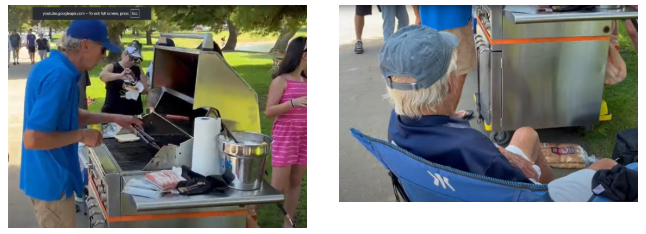
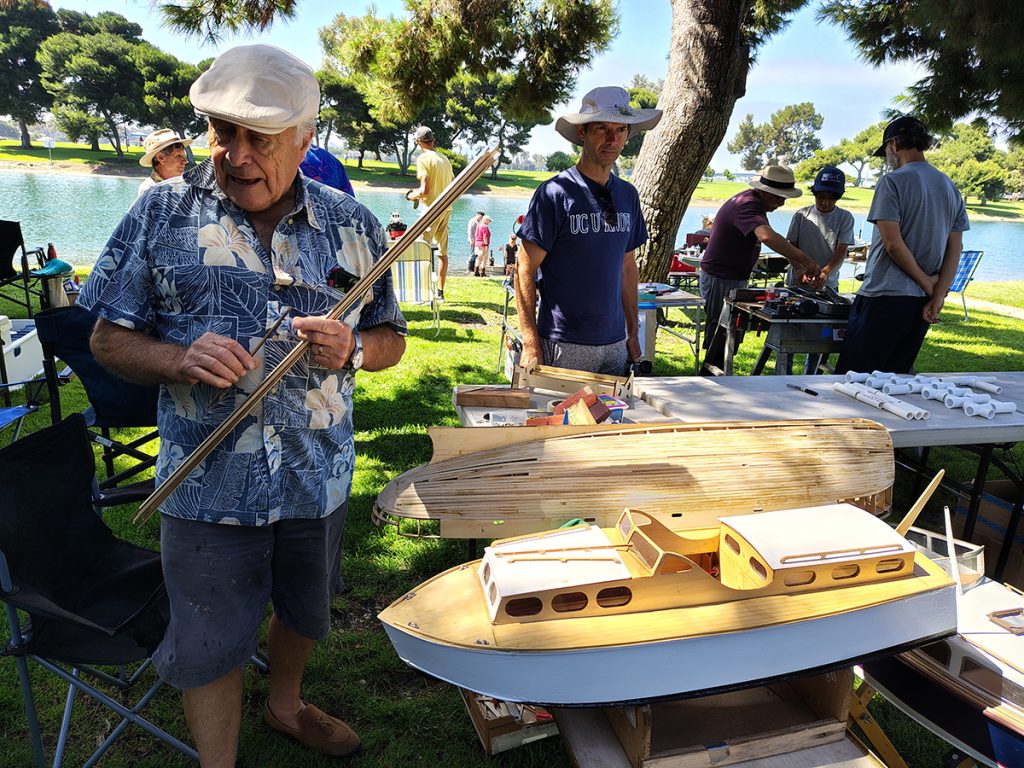
One of the most rewarding aspects of the day was seeing approximately one-quarter of our membership come together to make it happen. Members displayed their boats, taught newcomers how to sail, staffed STEM and Maker exhibits, answered countless questions, cooked lunch, hauled equipment, and made every visitor feel welcome.

The atmosphere at the pond was fantastic from start to finish.

Hundreds of Hands-On Experiences

Throughout the day, visitors had the opportunity to explore nearly every aspect of our hobby.

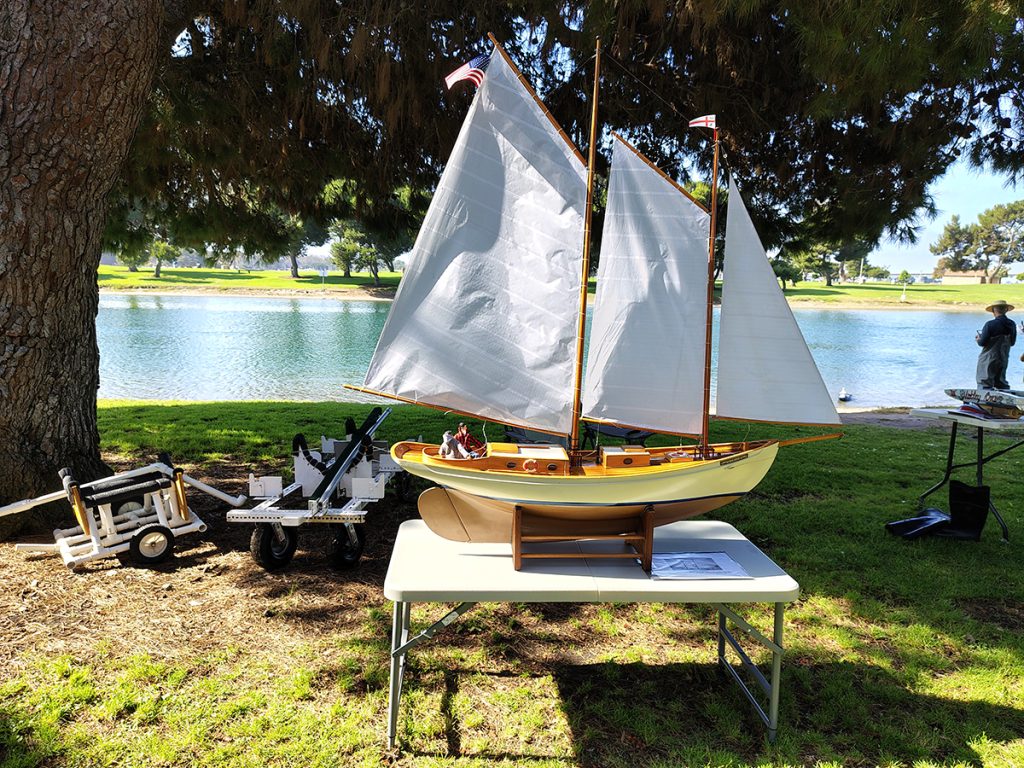
Beautiful sailboats, scale models, and power boats were on display, while many guests took the controls of an RC sailboat for the very first time.

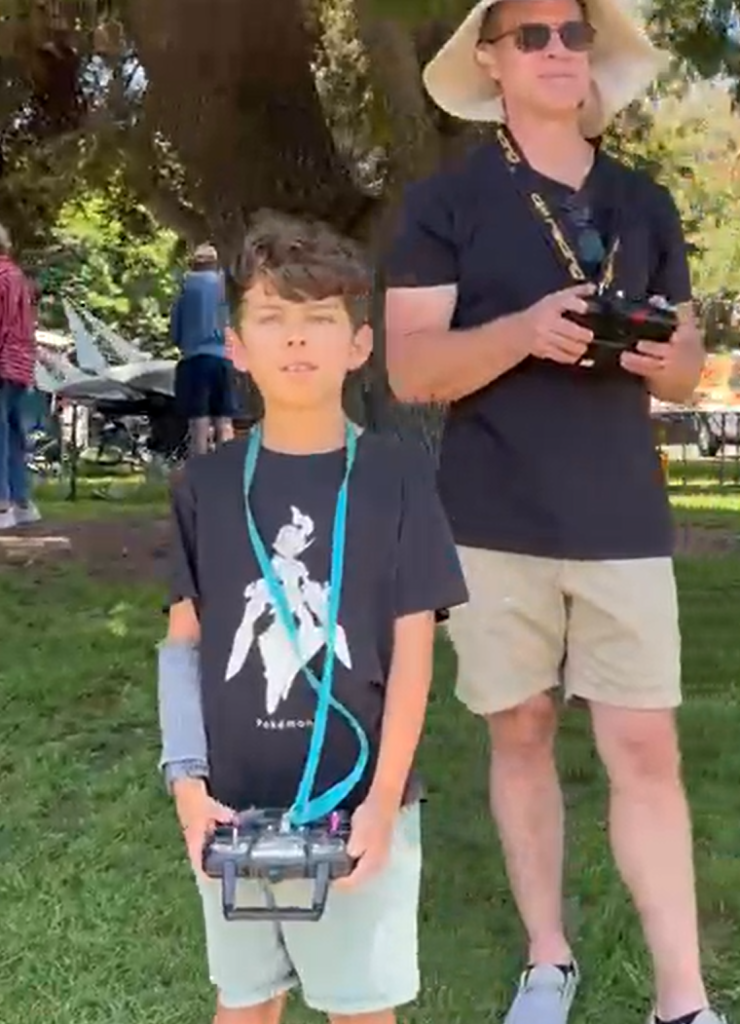
One of the highlights was watching children—and plenty of adults—go from never having touched an RC sailboat to confidently sailing upwind in just 10 to 15 minutes.

It’s always exciting to see how quickly people discover that RC sailing is both approachable and incredibly rewarding.

STEM & Maker Faire Activities

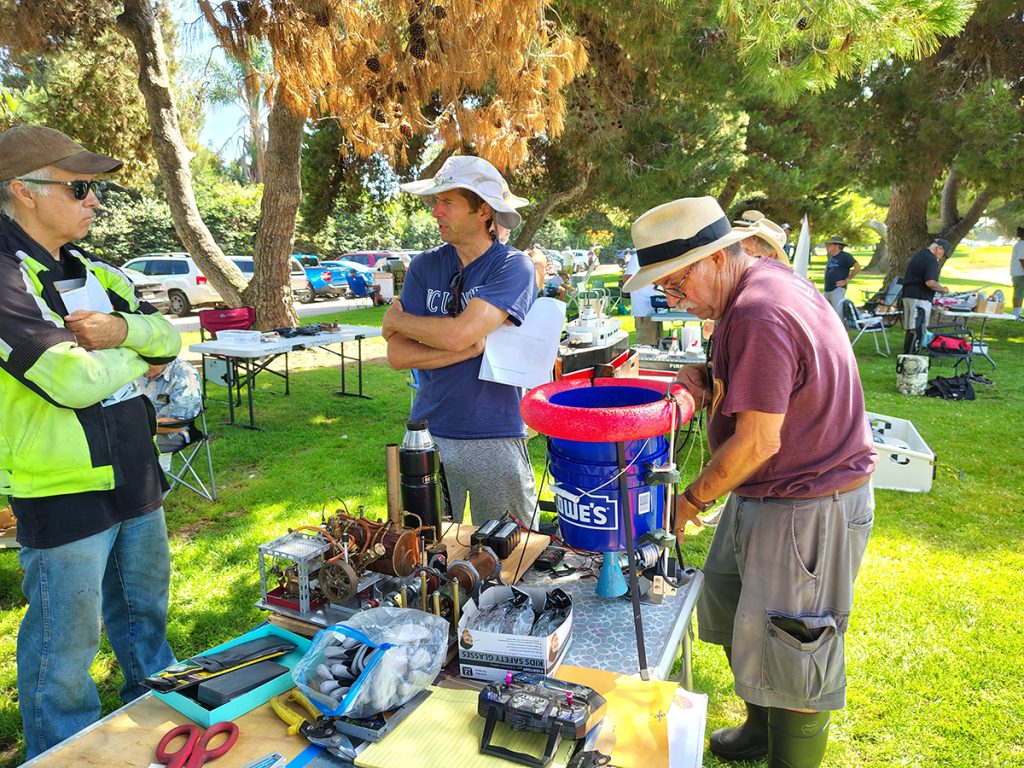
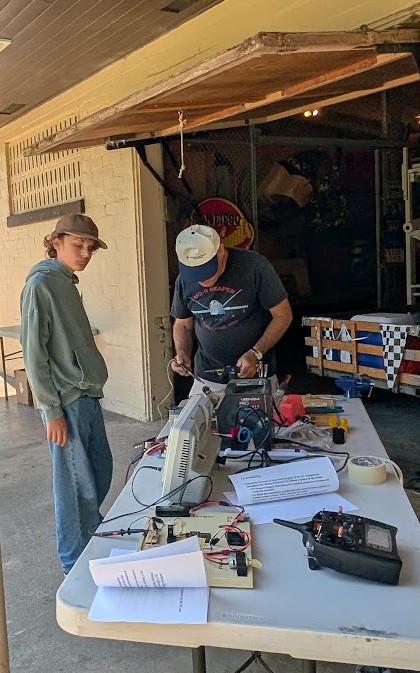
A special thank-you goes to Jeff Sparksworthy, Rob Wood, Robin Cahill Simpson, and Steve Delva, who created and staffed our STEM and Maker Faire tables.

Visitors explored topics including:

– Electronics and batteries
– Radio control systems
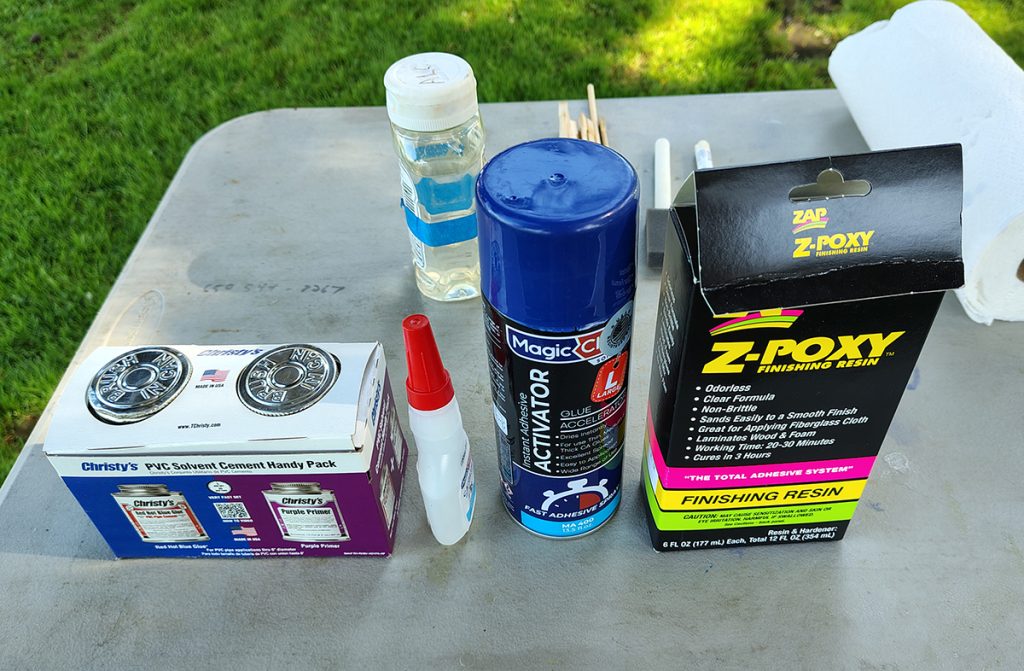
– Glues and adhesives
– Fabrication techniques
– Building methods and tools

These hands-on exhibits sparked countless conversations and demonstrated that our hobby is much more than simply sailing boats—it’s a wonderful blend of engineering, craftsmanship, creativity, and lifelong learning.

Thank You to Our Volunteers

It’s always risky to start naming names because someone deserving is inevitably forgotten, but several members deserve special recognition.

  • Bob and Gil kept everyone well fed with the famous BobDogs.
  • Bill Bridge quietly handled countless behind-the-scenes tasks, including bringing coolers and helping with cleanup.
  • John Scripps made the pizza run happen.
  • Jess Atkinson, Pat Nevitt, and Tom Warren spent much of the day greeting visitors, answering questions, and representing the club.
  • Jon Rogers, Dennis Rogers, Gil, John Scripps, Keith, Steve Ross, Ben, Tom, Pat, and many others generously handed over transmitters and patiently taught visitors the basics of RC sailing throughout the day.

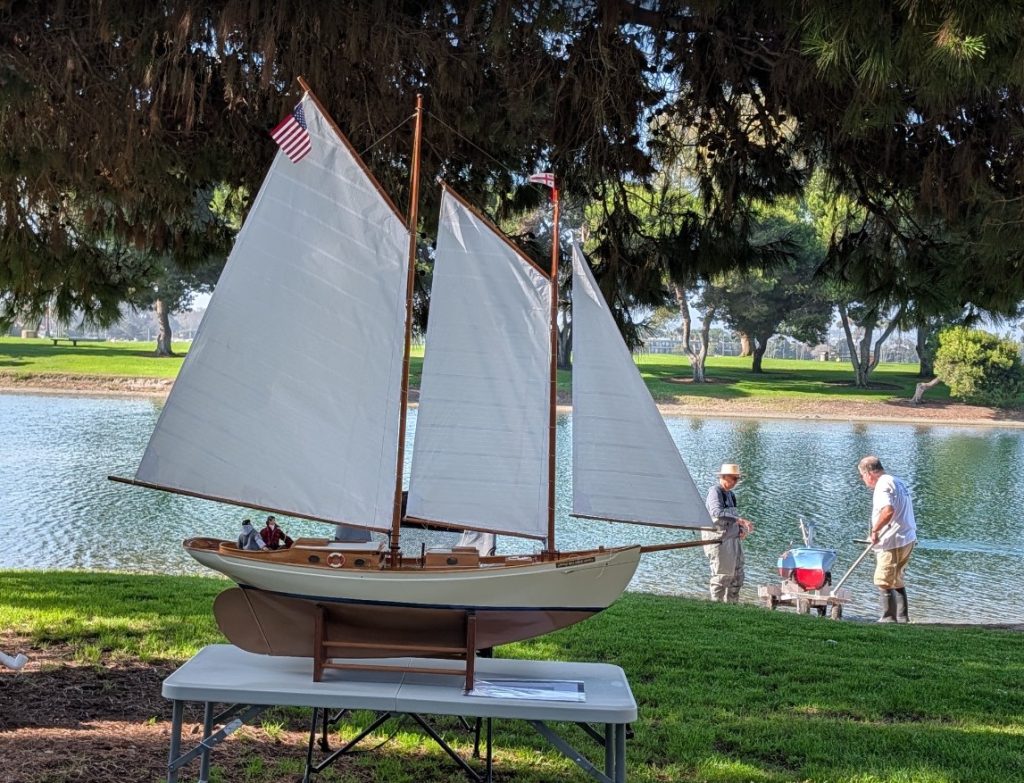
Special recognition also goes to Pat Nevitt and Dave Endert for bringing their beautiful schooners, which attracted plenty of attention.

Looking Toward the Future

One particularly exciting outcome was the attendance of two local high school teachers, who expressed genuine interest in partnering with the San Diego Argonauts on future STEM education programs. They experienced firsthand how RC boats can inspire students to learn about engineering, physics, electronics, and teamwork, and we’re looking forward to continuing those conversations.

Another idea that emerged throughout the day was to host similar events several times each year. Rather than limiting ourselves to one annual Open House, we’d like to organize periodic “Learn to RC Sail“ days focused simply on introducing newcomers to this wonderful hobby.

Thank You!

Finally, thank you once again to every member who helped make this event such a success.

As several members said afterward, this truly was an “Outstanding day at the pond.” The enthusiasm, generosity, and willingness to share our hobby with others reminded all of us what makes the San Diego Argonauts such a special club.

If you took photos or videos during the event, please send us a few of your favorites—we’ll continue updating this recap as more memories from the day come in.

We can’t wait to do it again!

More photos from the day:

🎙️Argonauts Radio – Episode 13: Conversations about our growing STEM outreach efforts

Can High School Robotics Students Change the Future of Radio Sailing?

In Episode 13 of San Diego Argonauts Radio, Commodore Jess Atkinson sits down with Kerim Baran and Jeff Sparksworthy to discuss one of the club’s most exciting new initiatives: bringing high school students, STEM education, and maritime robotics together at the San Diego Model Boat Pond.

Also available on Apple Podcasts:
https://podcasts.apple.com/us/podcast/can-high-school-robotics-students-change-the-future/id1874110517?i=1000777517603

The conversation covers:

  • ⚓ Our recent High School Maritime Robotics & STEM Workshop Day
  • 🤖 The vision behind the upcoming RoboBuoy Challenge, where students will design and build radio-controlled (and eventually autonomous) robotic buoys
  • 🛠️ The five hands-on maker stations that introduce students to electronics, radio systems, adhesives, metalworking, and basic fabrication skills
  • 🏫 Partnerships with local high schools and the long-term goal of creating semester-long STEM and robotics programs centered around marine technology
  • 🌊 Reviving the historic connection between San Diego schools and the Model Boat Pond—while inspiring the next generation of engineers, builders, sailors, and innovators.

The episode also previews our August 1st Open House, where the public can experience these STEM activities firsthand, learn to sail RC boats, and discover everything the San Diego Argonauts has to offer.

🎧 Listen now and learn how today’s students could help shape the future of model boating!

🎪 OPEN HOUSE: RC Sailing & Boating Open House Event! (Aug 1st, 2026)

Join us for a day of fun

Join us for a free, hands-on community event where you can experience the thrill of radio-controlled boating & sailing in an inclusive & friendly environment at the San Diego Model Boat Pond.

Whether you are a competitive sailor, weekend hobbyist, part of a sailing team, or simply curious about scale boats, this event welcomes everyone to grab a transmitter and try RC Boating!

Here’s what to expect:

* Hands-On Experience – Argonauts members will hand you the control of their own scale boats & sailboats.
* Fun Mini-Courses – Short courses set up for casual mini-races, practice maneuvers, and casual boating.
* Maker Faire–Style Learning Tables – Visit interactive stations where Argonauts members share their know-how on topics such as:
– Boat Building & Repairs (Cutting, drilling, filing, etc.)
– Basic Circuits & Connections
– RC Electronics & Batteries
– Glues, Adhesives & Assembly Techniques
– Radio Programming & Control Systems
* Free Food & Community Vibes – Picnic-style pizza & hot dogs for all who RSVP by July 29th via Eventbrite at modelboats.eventbrite.com

When & Where:

When: Saturday, Aug 1st, 2026 (10:00 AM to 3:00 PM)
Where: San Diego Model Boat Pond, Mission Bay Park
Cost: Free – Just show up and play!

Come learn, compete, or just play around on the water — no prior RC experience is needed.

Bring your curiosity (and maybe a friend), and let the San Diego Argonauts show you what RC boating & sailing is all about.

Questions? Email [sdargonauts@gmail.com] or visit www.sandiegoargonauts.org

⚓ High School Maritime Robotics & STEM Workshop Day (July 7th, 2026)

Update (July 2026):

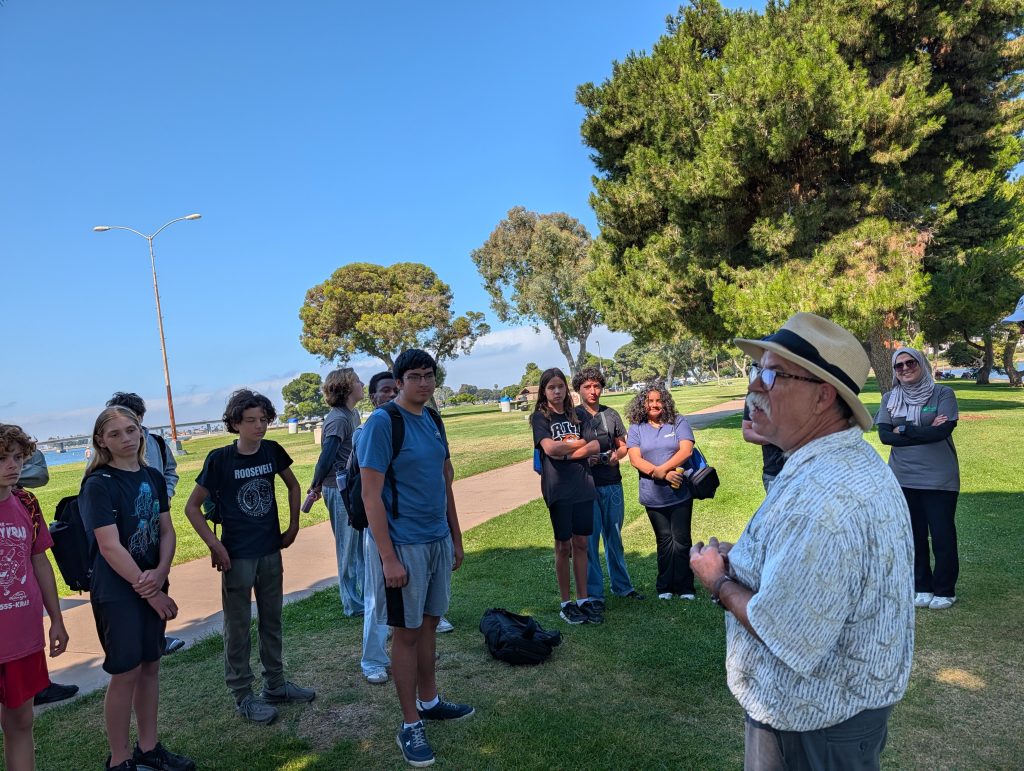
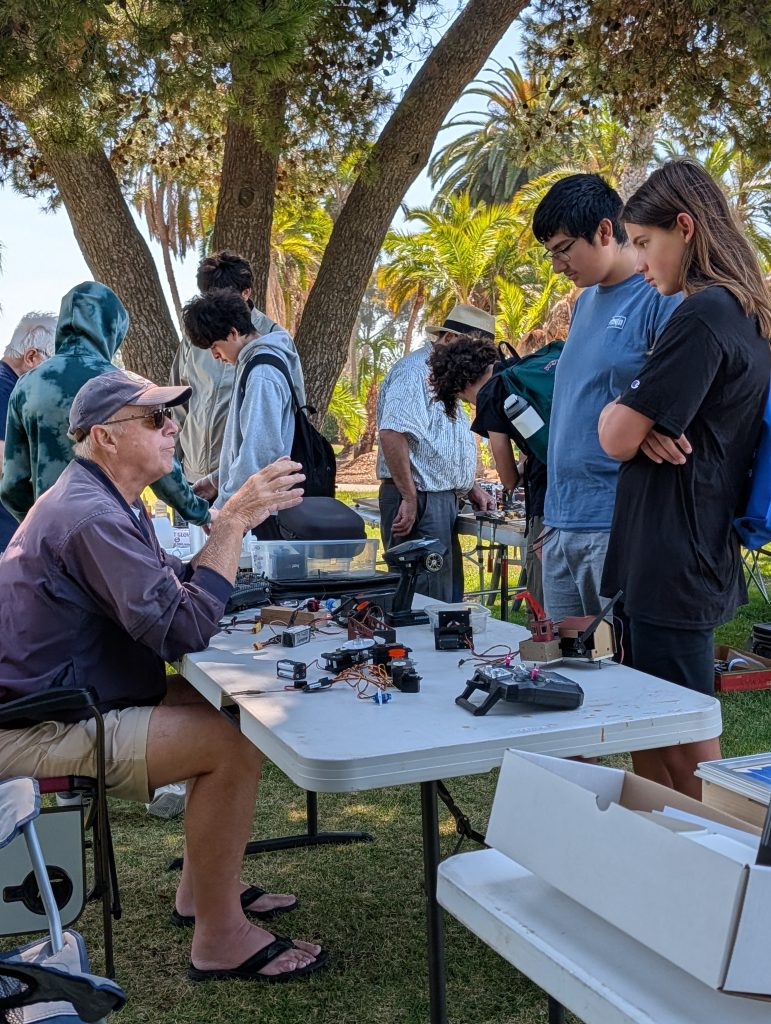
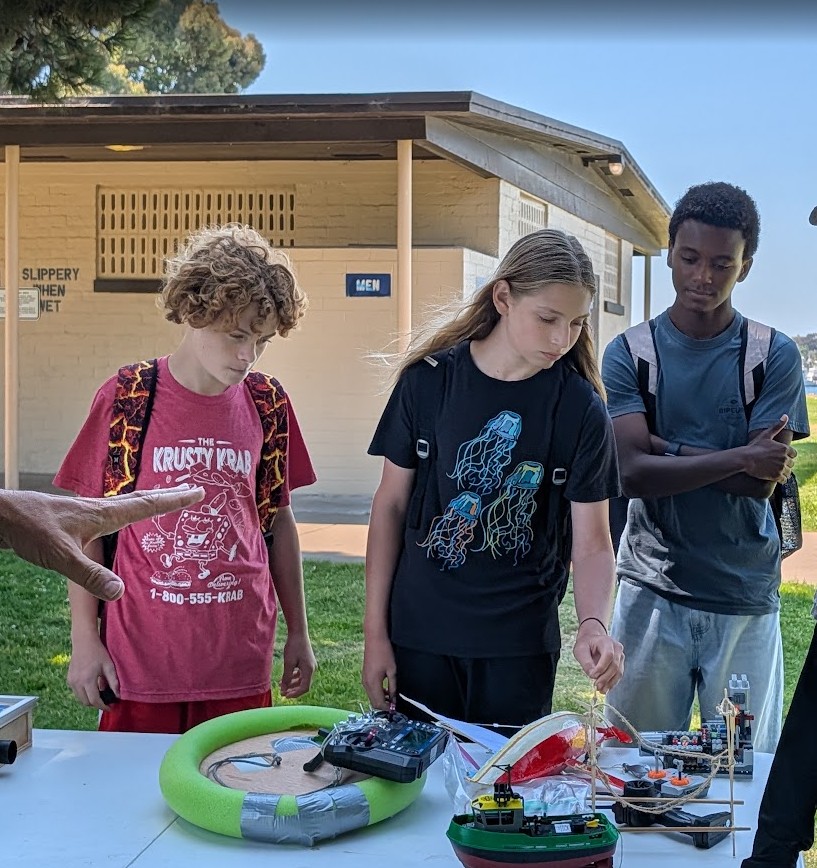
Our first High School Maritime Robotics & STEM Workshop was a great success! Approximately 15–20 students joined San Diego Argonauts mentors for a hands-on introduction to our five STEM learning stations, covering basic circuits & connections, electronics & batteries, glues & binders, radio programming & control systems, and cutting, filing, drilling & tapping. Students also had the opportunity to learn the basics of sailing with our radio-controlled sailboats.

Check out the photos and videos below to see the students in action!

We’re excited to build on this momentum by partnering with local high schools during the upcoming school year to expand our Maritime STEM program, including developing Robo-Buoys and other exciting hands-on engineering projects.


⚓ High School Maritime Robotics & STEM Workshop Day (July 7th, 2026)

Tuesday, July 7, 2026
10:00 AM – 1:00 PM
Mission Bay Model Boat Pond Clubhouse

The San Diego Argonauts are pleased to host our first High School Maritime Robotics & STEM Workshop Day, bringing together educators, mentors, engineers, makers, and experienced builders to explore hands-on skills that can support future maritime robotics and STEM programs for local high schools.

This workshop is part of a broader initiative to expand practical, project-based STEM education opportunities centered around marine technology, robotics, engineering, electronics, fabrication, and model boating.

The July 7 workshop represents the first step in what we hope will become an ongoing program that includes:

  • The development of the RoboBuoy Challenge, a new maritime robotics competition currently being designed for the 2026-2027 school year.
  • A Mentor & OPEN HOUSE Day on August 1, 2026, where students, parents, teachers, engineers, and potential mentors can learn more about model boating, maritime engineering, robotics, and future STEM opportunities at the pond.
  • Continued collaboration with local schools, educators, industry professionals, universities, and STEM organizations throughout San Diego County.

Our goal is simple: create a pathway that allows students to progress from learning basic technical skills, to building increasingly sophisticated maritime robotics projects, and ultimately to competing in a fun, educational, and highly practical engineering challenge.

The proposed RoboBuoy Challenge will encourage students to design, build, and operate autonomous and remotely controlled marine systems while developing real-world skills in engineering, electronics, fabrication, programming, communications, project management, and teamwork.

July 7 Workshop Overview

To support these future activities, participants will rotate through five instructional stations led by experienced Argonauts members and subject matter experts.

Table 1 – Basic Circuits & Connections

Instructor: Robin Cahill Simpson (or TBD)

Teaching Goals

  • Learn basic circuitry
  • Electrical safety
  • Grounding
  • Switching
  • Fusing
  • Metering

Activities

  • Create a basic switched circuit with fuse
  • Solder wire-to-wire and wire-to-connector connections
  • Test circuit operation and switching
  • Learn safe electrical practices and troubleshooting techniques

Table 2 – Batteries

Instructor: Ed Syres (or TBD)

Teaching Goals

  • Understand battery types
  • Learn charging methods and best practices
  • Understand series and parallel configurations
  • Learn common connection types
  • Discuss usage, charging, and storage safety
  • Explore waterproofing considerations

Activities

  • Compare battery packs wired in series versus parallel
  • Test and measure battery voltages
  • Demonstrate proper battery handling and connection techniques
  • Review connectors commonly used in robotics and marine applications

Table 3 – Glues & Binders

Instructor: Rob Wood (or TBD)

Teaching Goals

  • Understand different adhesive types
  • Learn where each adhesive performs best
  • Discuss safety considerations
  • Learn proper curing and setting techniques

Activities

  • Bond plastic-to-plastic materials
  • Bond acrylic and plexiglass components
  • Work with ABS and PVC materials
  • Explore epoxy applications
  • Learn clamping techniques
  • Discuss forms, jigs, and curing times

Table 4 – Control Systems

Instructor: Kurt Sellens (or TBD)

Teaching Goals

  • Gain familiarity with basic radio-control systems
  • Understand motor control systems
  • Learn about servos, receivers, and speed controllers
  • Explore mechanical linkage systems

Activities

  • Connect and bind a radio transmitter to a receiver
  • Add and test servos
  • Configure speed controllers
  • Demonstrate radio programming and control functions
  • Explore rudder and thruster linkages, pushrods, and turnbuckles

Table 5 – Cutting, Filing, Drilling & Tapping

Instructor: Jeff Sparksworthy (or TBD)

Teaching Goals

  • Gain familiarity with measuring and marking
  • Learn drilling and tapping techniques
  • Practice fabrication and finishing skills

Activities

  • Measure and mark a drilling location
  • Use a center punch
  • Drill a pilot hole in aluminum
  • Tap threads using an 8-32 tap
  • Practice filing techniques
  • Learn safe shop practices and proper tool usage

Building Maritime STEM in San Diego

The San Diego Argonauts believe that some of the best STEM education happens when students can design, build, test, troubleshoot, and improve real-world systems with their own hands.

By combining engineering, electronics, fabrication, programming, radio-control systems, autonomous technologies, and maritime applications, we hope to create engaging learning opportunities that inspire the next generation of innovators, engineers, scientists, and marine technologists.

The July 7 workshop is intended to bring together educators, mentors, and technical volunteers to help shape the future of maritime STEM education in San Diego.

If successful, this effort will continue with our Mentor & Open House Day on August 1, 2026, followed by the launch of the RoboBuoy Challenge during the upcoming school year.

We invite teachers, engineers, makers, mentors, students, and STEM supporters to join us as we work to build a unique maritime robotics program for San Diego’s next generation of innovators.

Related Programs

⚓ RoboBuoy Challenge (Coming 2026-2027 School Year)

The San Diego Argonauts are currently working with educators, engineers, and industry professionals to develop the RoboBuoy Challenge, a maritime robotics competition designed for high school students throughout Southern California.

The challenge will encourage students to apply engineering, electronics, programming, fabrication, navigation, and teamwork skills to solve real-world maritime robotics problems in a fun and competitive environment.

Learn more:

https://www.sandiegoargonauts.org/2026/05/02/%e2%9a%93-calling-san-diego-socal-robotics-stem-students

⛵ Mentor & Open House Day – August 1, 2026

Students, teachers, parents, mentors, and community members are invited to visit the pond, meet Argonauts members, learn about model boating, RC sailing, and maritime STEM opportunities, and explore ways to get involved.

The event will provide an opportunity for prospective students and mentors to learn more about the upcoming RoboBuoy Challenge and other educational initiatives being developed by the San Diego Argonauts.

Learn more:

https://www.sandiegoargonauts.org/2026/05/07/rc-sailing-boating-open-house-event-aug-1st-2026

We look forward to a productive and exciting day of learning, collaboration, and maritime innovation.

📺San Diego Argonauts on CBS News

A piece of fun news 🙂

The San Diego Argonauts were featured on CBS8 San Diego today!

CBS8 story on their website:
https://www.cbs8.com/article/news/local/zevely-zone/san-diego-argonauts-affordable-water-sport/509-d67e58f9-79ec-4434-a3a1-ebc6330861a7

On a related note:
The CBS8 crew helped promote our STEM/Robotics initiative for high school & college students involving GPS-guided robotic buoys and autonomous marine systems. If you know any students, robotics teams, or STEM advisors who might be interested, please send them our way!

More info here:
https://www.sandiegoargonauts.org/2026/05/02/%e2%9a%93-calling-san-diego-socal-robotics-stem-students/

⚓ Age of Sail Schooner Day (May 9, 2026)

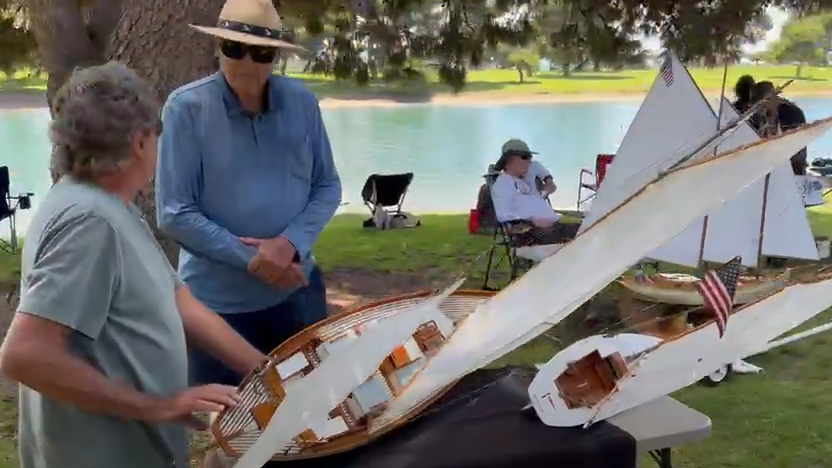
The San Diego Argonauts Scale Division held a beautiful “Age of Sail” gathering at the Mission Bay Model Boat Pond on May 9th, featuring an impressive collection of classic schooners and traditional sailing vessels.

Members brought out a variety of finely crafted scale sailboats inspired by the great Age of Sail era — from elegant schooners to detailed tall ship models — creating a scene that looked like a miniature historic harbor brought to life.

The combination of steady winds, detailed craftsmanship, and camaraderie made for a memorable day at the pond. Spectators and fellow members enjoyed watching the graceful sailing characteristics of these classic vessels as they navigated the water under full sail.

A special thank you to everyone who participated, helped organize the event, and shared their beautiful boats with the club and visitors.

Photo Gallery & Videos Below

Interested in scale model boating or RC sailing?

Come visit the San Diego Argonauts at the Mission Bay Model Boat Pond and learn more about our Sail, Scale, and Power divisions.

🔗 Membership information and upcoming events can be found on this page.