
What happens when more than half a century of family boatbuilding tradition meets modern 3D printing, miniature electronics, and a determination to make radio sailing simpler, faster, and more accessible?
You get MiniMax: a remarkably capable, 22-centimeter (about 8.5-inch) radio-controlled sailboat that can be printed, assembled, customized, and raced almost anywhere.
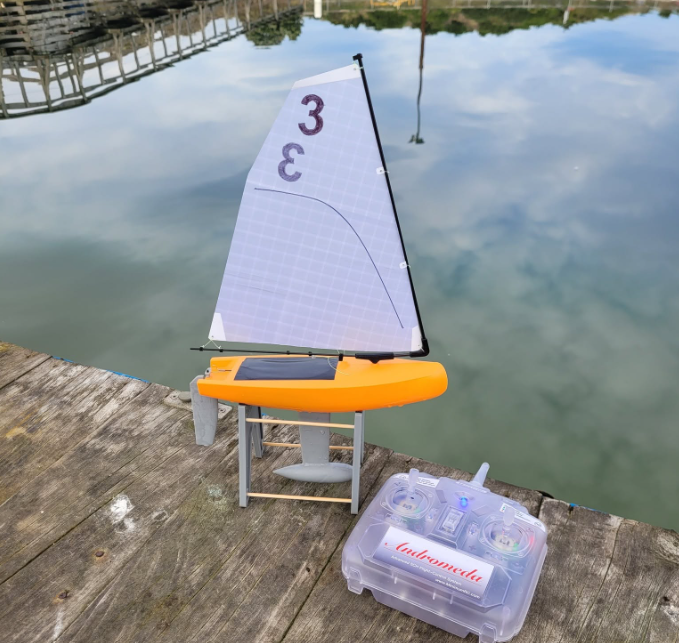
In this San Diego Argonauts conversation, Kerim Baran sits down with MiniMax creator Brett McCormack of Castlerock Yachtworks in Dunedin, New Zealand. Brett’s story begins with a childhood surrounded by yacht design and construction. His father designed and built boats — sometimes in the family living room — and Brett grew up drawing hulls, studying yacht design, building model boats from offcuts, racing dinghies, making sails, and eventually designing and constructing boats of his own.
That lifelong journey led through high-level dinghy sailing, fiberglass construction, International One Metre racing, commercial IOM production, and dozens of experimental Footy designs. One of those projects, Moonshadow, won every heat at an unofficial Footy World Championship. Years later, Brett began exploring what 3D printing could bring to small-scale sailing. His 22-centimeter free-sailing Ocean Mini provided the foundation for an even more ambitious question: How small could a genuinely exciting radio-controlled sailboat be?
MiniMax is Brett’s answer.
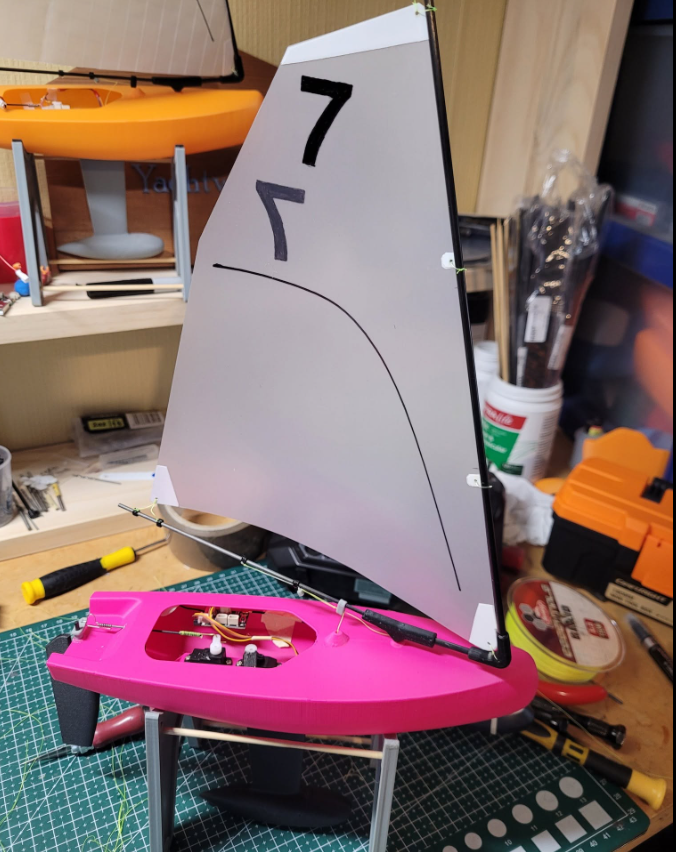
A perfect fit for the Argonauts’ school STEM mission
The timing of MiniMax’s launch could hardly be better for the San Diego Argonauts. SDA is expanding its collaboration with local high school STEM, engineering, and robotics programs, using radio-controlled sailboats and robotic race buoys to give students hands-on experience with design, fabrication, electronics, control systems, teamwork, and competition.
MiniMax fits that vision beautifully. Students can work with CAD and STL files, operate 3D printers, compare materials, install tiny servos and receivers, fabricate a keel ballast, build and tune a sail rig, manage a strict weight budget, and then test their decisions on the water. It is a complete engineering project that ends not on a classroom shelf, but on a racecourse.
For a school building a fleet and sharing transmitters among teams, the San Diego pilot budget discussed in the conversation puts each completed boat in roughly the $60–$70 range. Individual hobbyists buying small quantities of every component may spend more, but the project remains unusually affordable for a true two-channel RC sailboat.
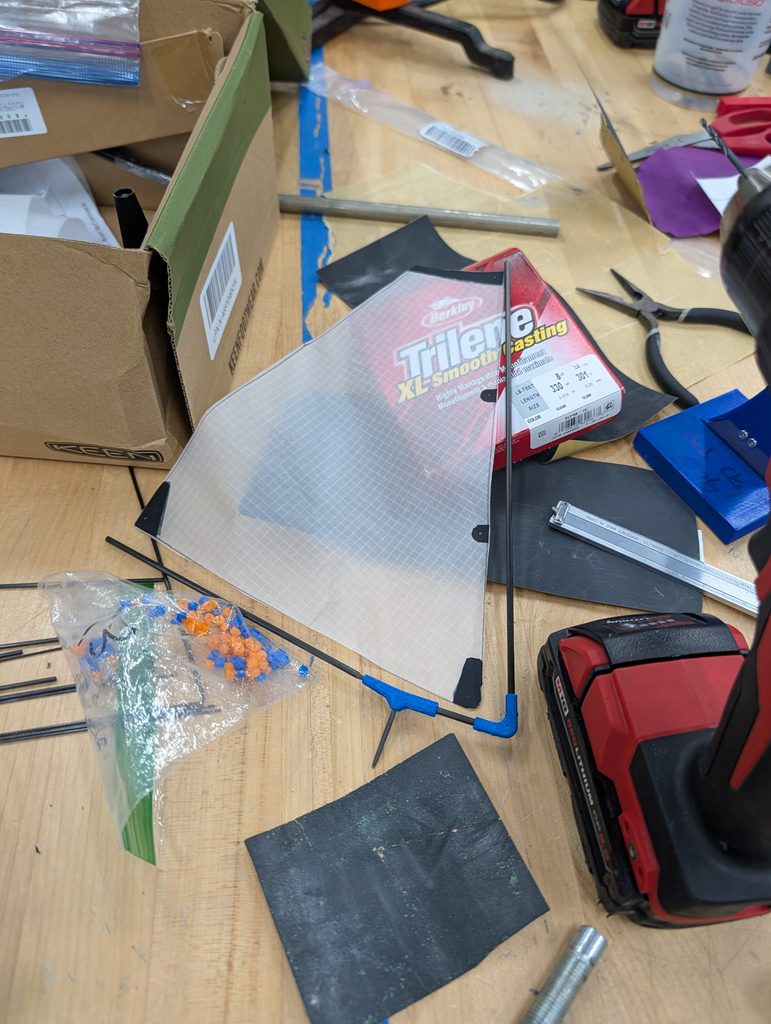
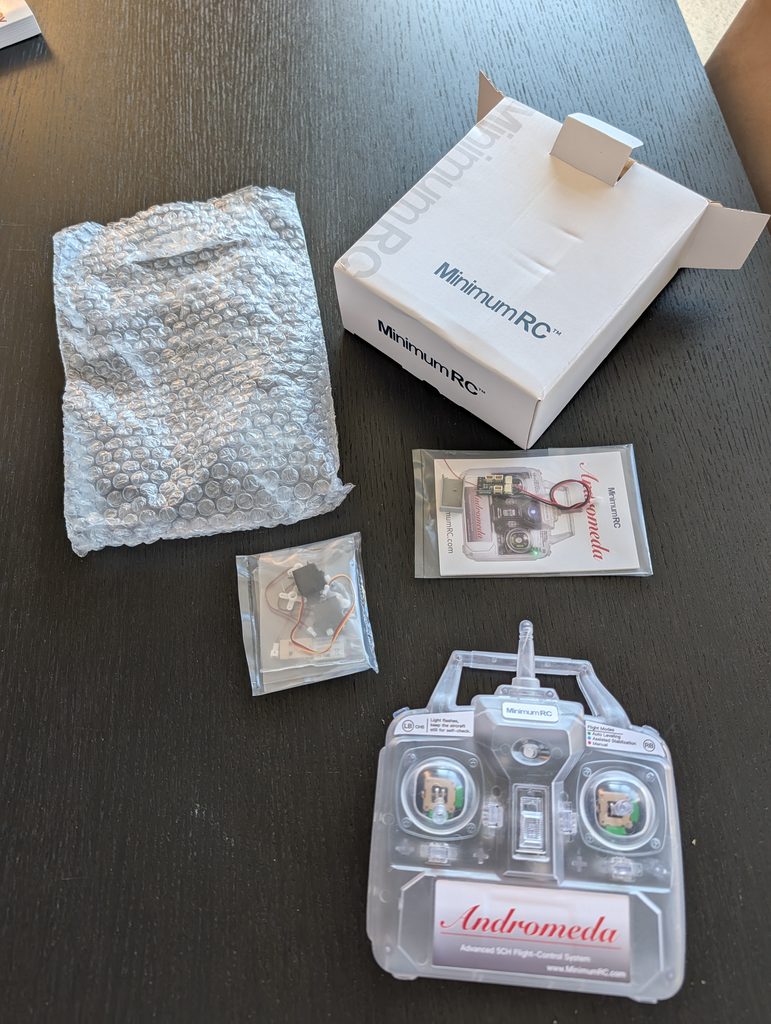
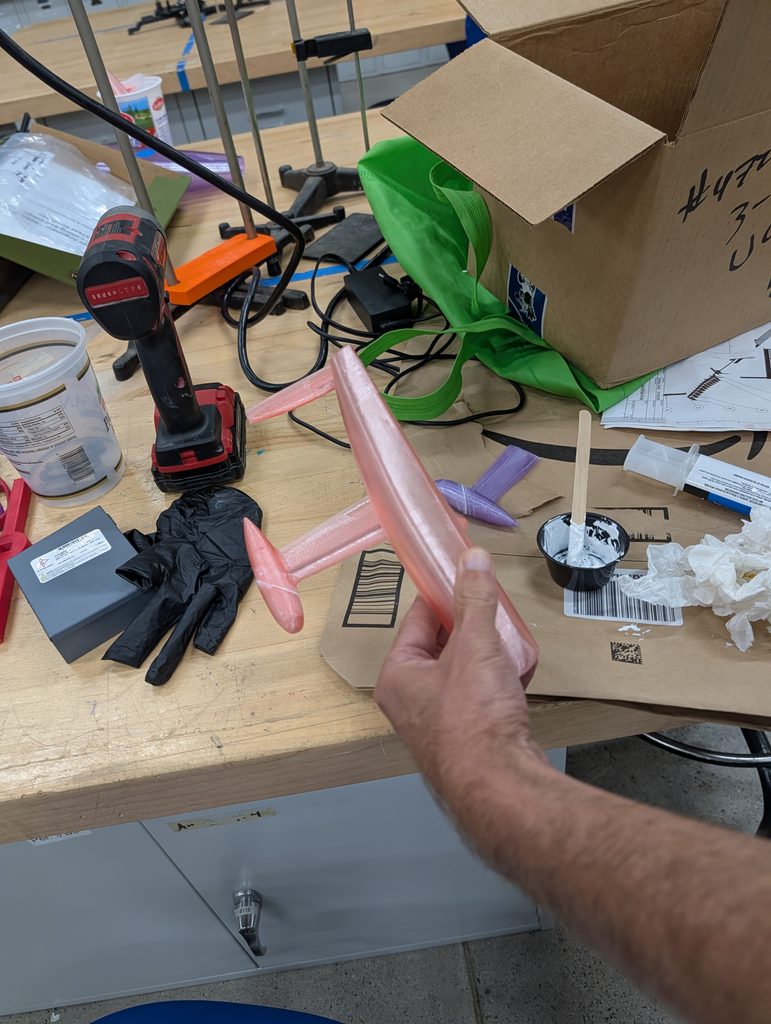
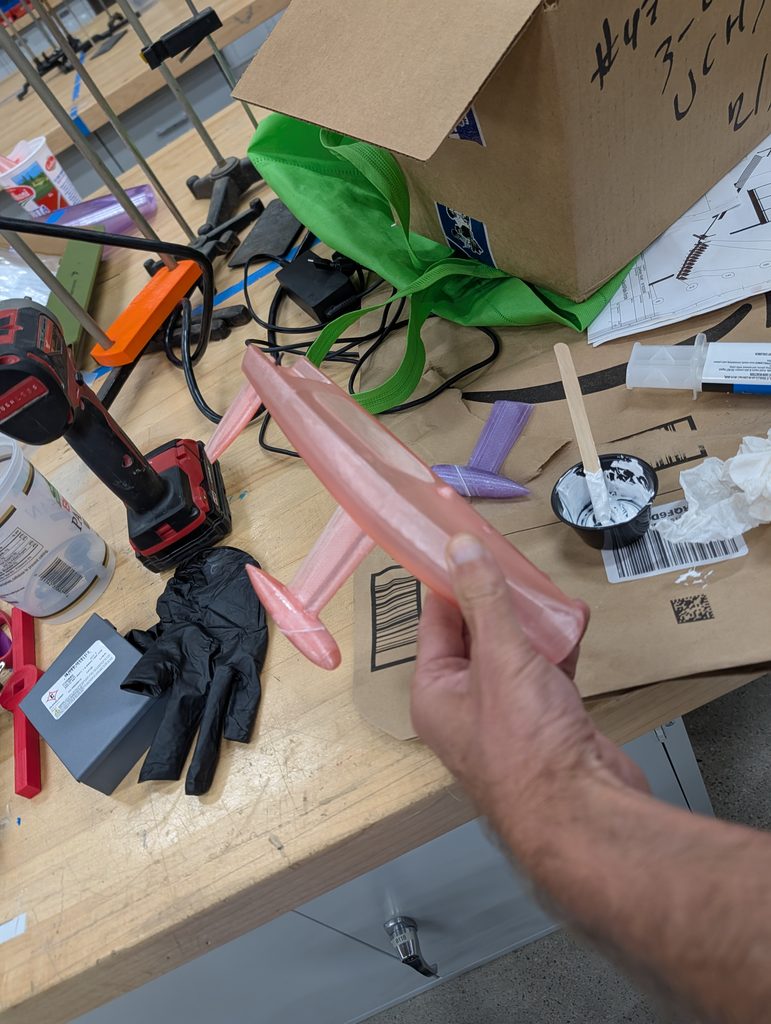
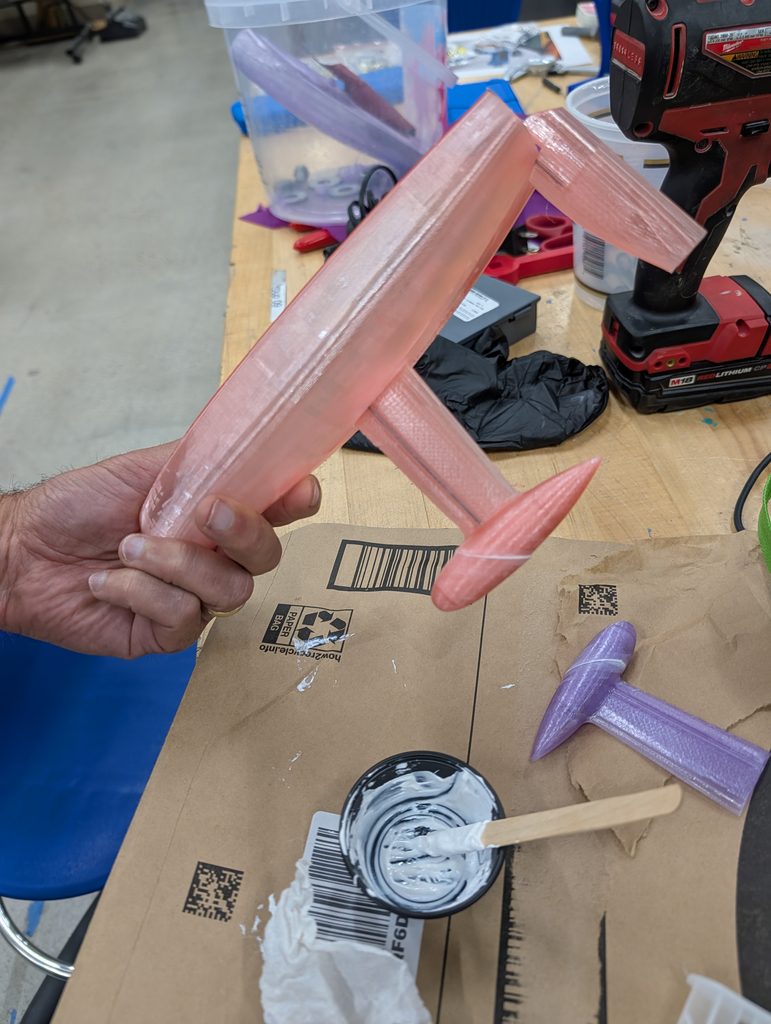
Small enough to print. Serious enough to sail.
MiniMax weighs about 120 grams and uses an entire radio system — two servos, receiver, and battery — weighing only about 11 grams. Those numbers create tight design constraints. The boat needs tiny 2-gram servos, a healthy ballast ratio, carefully selected materials, and an efficient rig capable of delivering real performance with very little weight.
The hull and most parts can be printed in PLA+ or PETG, while flexible TPU is recommended for several small rig fittings that need to move yet hold their adjusted position. The full set of parts typically takes approximately five to six hours to print, depending on the machine. Once the parts and materials are ready, Brett estimates about three hours for careful assembly and tuning.
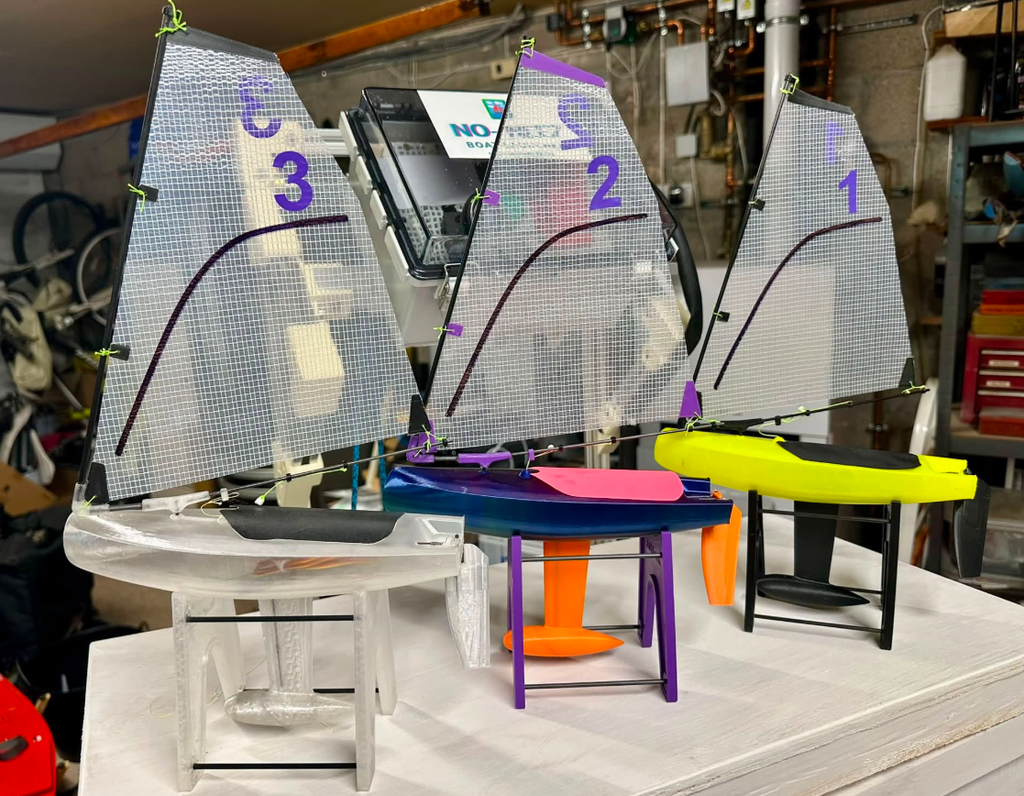
The work is small and precise. On a MiniMax, a quarter-millimeter adjustment can matter. Brett says one of the most important assembly jobs is getting the rudder linkage exactly right. Yet the overall project has an unusually high completion rate because the printed parts locate and fit together as intended. Brett can send someone the files and, two days later, see that person’s new boat sailing online.
From digital file to global one-design class
There are several ways to get started. Builders with access to a 3D printer can purchase the STL license and print their own parts. Kits or printed components are also becoming available through licensed suppliers in different regions, including the United States, United Kingdom, and European Union.
The distributed production model is one of MiniMax’s most interesting innovations. Instead of shipping every boat around the world from New Zealand, the same one-design boat can be manufactured locally from Brett’s files. That reduces shipping costs and international friction while keeping the boats substantially identical.
Purchasing the files is also more than a simple download: it registers the owner as a member of the MiniMax class. Brett maintains a register of licensed owners, and design updates are provided to them.
As of the recording, the digital STL license was discussed at approximately €25, while a more complete regional kit supplied by Brett was discussed at approximately €85, including the license. Prices, availability, kit contents, and suppliers may evolve, so prospective builders should confirm current information directly with Castlerock Yachtworks or a licensed regional supplier.
Why 22 centimeters?
The boat’s size was not chosen arbitrarily. Living in southern New Zealand, Brett knew that most customers would be overseas. He began by studying postal limits: the smallest economical international package, its dimensions, and its allowable weight. Those shipping constraints helped establish the boat’s hull length and total weight budget.
It is a delightful example of real-world engineering: packaging, freight economics, hydrodynamics, electronics, stability, and manufacturability all shaping one product.
A sailboat that races like Mario Kart
MiniMax may be tiny, but it reacts quickly and sails with the character of a much larger yacht. At the same time, the boats are so light that contact generally causes no damage. Brett and a friend tested that proposition enthusiastically — deliberately colliding their boats for half an hour without harming them.
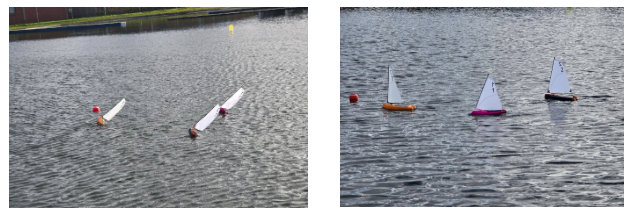
That discovery inspired an informal racing format with almost no right-of-way rules. Establish a start, a finish, and marks that must be rounded; touching another boat or a mark carries no automatic penalty. The racing becomes largely self-regulating because collisions are usually slow. Someone in the growing builder community described it perfectly: the sailing version of Mario Kart.
A course can be compact — perhaps 15 meters long and close to shore — and the boat needs very little water depth. That makes MiniMax particularly promising for schools, camps, small ponds, temporary shallow pools, and other places where conventional RC yachts would be impractical.
Lowering the barriers to radio sailing
Traditional RC yachts can be intimidating to newcomers. Rigging, tuning, terminology, racing rules, transportation, cost, and access to suitable water all create friction. MiniMax removes a surprising amount of it.
The boat is inexpensive enough to build as a fleet, small enough to transport easily, quick enough to assemble while enthusiasm is still high, and forgiving enough to begin racing without first mastering the full Racing Rules of Sailing. It can introduce students, parents and children, model-airplane builders, RC car enthusiasts, sailors, and complete newcomers to the same shared experience.
And although it may look like a toy at first glance, it is much more than that. In Kerim’s words near the close of the conversation: “Tiny boat. Big breeze. Sails like a big yacht.”
Watch the full conversation to hear Brett’s remarkable family story, see the MiniMax parts and rig up close, learn what it takes to print and assemble one, understand the purchasing options around the world, and discover why the San Diego Argonauts believe this little boat could have a very big future in RC sailing and STEM education.
Chapters / Sections of this conversation
[0:00] MiniMax Intro
[0:32] SD Argonauts STEM Program Introduction
[2:06] MiniMax Action
[4:31] Who is Brett McCormack?
[8:28] When Did Brett Start Building Boats?
[11:49] From Dingies to Fiberglass IOMs
[14:20] Designing Footys — and Finding the Fastest
[16:45] Why MiniMax Fits SDA’s School STEM Program
[19:30] From Moonshadow to 3D Printing
[20:35] Why Is MiniMax Exactly 22 Centimeters?
[22:37] How Ocean Mini Became Radio Controlled
[23:40] Why the First RC Conversion Wouldn’t Turn
[24:20] Which Tiny Servos Does MiniMax Need?
[25:50] The 120-Gram Weight Budget
[27:26] What Does the 25 EUR STL License Include?
[32:15] Which Battery Should Builders Use?
[33:13] Which Parts Are Made of PLA+, PETG, or TPU?
[35:00] How the MiniMax Sheeting System Works
[36:50] Naming the Tiny Rig Fittings
[39:05] How Do You Make the Sail Corners?
[40:45] How Do You Build the Keel Ballast?
[43:34] Can a School Fleet Really Cost Under $70 per Boat?
[45:34] What Else Must Builders Buy?
[48:30] Could MiniMax Become Ready-to-Sail?
[50:00] Is MiniMax the First DIY True One-Design?
[50:40] How Can You Buy MiniMax Around the World?
[52:09] A MiniMax Business Opportunity for Students?
[52:50] What Comes in a Regional MiniMax Kit?
[54:10] What Does the License and Class Registration Mean?
[56:15] Could MiniMax Become a Complete School Course?
[57:00] How Long Does It Take to 3D-Print?
[58:15] How Long Does Assembly Take?
[59:55] What Is the Hardest Part of the Build?
[1:00:47] How Much Gluing Is Required?
[1:01:10] Why Doesn’t the Rotating Rig Fall Out?
[1:02:35] Where Could MiniMax Go Next?
[1:03:22] Why New Builders Are Finishing These Boats
[1:05:07] MiniMax for STEM, Families, and Sailing Schools
[1:06:52] What Is the Best First Step?
[1:07:38] MiniMax Racing: The Sailing Version of Mario Kart
[1:10:25] Can You Race MiniMax at a School?
[1:12:28] Tiny Boat, Big Breeze
About the participants
Brett McCormack is the creator of MiniMax and the founder of Castlerock Yachtworks in Dunedin, New Zealand. His background spans dinghy racing, yacht design, traditional and composite boatbuilding, sailmaking, International One Metre competition, Footy development, and 3D-printed model yachts.
Kerim Baran is a member of the San Diego Argonauts and is leading the club’s collaboration with local school STEM and robotics programs.
Learn more
- Visit the Castlerock Yachtworks online shop: castlerock.bigcartel.com
- Look for Castlerock Yachtworks and the MiniMax Yacht Builders community on Facebook
- 3D-printed parts (for the US market) are available from Mark Cooper at Cooper Wood Crafts.
- Partial Parts list (for the US market, created by Mark Cooper) is on this MiniMax Resources Page.
- Learn about the San Diego Argonauts and its sailing, scale-model, powerboat, and youth STEM activities at SanDiegoArgonauts.org.
Editor’s note: Product prices, suppliers, specifications, and kit contents mentioned in the interview reflect the information discussed on August 21, 2026. Confirm current details before ordering. Correction: STL files cost 25 EUR (not $25).