Latest Updates

🔧 Argonauts Radio – Episode 16: Make Every Start with a Proactive Boat Maintenance Routine

A successful race day often begins long before the starting signal.

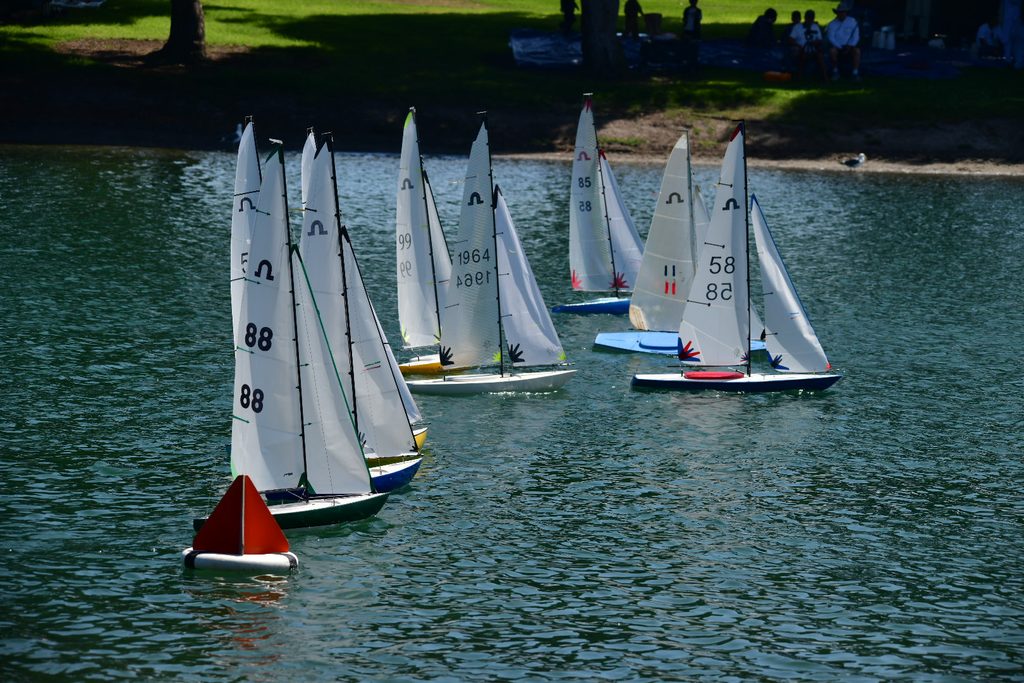
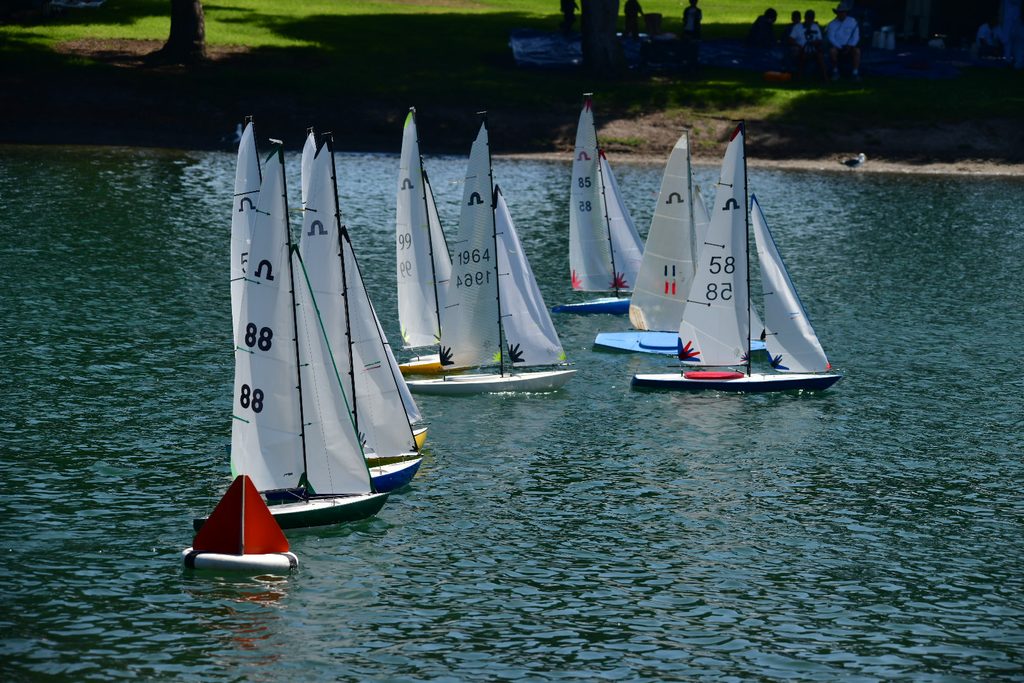
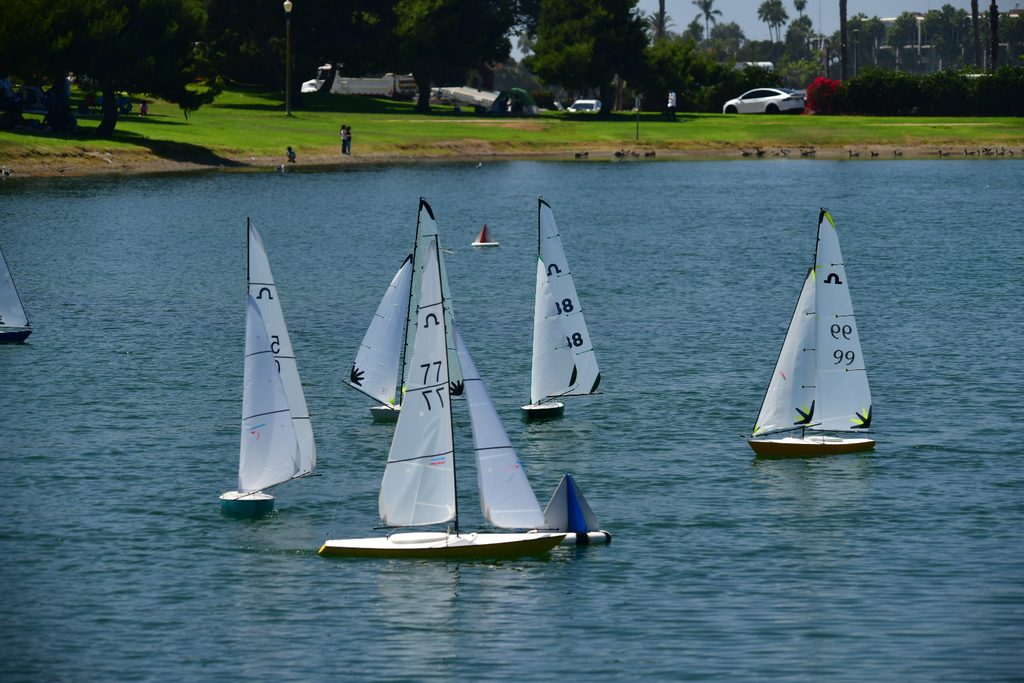
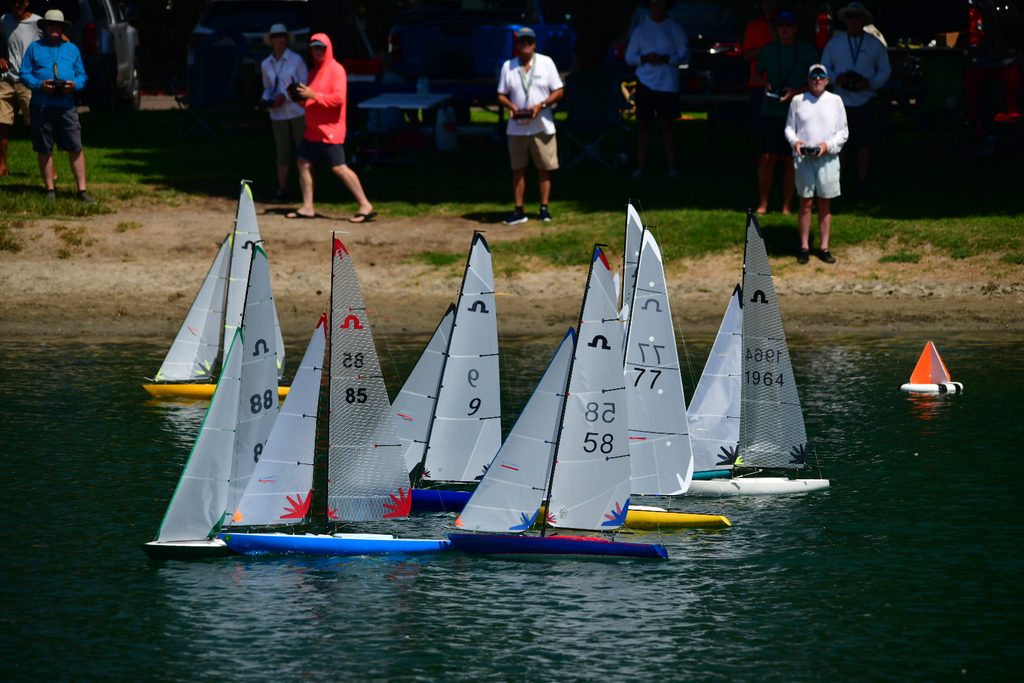
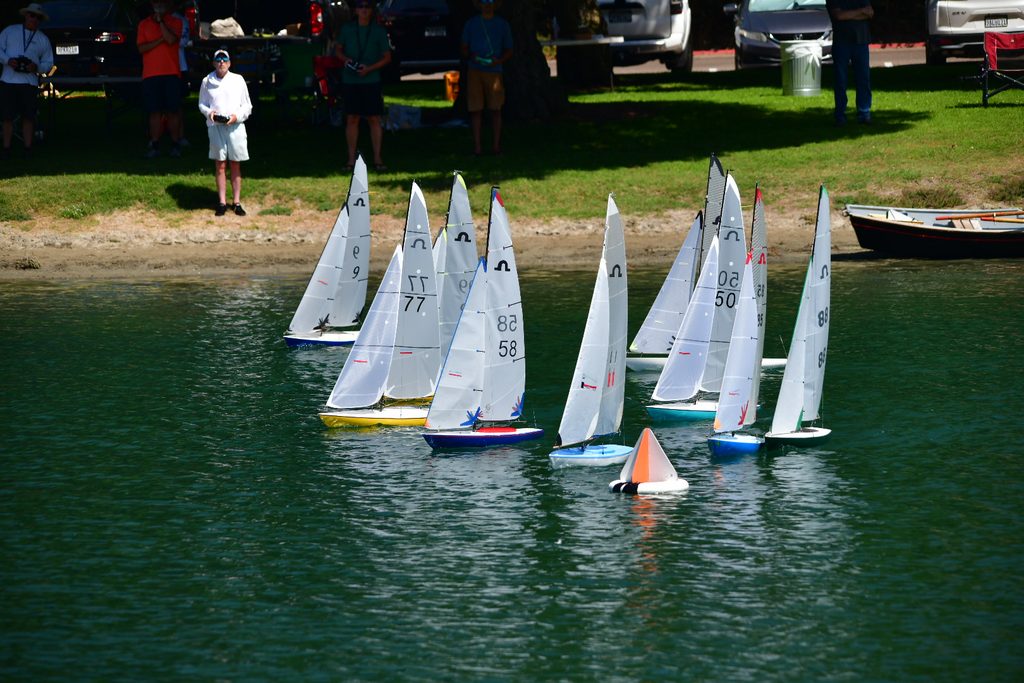
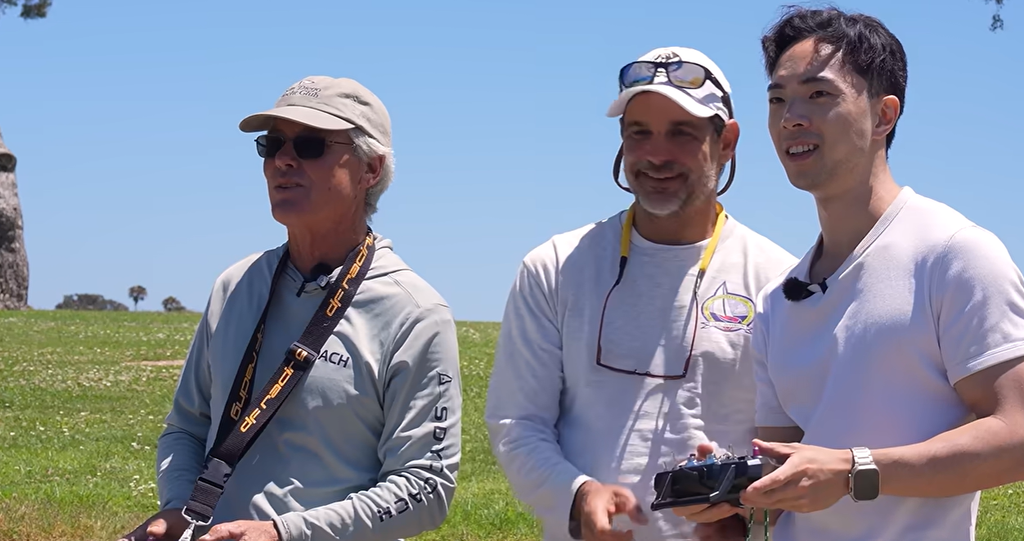
In the latest episode of San Diego Argonauts Radio, we explore the maintenance habits that help keep our boats reliable, responsive, and ready to make every start. The discussion covers the four primary sailboat classes raced at the San Diego Model Yacht Pond: the DF95, ODOM, Soling 50, and IOM.

Also available on Apple Podcasts:
https://podcasts.apple.com/us/podcast/make-every-start-with-a-proactive-boat-maintenance-routine/id1874110517?i=1000786926040
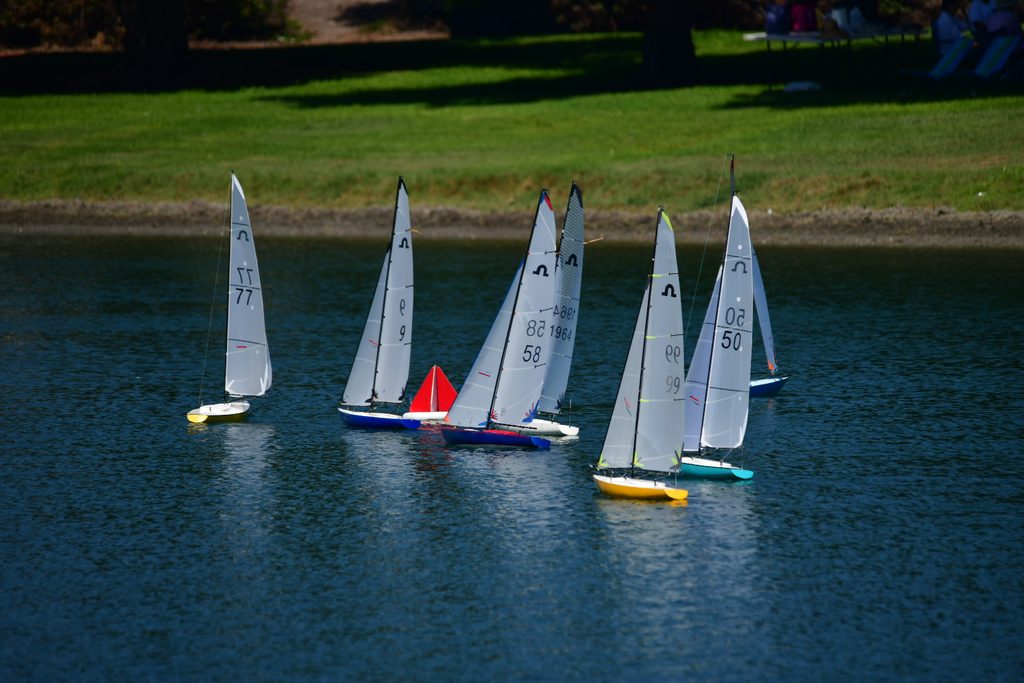
Saltwater sailing can be particularly demanding on model yachts. Sheets chafe, metal fittings corrode, rudder shafts seize, electrical connections deteriorate, and even small leaks can eventually cause major problems. Fortunately, many of these issues can be prevented through regular inspection, cleaning, lubrication, and careful storage.

Topics covered in this episode include:

  • Inspecting sheets, pivot lines, travelers, and other friction points for chafe
  • Preventing corrosion caused by saltwater and dissimilar metals
  • Cleaning and lubricating rudder shafts, tubes, goosenecks, and fittings
  • Protecting keel bulbs and keel-fin slots from corrosion
  • Checking deck-to-hull joints and rudder tubes for leaks
  • Keeping receivers, servos, plugs, and other electronics clean and dry
  • Rinsing and drying boats thoroughly after every sailing session
  • Identifying small problems at home—before they cost you races at the pond

The episode offers specific recommendations for each class. DF95 owners will hear tips for maintaining the stern turning block, keel bulb, sheets, gooseneck, and sail ties. ODOM and older Soling 50 sailors will want to pay particular attention to their rudder tubes and shafts, where corrosion can eventually seize the entire assembly. IOM sailors are reminded to inspect their traveler systems, elastic tensioners, spars, vangs, goosenecks, and mast fittings.

The central message is simple: inspect and service your boat when you put it away—not when you take it out for the next regatta. That gives you plenty of time to make repairs and reduces the chance of discovering a broken sheet, frozen fitting, or corroded connection minutes before a race.

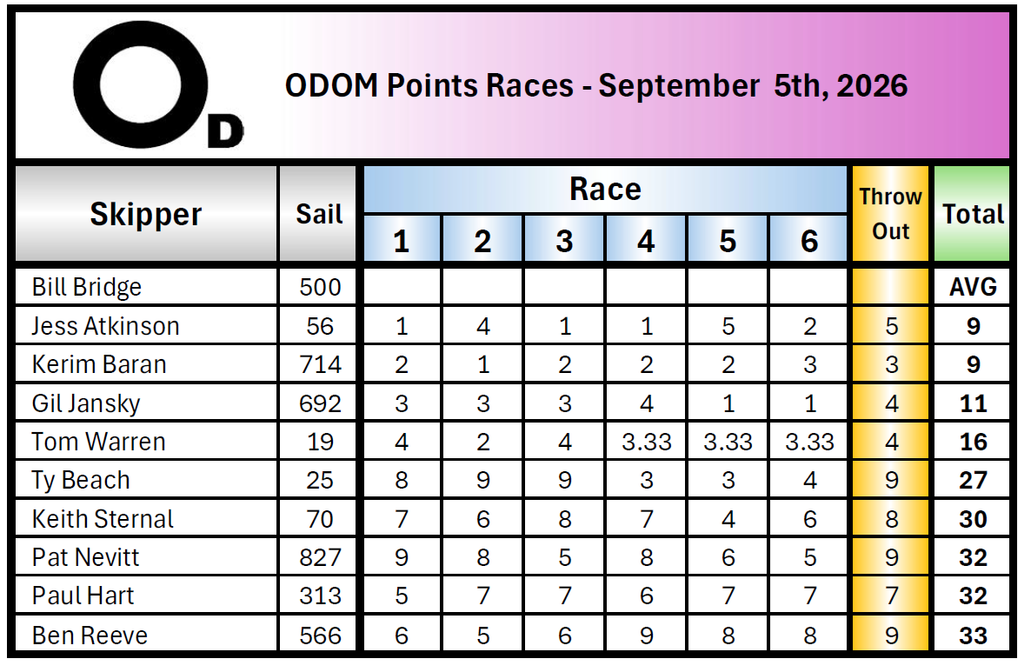
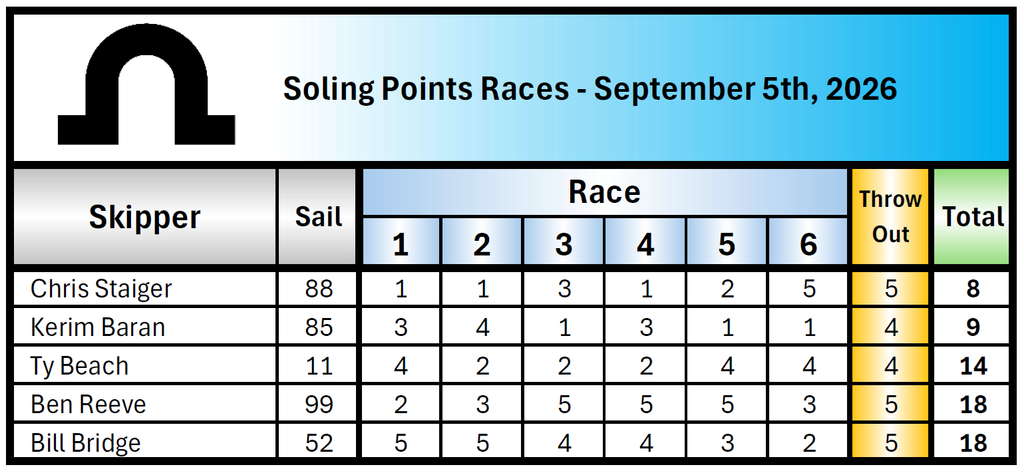
The episode concludes with a recap of our August points racing. Congratulations to Kerim Baran for winning the Soling 50 racing, Jess Atkinson for taking the ODOM day, Gary Winton for earning the top spot in the IOM fleet, and Chris Davidson for winning the DF95 racing during one of his final sailing days with the Argonauts before returning to Australia.

Whether you are preparing for a major regatta or simply heading to Mission Bay for a Saturday of club racing, a consistent maintenance routine will help keep your boat on the water—and help ensure that you make every start.

🎧 Listen to “Make Every Start with a Proactive Boat Maintenance Routine” on Spotify

See you at the pond!

🏆 Soling 50 NCR – Final Results (Aug 29-30th, 2026)

Another wonderful event is in the books!

The San Diego Argonauts were proud to host the 2026 AMYA Soling 50 National Championship Regatta, and what a terrific event it was. Great racing, great camaraderie, and tremendous support from club members made the regatta both successful and genuinely fun for everyone involved.

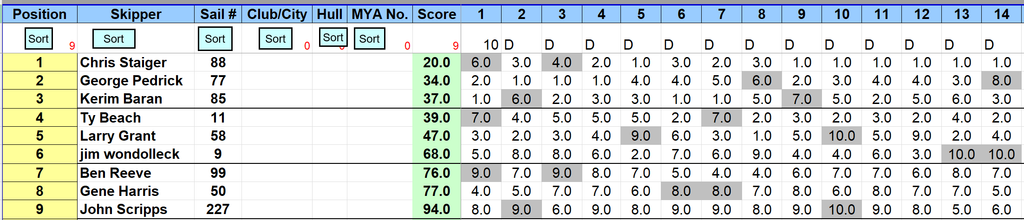
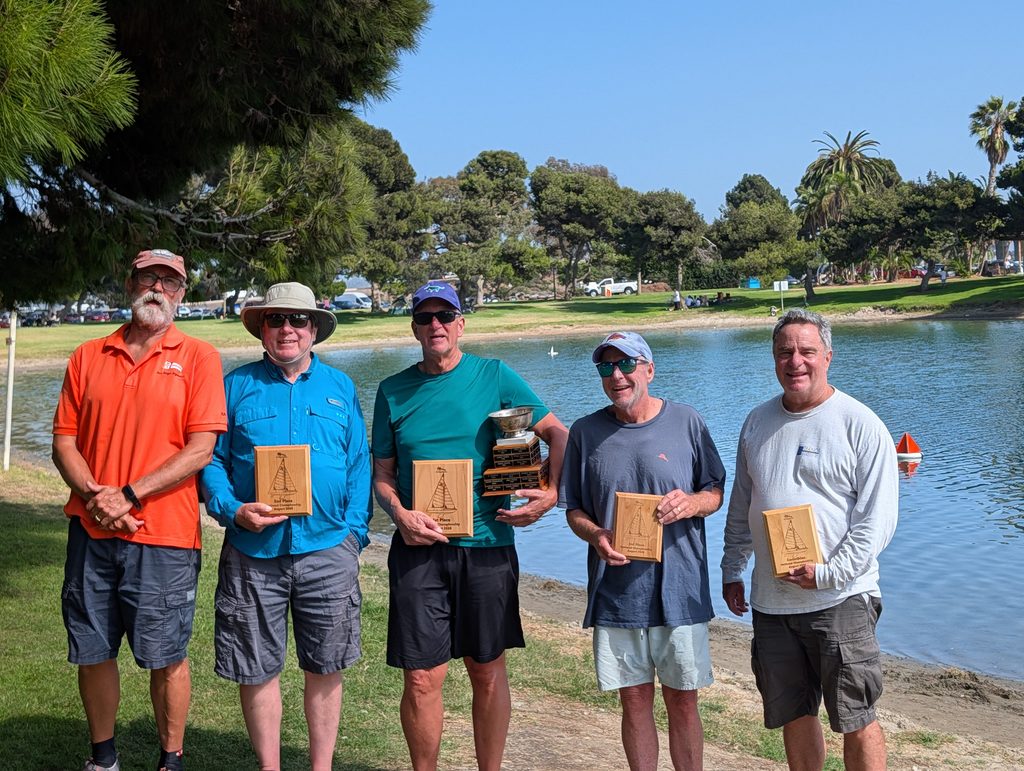
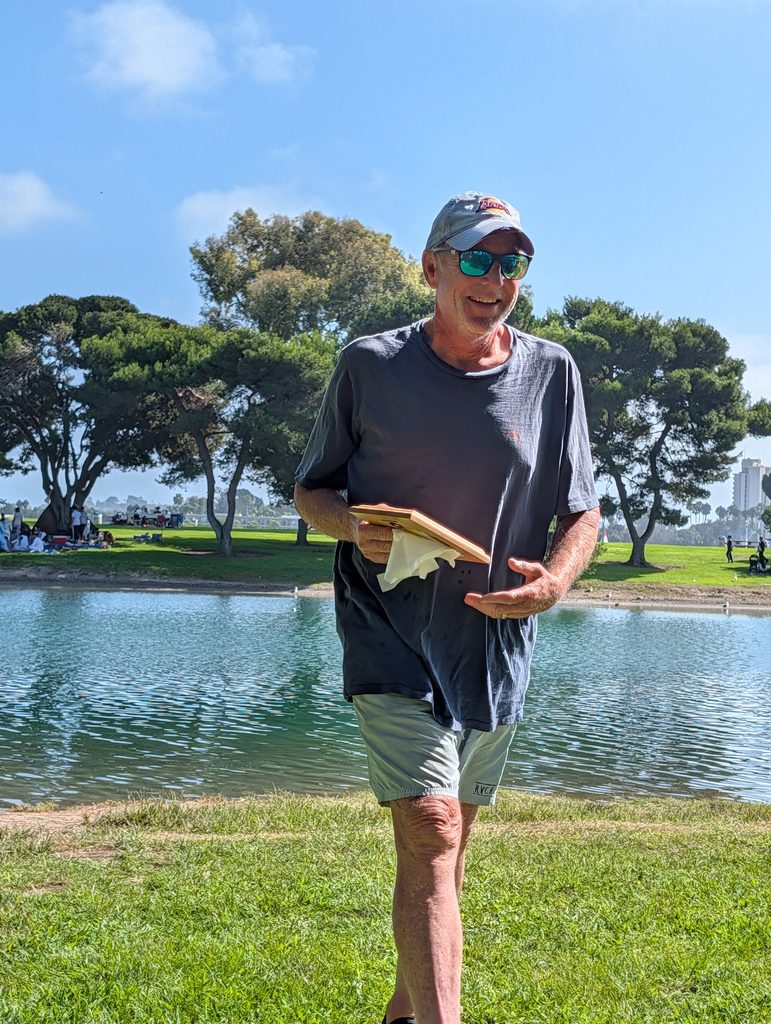
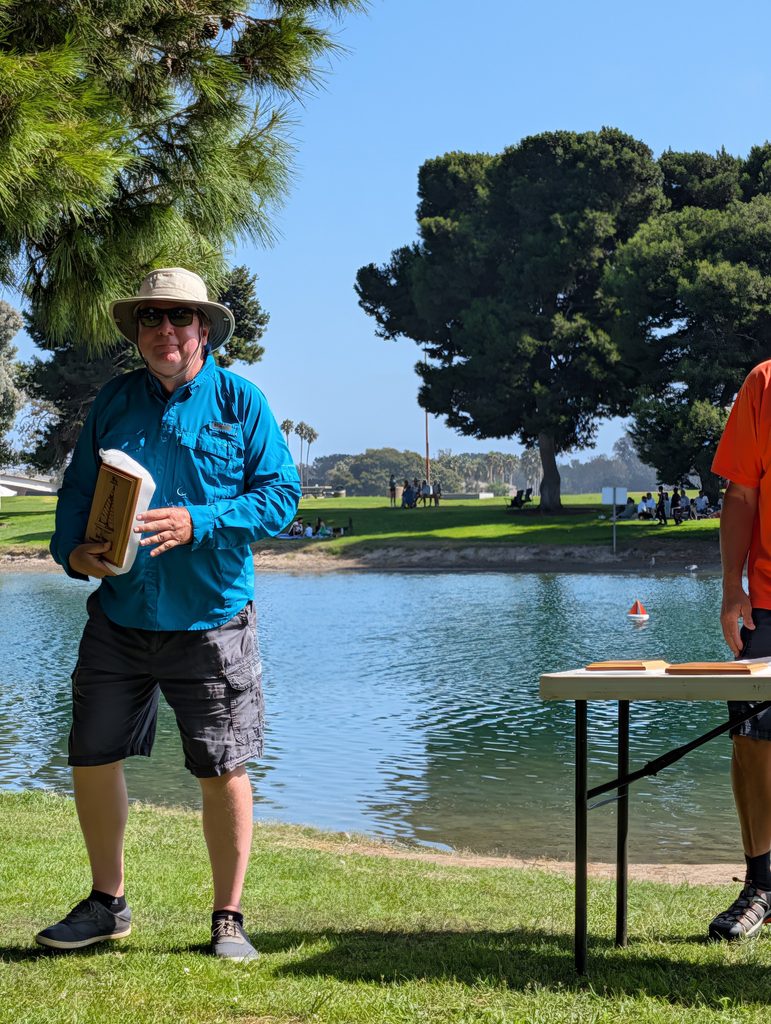
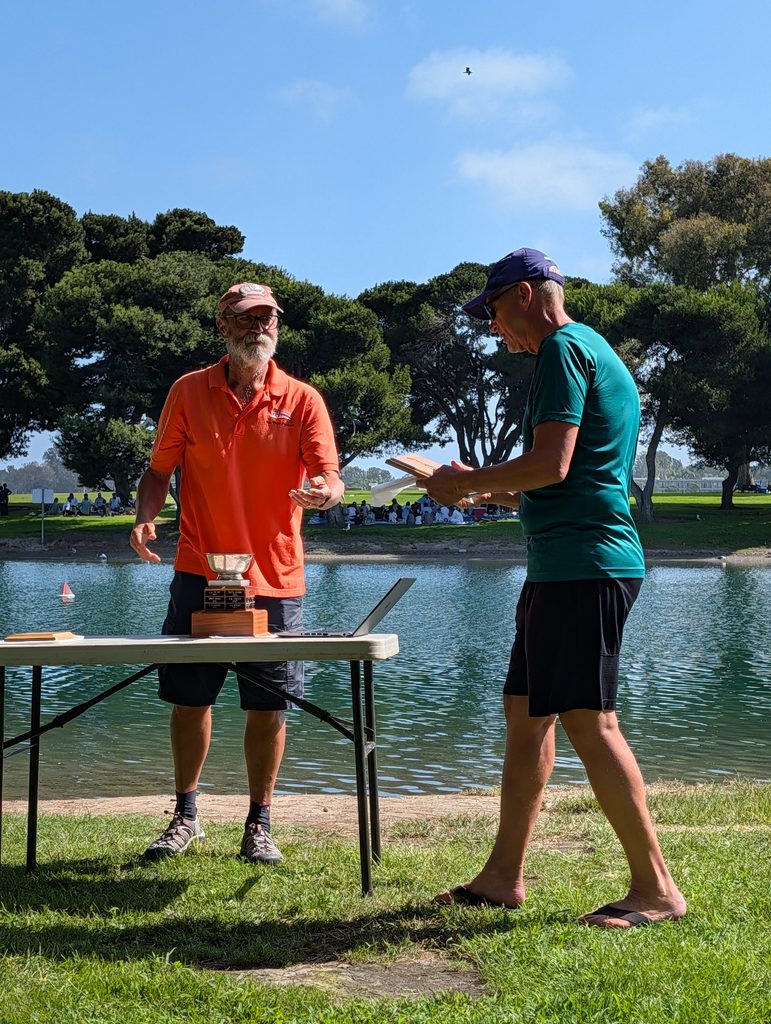
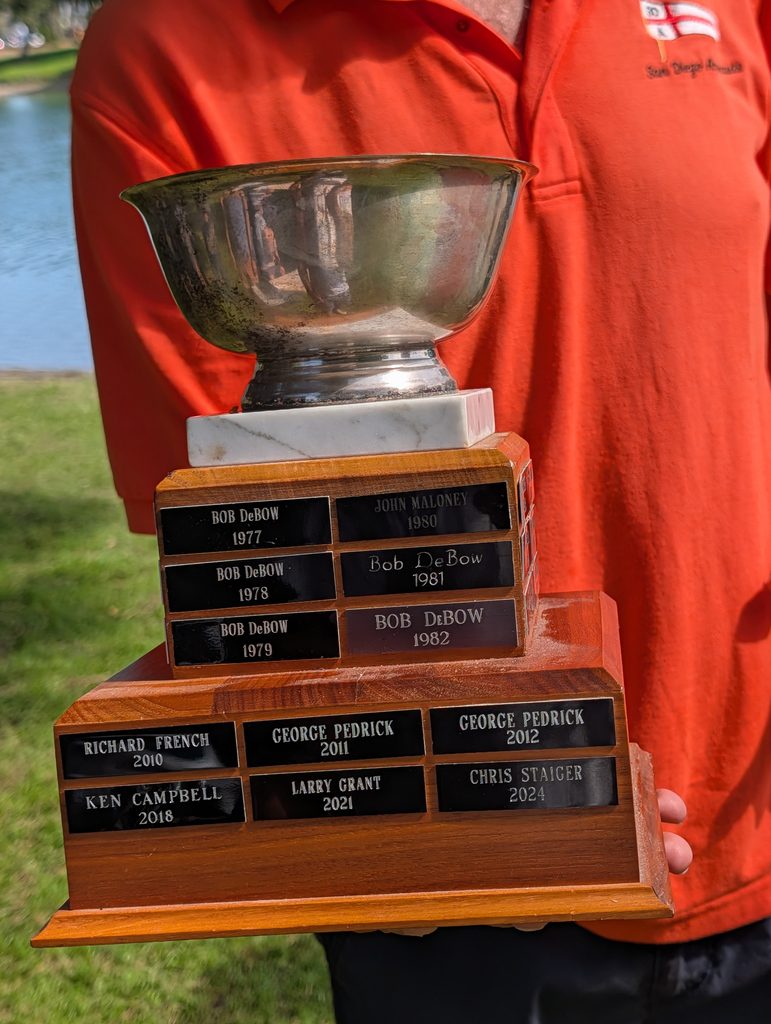
Three cheers for our own Chris Staiger, who captured the national championship and the top spot on the podium! George Pedrick sailed to an impressive second-place finish, while fellow Argonaut Ty Beach completed the podium in third.

Final Results

  1. Chris Staiger — First Place
  2. George Pedrick — Second Place
  3. Ty Beach — Third Place

The Corinthian Award went to Jim Wandolleck of San Rafael. Congratulations, Jim!

A championship regatta takes a team, and many Argonauts generously pitched in:

  • Setup, driving, trophies and much more: Ben Reeves
  • Video: Steve Ross and Pat Nevitt
  • Race team: Kelly McConvil, Jason Brooks, Jack C. and Gil J.
  • The ever-supportive peanut gallery: Bill B., Bob W., Keith S. and Tom W.

A heartfelt thank-you to Ben Reeve (AMYA Soling 50 Class Secretary) and all the club members who came out to support the Soling 50 NCR. Your time, energy and good spirits made this a memorable event for the competitors and another proud moment for the San Diego Argonauts.

Congratulations to Chris, George, Ty, Jim and everyone who helped make the regatta such a success!

Final Results:

End of Day 1 results:

Videos courtesy of Steve Ross & Pat Nevitt:

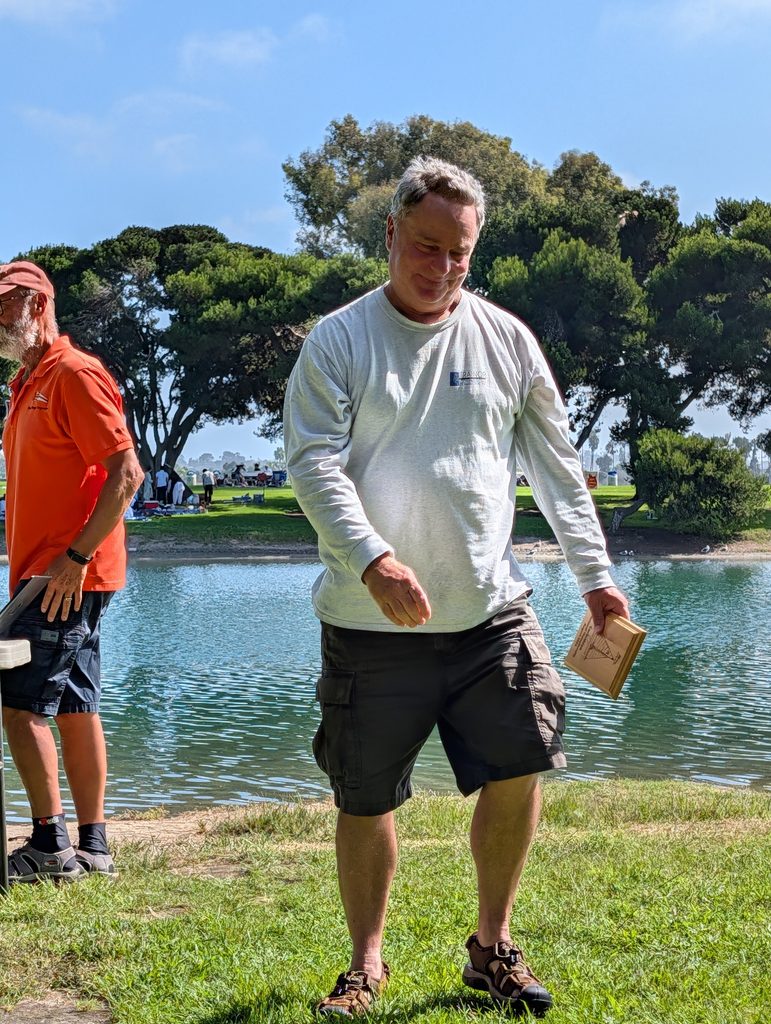
Photos courtesy of Ben Reeve & Tom Warren:

🎥 San Diego Argonauts Featured on Hafu Go’s 20-Million-Subscriber YouTube Channel

From DF95 sailboats and scale warships to submarines and a one-of-a-kind hovercraft, our pond took center stage for a worldwide audience

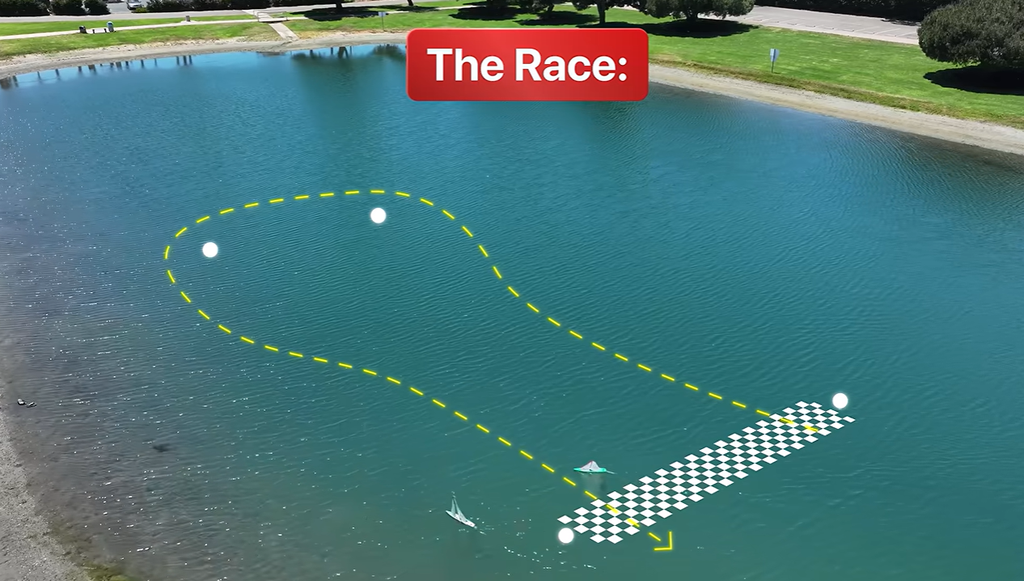
About six weeks ago, popular YouTube creator Hafu Go and his production team visited the San Diego Model Yacht Pond to film a video featuring some of the most unusual and impressive radio-controlled boats they could find.

The finished video has now been released—and it attracted more than 1 million views in its first 48 hours.

With approximately 20 million YouTube subscribers, Hafu Go has built a huge global audience through fast-paced videos exploring extraordinary vehicles, machines and experiences. His latest production compares RC boats ranging from a homemade $1 steam-powered “pop-pop” boat to an extremely powerful custom RC speedboat valued at approximately $10,000.

Along the way, several San Diego Argonauts members—and a wonderfully diverse collection of vessels—received their moment in the spotlight.

From the Slowest “Pop-Pop” to a 130-MPH Speed Demon

The video showcases an astonishing range of RC boats, beginning with a homemade $1 “pop-pop” boat powered by a tiny candle and steam—possibly the slowest and simplest vessel ever launched at our pond. From there, Hafu tests fishing boats, self-righting speedboats, hydrofoils, hovercraft, sailboats, submarines and museum-quality scale ships. At the opposite extreme is a highly customized, approximately $10,000 speed demon capable of exceeding 130 miles per hour. Seeing such radically different vessels together—from a gently puttering tin boat to a carbon-reinforced rocket skimming across the water—beautifully captures the extraordinary variety found within the world of radio-controlled boating.

Hafu Learns to Sail a DragonFlite 95

One of the highlights begins when Hafu is introduced to the DragonFlite 95, or DF95, one of the most popular radio-controlled racing sailboats in the world.

San Diego Argonauts members Jon Rogers & Kerim Baran gives Hafu a quick introduction to the controls and explains some basic sailing concepts—including tacking, jibing, sail trim and how to recover when a sailboat gets caught “in irons.”

Hafu then takes control of Kerim’s bright-green DF95 and races against longtime sailor and fellow Argonaut Jon Rogers, who tells him he has been sailing for 49 years.

With Kerim coaching from the shore, Hafu learns remarkably quickly. Jon even introduces him to a little sailboat-racing strategy by attempting to block his wind. Hafu ultimately crosses the finish first—although, as he readily admits in the video, Jon may have helped make that victory possible!

The short sequence offers millions of viewers a fun and approachable introduction to radio sailing. It demonstrates that these boats are not simply toys: they require an understanding of wind, strategy, boat handling and racing tactics.

A Submarine Beneath the Pond

The video then moves below the surface with a Thunder Tiger Neptune RC submarine, demonstrated by submarine expert Bob Martin of Nautilus Drydocks.

Bob explains how the submarine’s ballast system takes in water to make the vessel heavier and dive, then expels the water to become buoyant and return to the surface.

As the submarine slowly disappears beneath the pond, Hafu comments on how peaceful and fishlike it looks. Bob agrees that operating an RC submarine can be a surprisingly relaxing experience.

It is a wonderful demonstration of another fascinating corner of the model-boating world—one that combines craftsmanship, electronics, radio systems, propulsion, buoyancy and careful underwater navigation.

Museum-Quality Bismarck

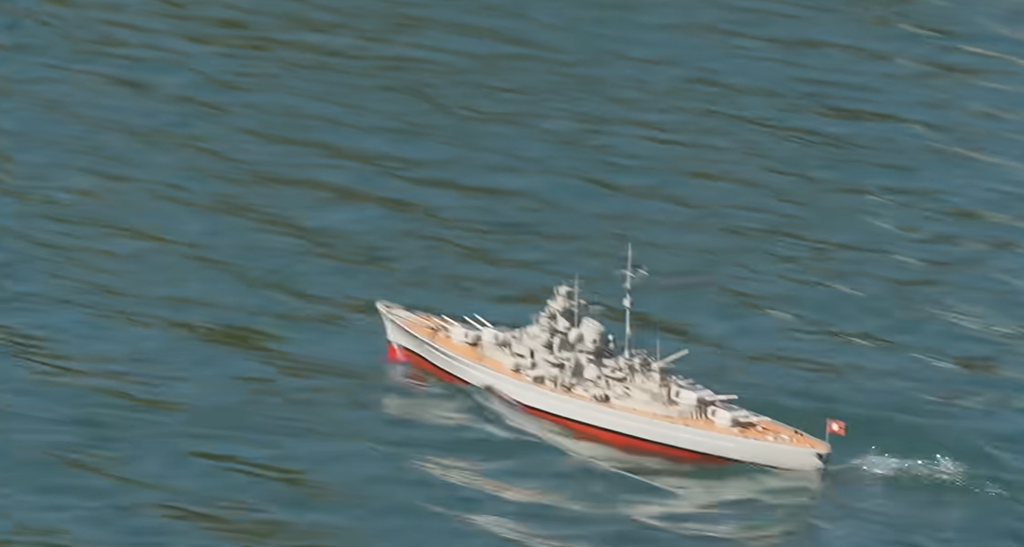
The scale-model side of the hobby is represented by another Argonaut and his highly detailed RC model of the German battleship Bismarck.

Hafu explains that scale modeling is not primarily about achieving the greatest speed. Instead, the goal is to reproduce a real vessel with as much accuracy and detail as possible.

The Bismarck glides across the pond while the camera captures its intricate fittings and realistic appearance. Mateo describes it as looking like a museum piece—and Hafu readily agrees.

For viewers who may associate RC boating only with small, fast powerboats, this segment provides a glimpse into the historical research, patience and model-building skill involved in producing a fine-scale vessel.

Robin’s One-of-a-Kind Hovercraft

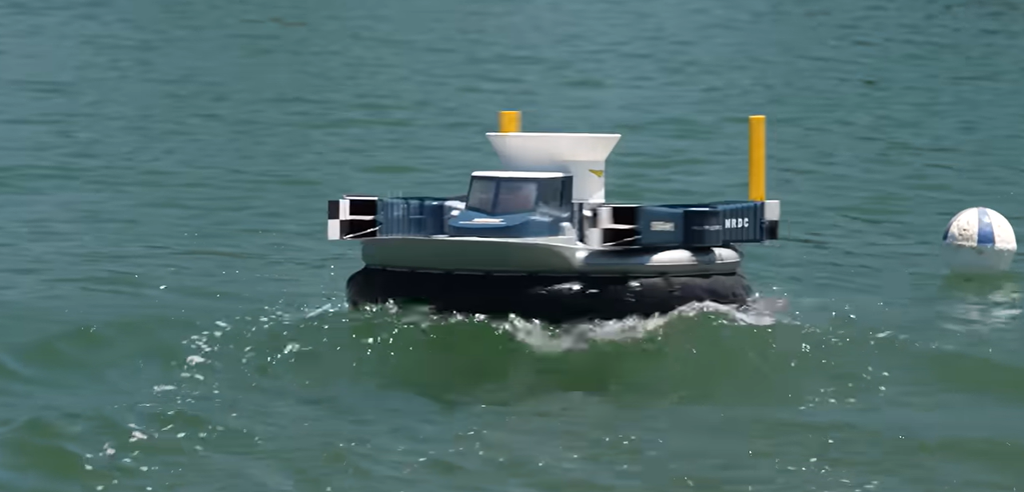
Perhaps the most unusual San Diego Argonauts vessel in the entire video is Robin Cahill Simpson’s custom-built hovercraft.

The model is approximately one-tenth scale and is based on the first full-sized hovercraft to cross the English Channel. Robin explains that the project took approximately two or three years to build, followed by another year of solving technical problems and getting it to operate properly.

The result is spectacular.

The hovercraft travels across the pond on a cushion of air, transitions onto land and even performs a spin for the camera. Hafu describes it as looking like a UFO and calls it one of the coolest vessels in the video.

It is believed to be the only operating model of its kind in the world—a wonderful example of the ingenuity, perseverance and craftsmanship found within the San Diego Argonauts.

More Than Boats: Sharing the Hobby With a New Generation

The video is entertaining, energetic and often very funny. But for organizations such as the San Diego Argonauts and all American Model Yachting Association (AMYA) Clubs, it also illustrates something important.

Millions of people—especially young people—may never have seen a competitive RC sailboat, an operating scale warship, a functional RC submarine or a scratch-built hovercraft. A single well-produced YouTube video can introduce the hobby to an audience far larger than any club could reach through a traditional event or advertisement.

In this instance, Hafu Go found the San Diego Argonauts. His team was searching for interesting boats and knowledgeable people, and our members were delighted to welcome them to the pond, provide vessels and help bring the production to life.

But this same opportunity may exist for many other AMYA and model-boating clubs.

There are thousands of YouTube, TikTok, Instagram and other digital creators looking for unusual stories, visually interesting machines, talented builders and authentic experiences. Model-boating clubs have all of those things—as well as colorful personalities, remarkable history and members who love sharing what they know.

Clubs do not necessarily need to wait to be discovered. They can identify creators in their regions, invite them to a sailing day, offer them an opportunity to operate a boat, introduce them to an experienced builder or arrange a friendly race. The strongest collaborations allow creators to tell the story in their own style while club members provide the knowledge, equipment and welcoming environment that make the experience possible.

One creator visit could introduce radio sailing and model boating to hundreds of thousands—or even millions—of potential new enthusiasts.

Welcome to Our Pond

We congratulate Hafu Go and his team on the release and thank them for visiting the San Diego Model Yacht Pond. We also thank the San Diego Argonauts members and other model-boating experts who contributed their time, knowledge and extraordinary vessels to the production.

For our club, it was a memorable day at the pond. For viewers around the world, we hope it will be an invitation to discover the creativity, engineering, camaraderie and sheer fun of model boating.

And for our fellow AMYA clubs, perhaps it will inspire the next great collaboration.

Sometimes the best way to grow our hobby is simply to place a transmitter in someone’s hands—and let the wind, the water and the boats do the rest.

⛵ Tiny Boat, Big Future: The MiniMax RC Sailboat with Creator Brett McCormack

What happens when more than half a century of family boatbuilding tradition meets modern 3D printing, miniature electronics, and a determination to make radio sailing simpler, faster, and more accessible?

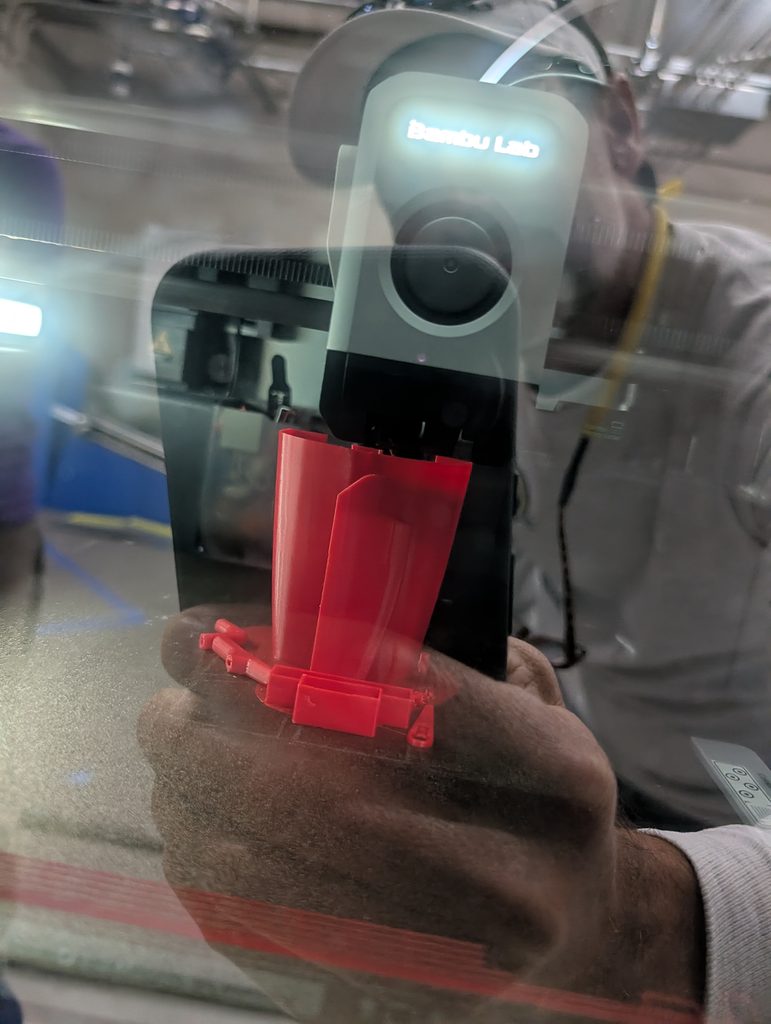
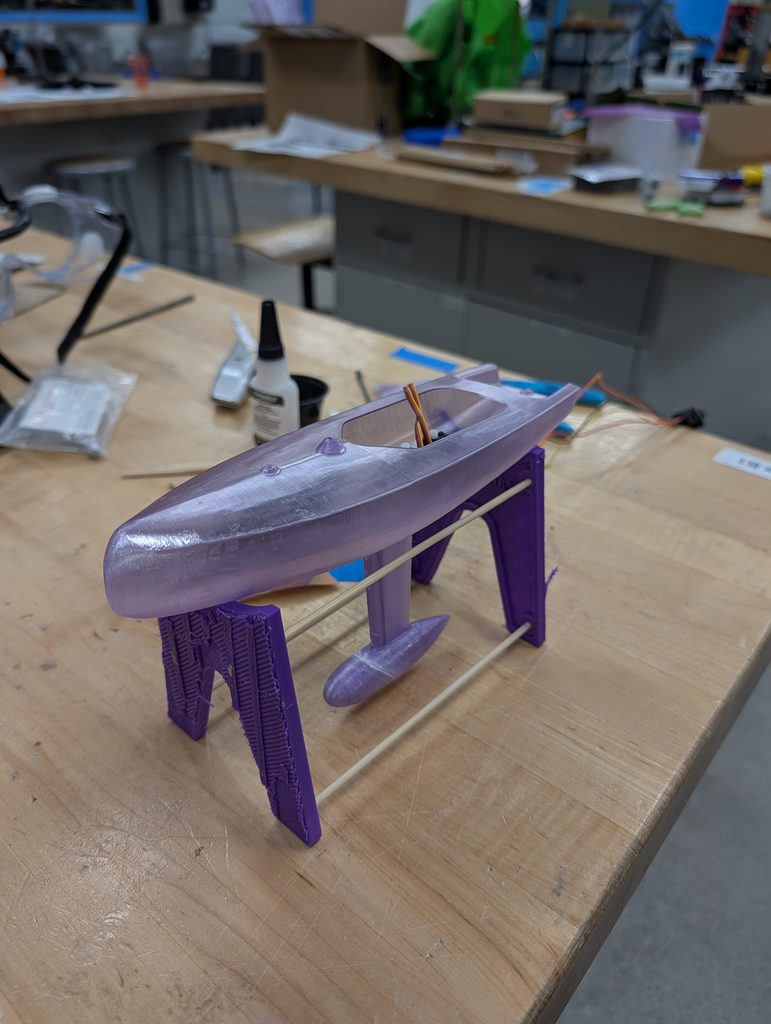
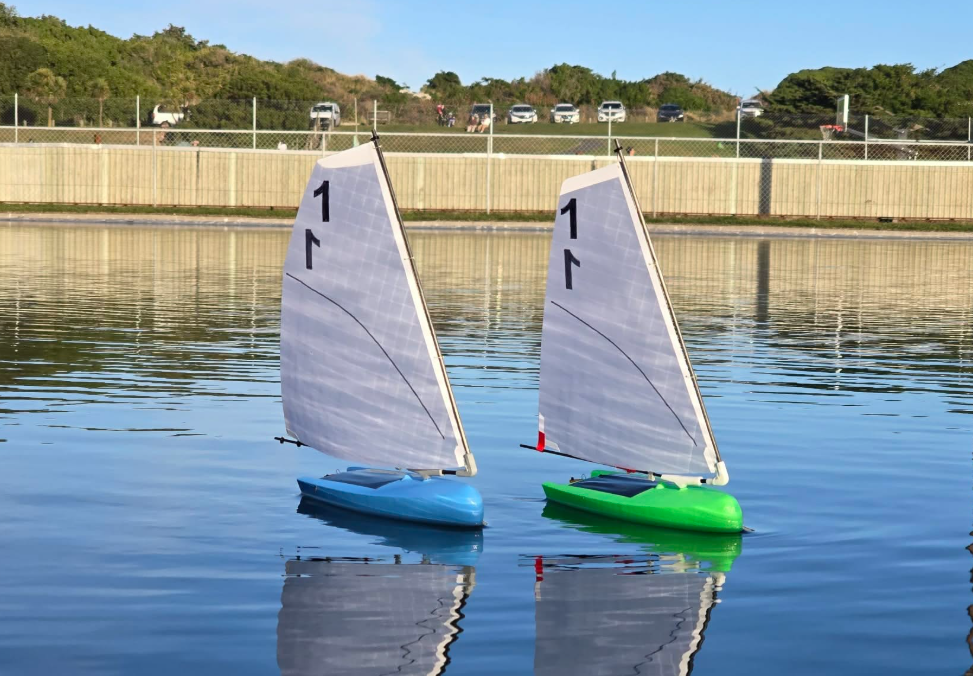
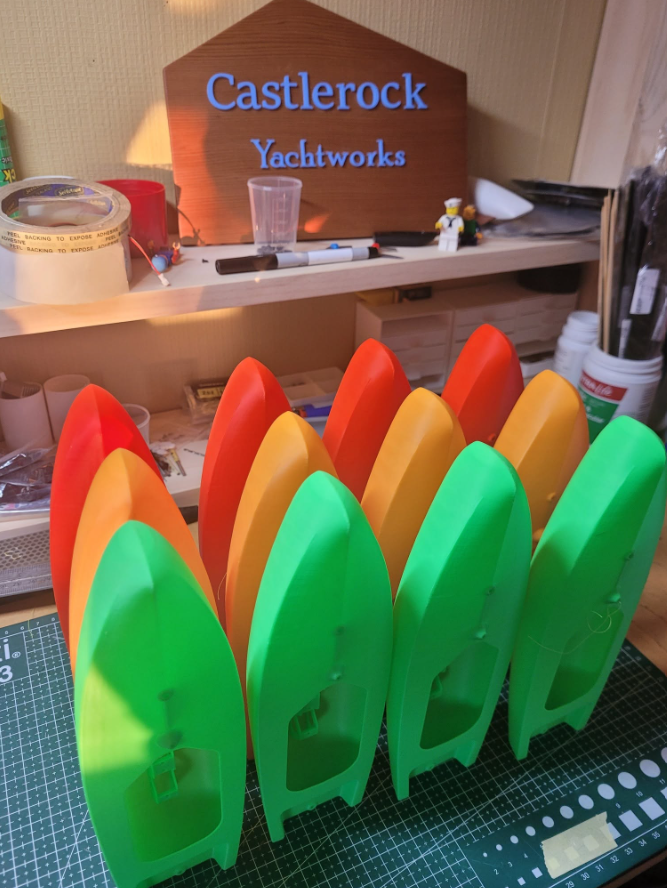
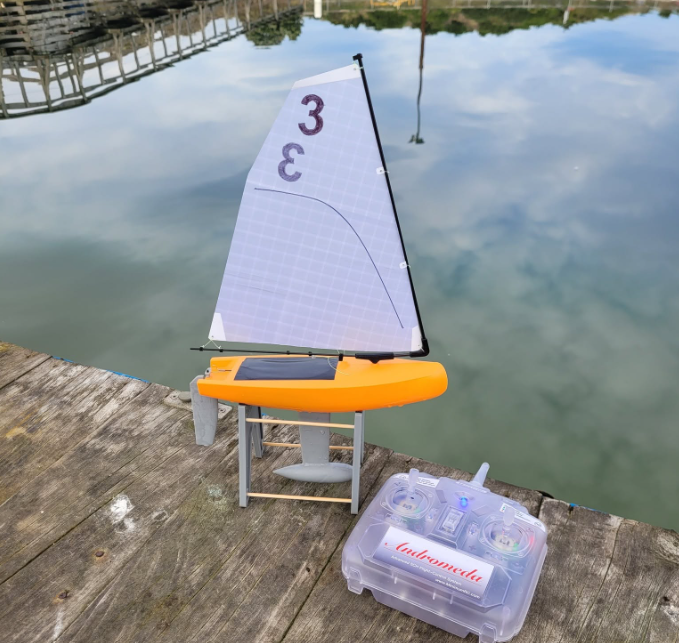
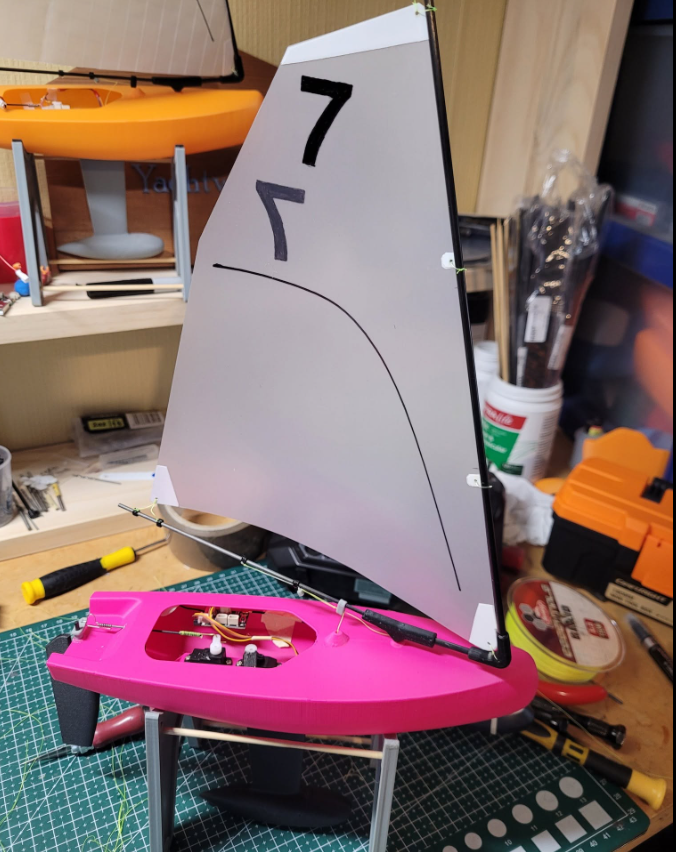
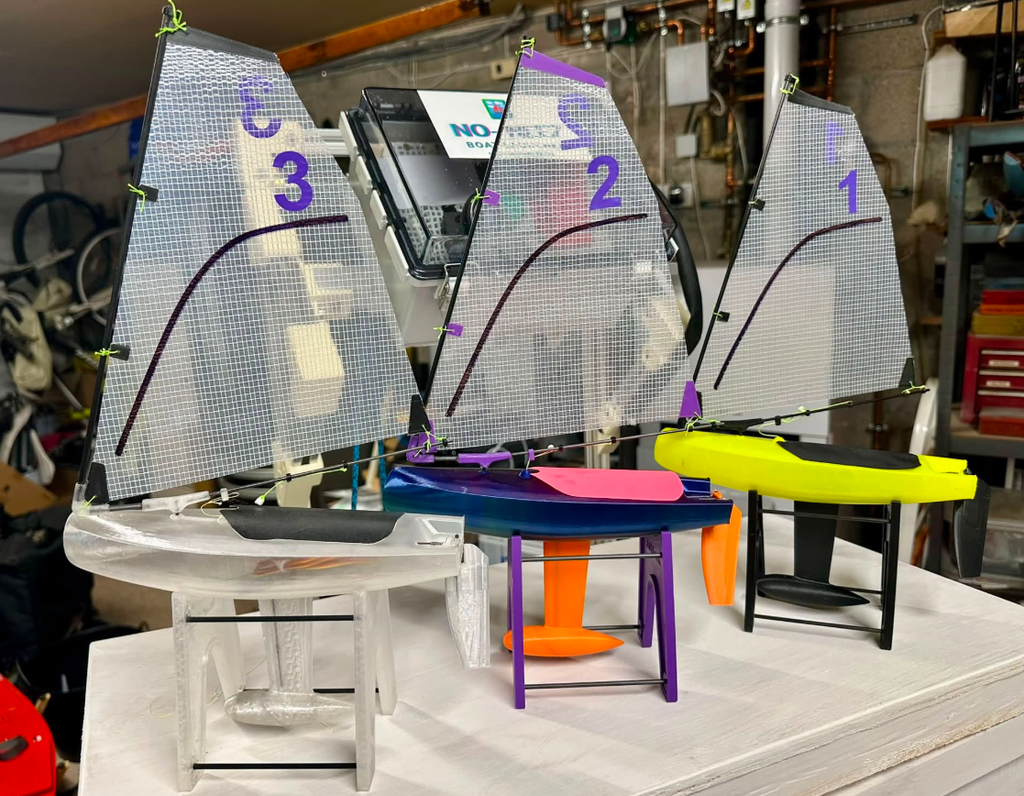
You get MiniMax: a remarkably capable, 22-centimeter (about 8.5-inch) radio-controlled sailboat that can be printed, assembled, customized, and raced almost anywhere.

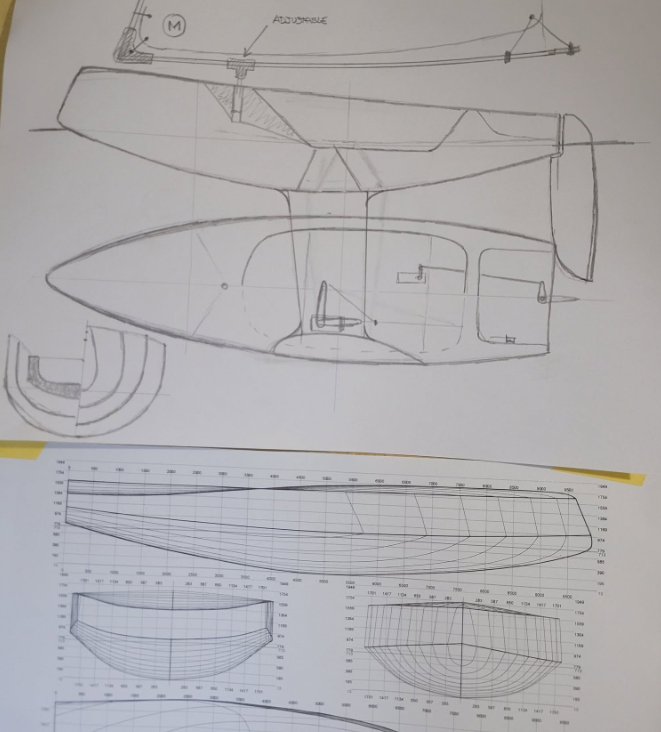
In this San Diego Argonauts conversation, Kerim Baran sits down with MiniMax creator Brett McCormack of Castlerock Yachtworks in Dunedin, New Zealand. Brett’s story begins with a childhood surrounded by yacht design and construction. His father designed and built boats — sometimes in the family living room — and Brett grew up drawing hulls, studying yacht design, building model boats from offcuts, racing dinghies, making sails, and eventually designing and constructing boats of his own.

That lifelong journey led through high-level dinghy sailing, fiberglass construction, International One Metre racing, commercial IOM production, and dozens of experimental Footy designs. One of those projects, Moonshadow, won every heat at an unofficial Footy World Championship. Years later, Brett began exploring what 3D printing could bring to small-scale sailing. His 22-centimeter free-sailing Ocean Mini provided the foundation for an even more ambitious question: How small could a genuinely exciting radio-controlled sailboat be?

MiniMax is Brett’s answer.

A perfect fit for the Argonauts’ school STEM mission

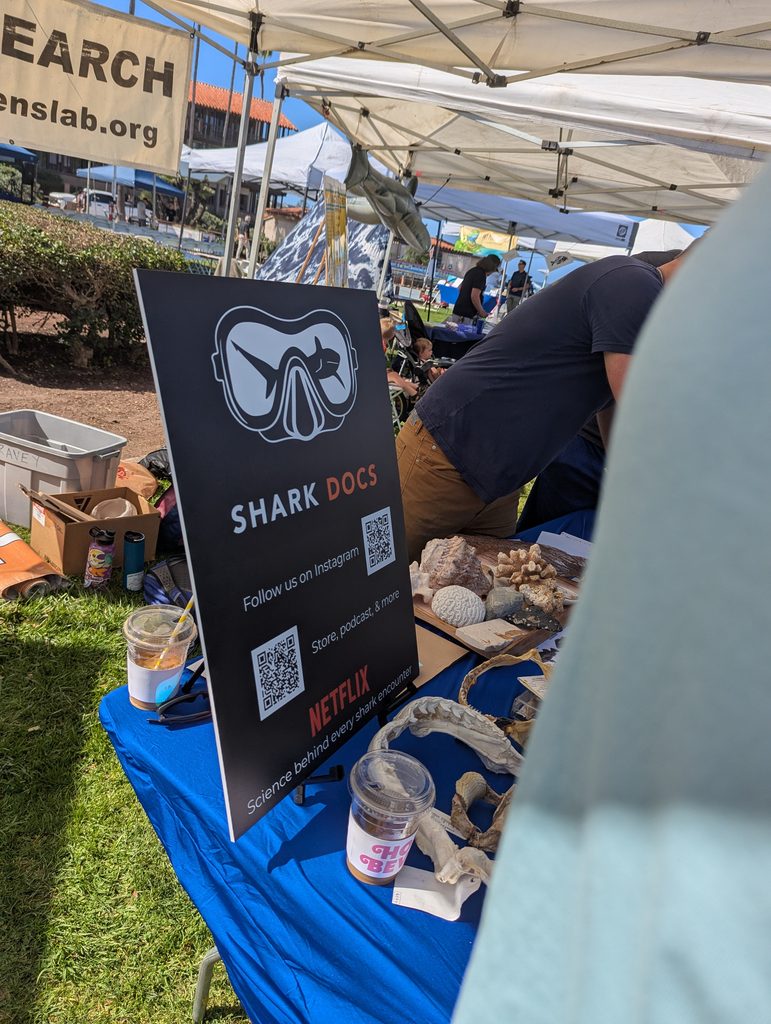
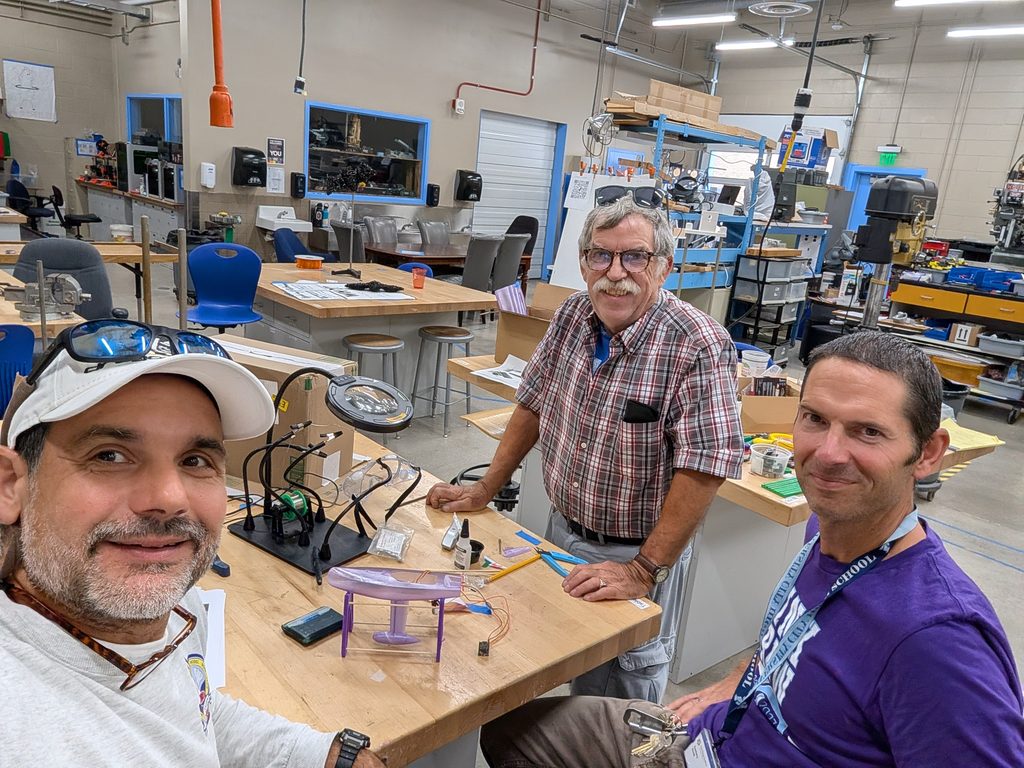
The timing of MiniMax’s launch could hardly be better for the San Diego Argonauts. SDA is expanding its collaboration with local high school STEM, engineering, and robotics programs, using radio-controlled sailboats and robotic race buoys to give students hands-on experience with design, fabrication, electronics, control systems, teamwork, and competition.

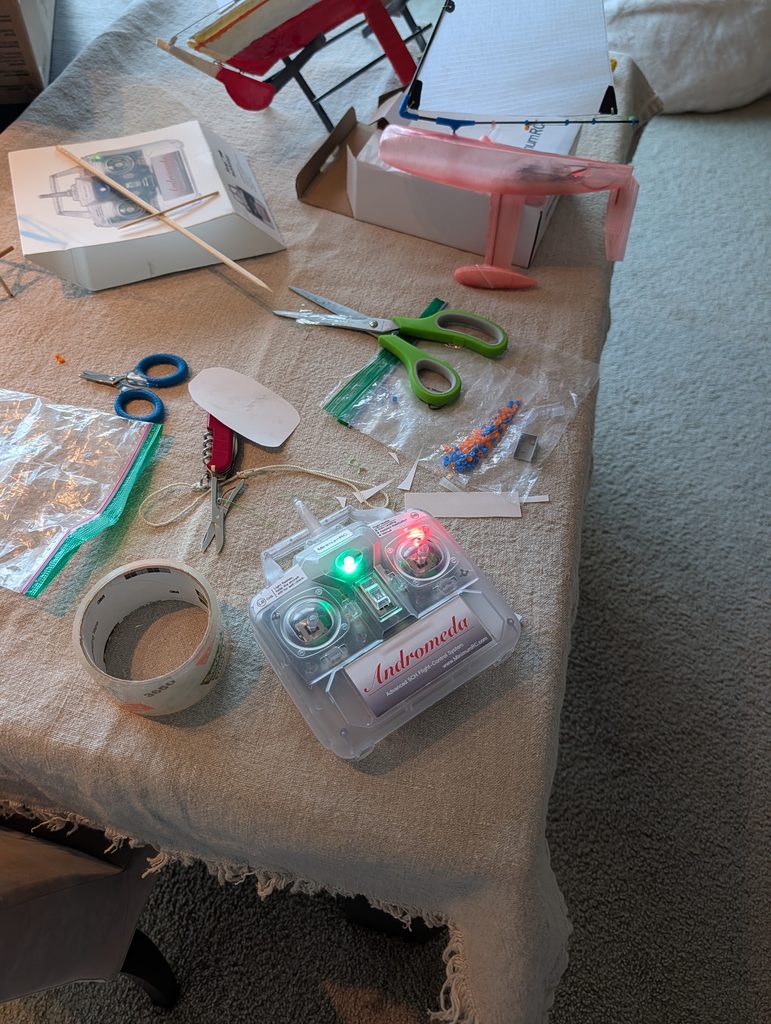
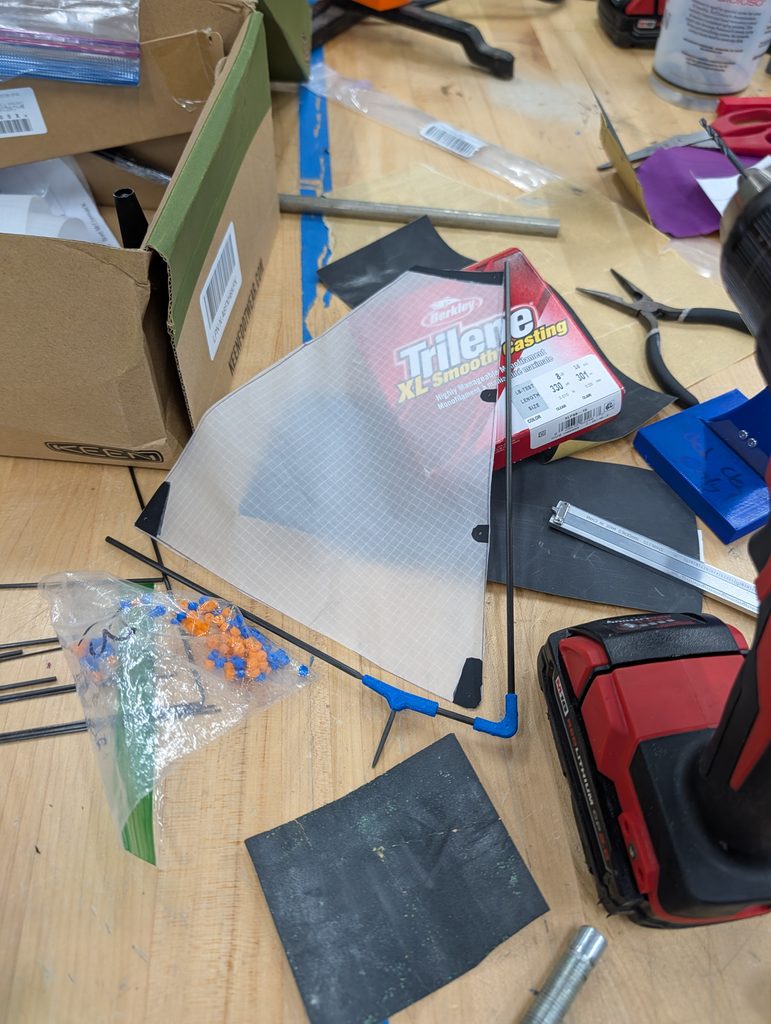
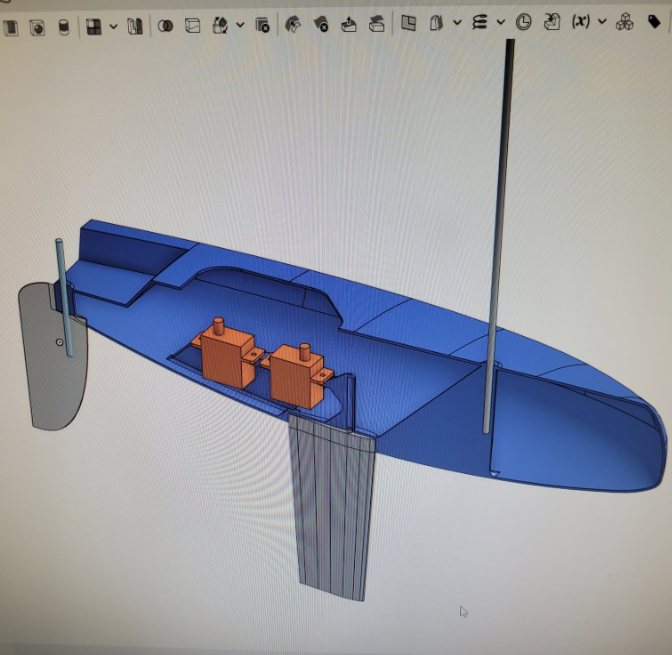
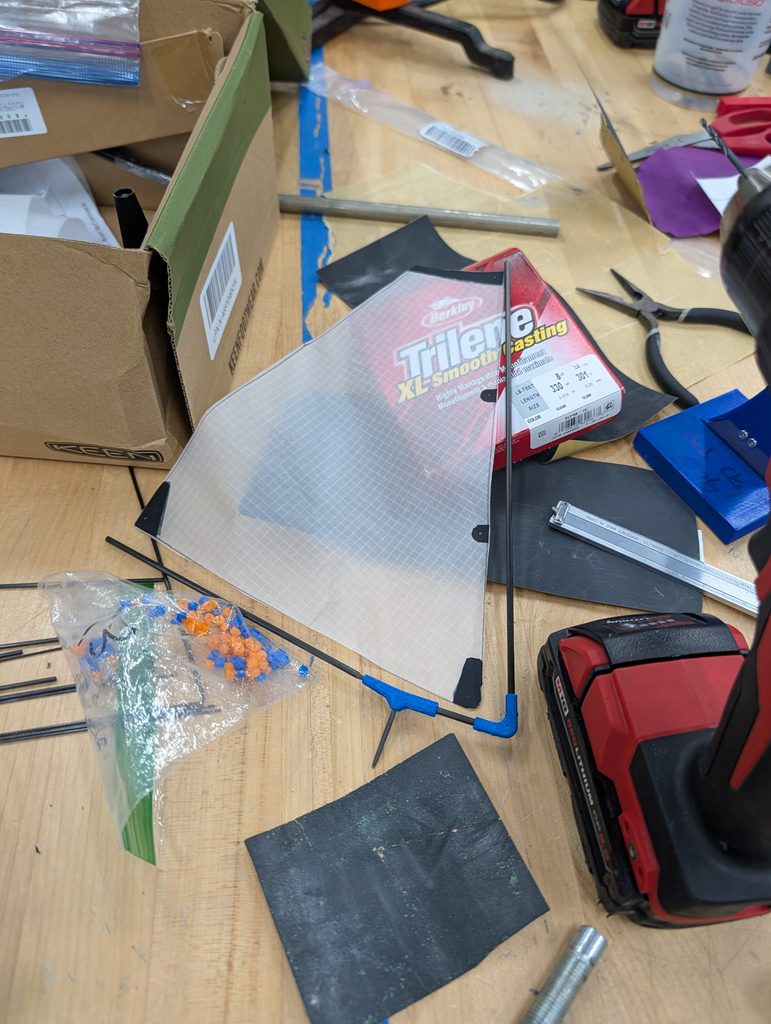
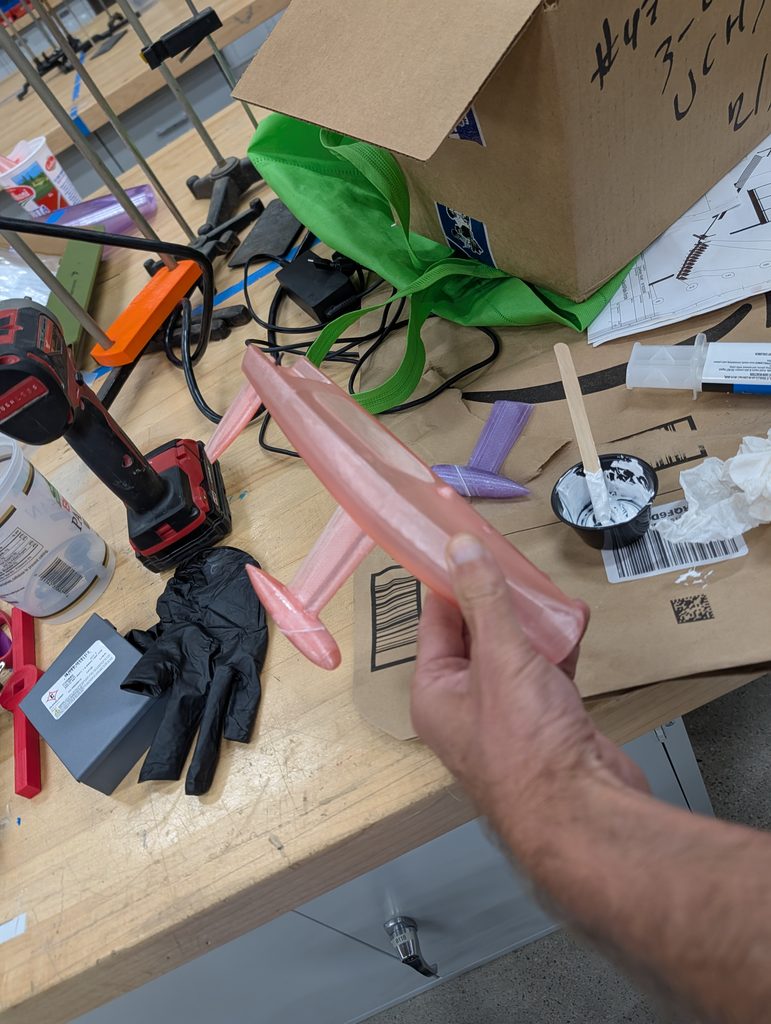
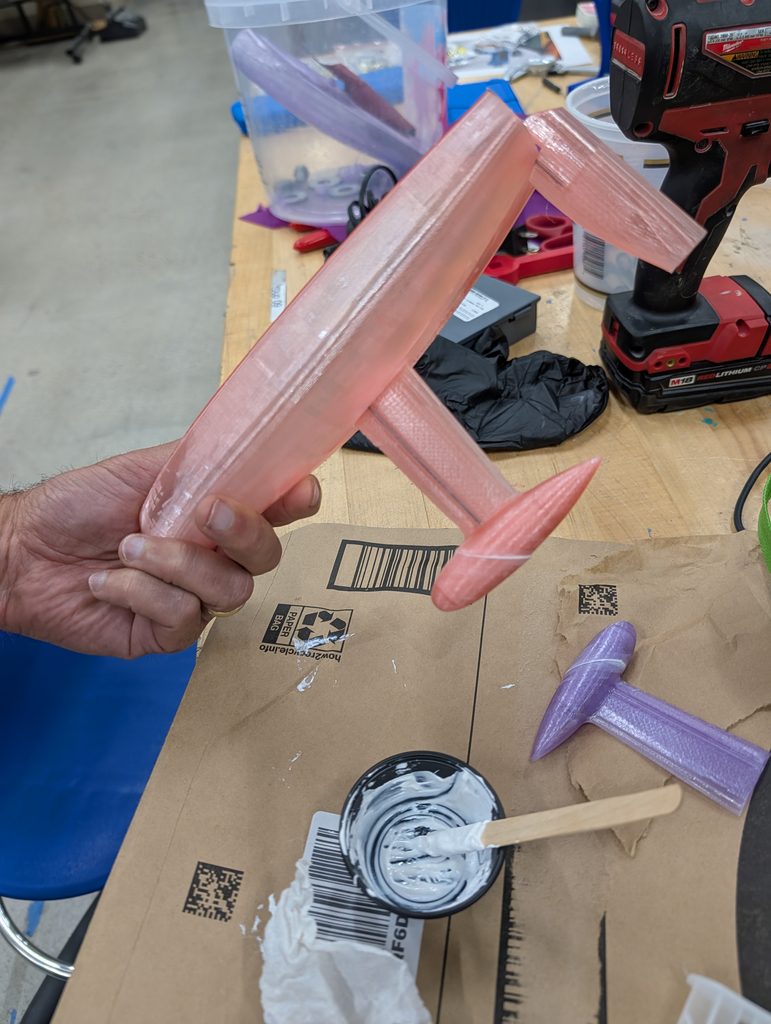
MiniMax fits that vision beautifully. Students can work with CAD and STL files, operate 3D printers, compare materials, install tiny servos and receivers, fabricate a keel ballast, build and tune a sail rig, manage a strict weight budget, and then test their decisions on the water. It is a complete engineering project that ends not on a classroom shelf, but on a racecourse.

For a school building a fleet and sharing transmitters among teams, the San Diego pilot budget discussed in the conversation puts each completed boat in roughly the $60–$70 range. Individual hobbyists buying small quantities of every component may spend more, but the project remains unusually affordable for a true two-channel RC sailboat.

Small enough to print. Serious enough to sail.

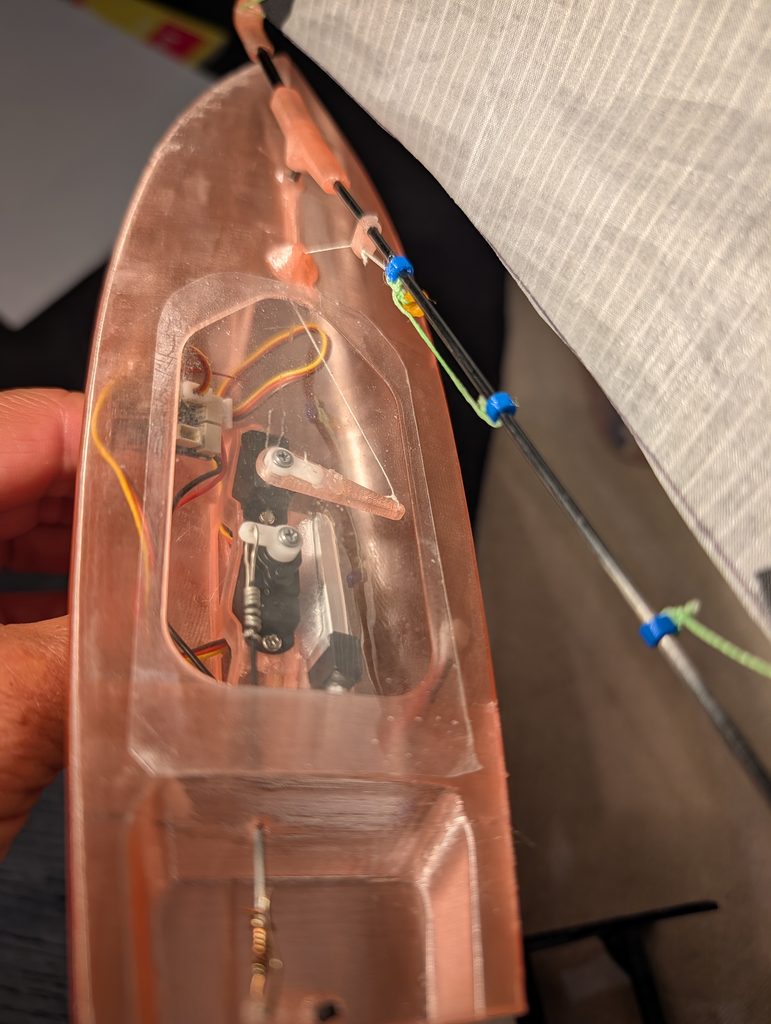
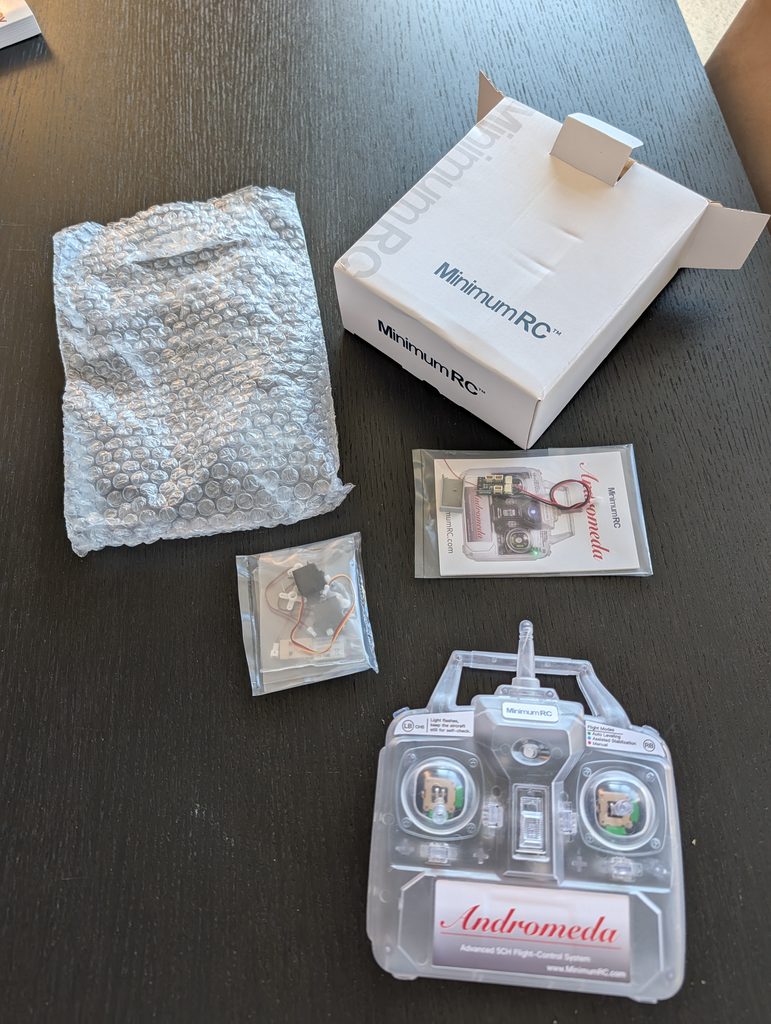
MiniMax weighs about 120 grams and uses an entire radio system — two servos, receiver, and battery — weighing only about 11 grams. Those numbers create tight design constraints. The boat needs tiny 2-gram servos, a healthy ballast ratio, carefully selected materials, and an efficient rig capable of delivering real performance with very little weight.

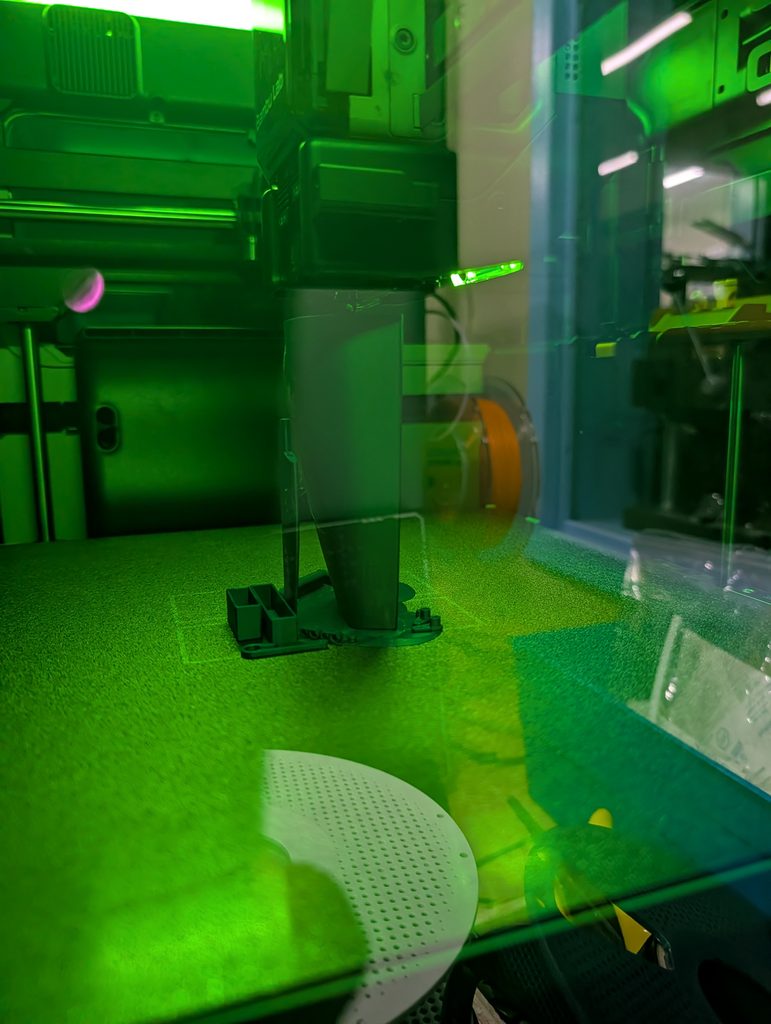
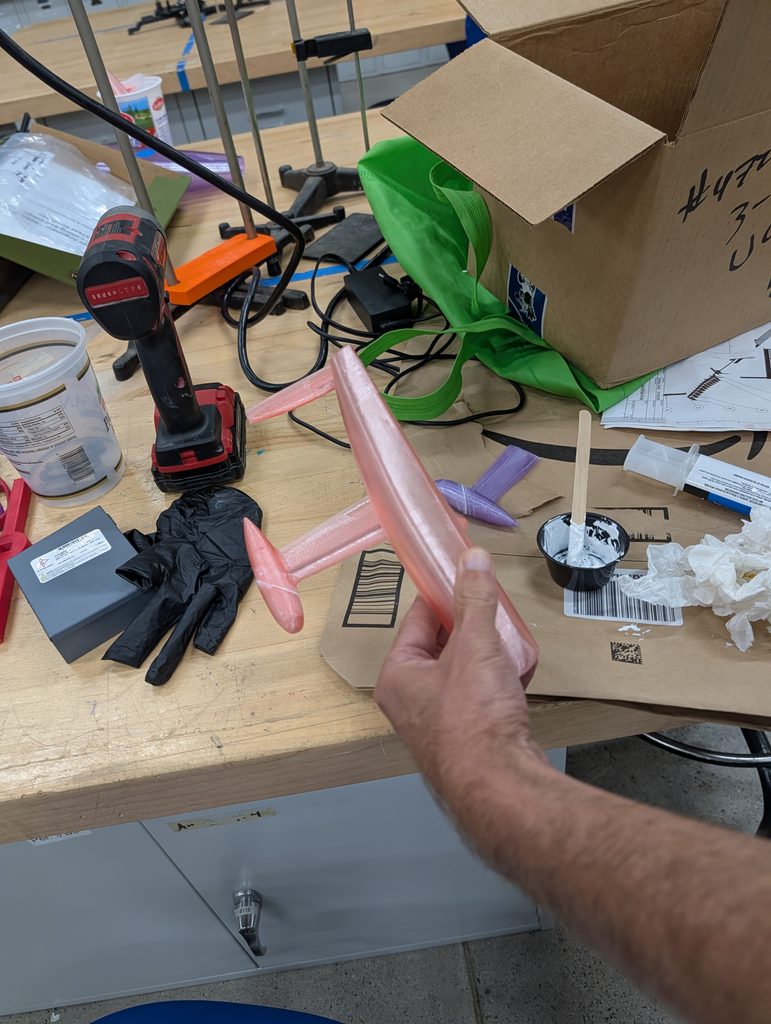
The hull and most parts can be printed in PLA+ or PETG, while flexible TPU is recommended for several small rig fittings that need to move yet hold their adjusted position. The full set of parts typically takes approximately five to six hours to print, depending on the machine. Once the parts and materials are ready, Brett estimates about three hours for careful assembly and tuning.

The work is small and precise. On a MiniMax, a quarter-millimeter adjustment can matter. Brett says one of the most important assembly jobs is getting the rudder linkage exactly right. Yet the overall project has an unusually high completion rate because the printed parts locate and fit together as intended. Brett can send someone the files and, two days later, see that person’s new boat sailing online.

From digital file to global one-design class

There are several ways to get started. Builders with access to a 3D printer can purchase the STL license and print their own parts. Kits or printed components are also becoming available through licensed suppliers in different regions, including the United States, United Kingdom, and European Union.

The distributed production model is one of MiniMax’s most interesting innovations. Instead of shipping every boat around the world from New Zealand, the same one-design boat can be manufactured locally from Brett’s files. That reduces shipping costs and international friction while keeping the boats substantially identical.

Purchasing the files is also more than a simple download: it registers the owner as a member of the MiniMax class. Brett maintains a register of licensed owners, and design updates are provided to them.

As of the recording, the digital STL license was discussed at approximately €25, while a more complete regional kit supplied by Brett was discussed at approximately €85, including the license. Prices, availability, kit contents, and suppliers may evolve, so prospective builders should confirm current information directly with Castlerock Yachtworks or a licensed regional supplier.

Why 22 centimeters?

The boat’s size was not chosen arbitrarily. Living in southern New Zealand, Brett knew that most customers would be overseas. He began by studying postal limits: the smallest economical international package, its dimensions, and its allowable weight. Those shipping constraints helped establish the boat’s hull length and total weight budget.

It is a delightful example of real-world engineering: packaging, freight economics, hydrodynamics, electronics, stability, and manufacturability all shaping one product.

A sailboat that races like Mario Kart

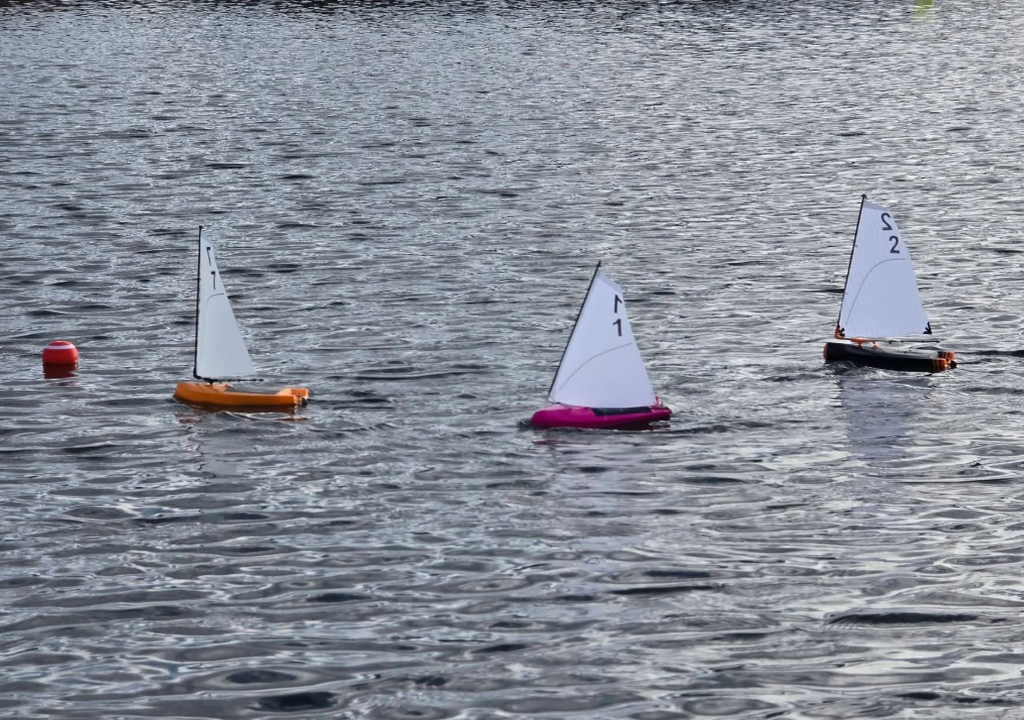
MiniMax may be tiny, but it reacts quickly and sails with the character of a much larger yacht. At the same time, the boats are so light that contact generally causes no damage. Brett and a friend tested that proposition enthusiastically — deliberately colliding their boats for half an hour without harming them.

That discovery inspired an informal racing format with almost no right-of-way rules. Establish a start, a finish, and marks that must be rounded; touching another boat or a mark carries no automatic penalty. The racing becomes largely self-regulating because collisions are usually slow. Someone in the growing builder community described it perfectly: the sailing version of Mario Kart.

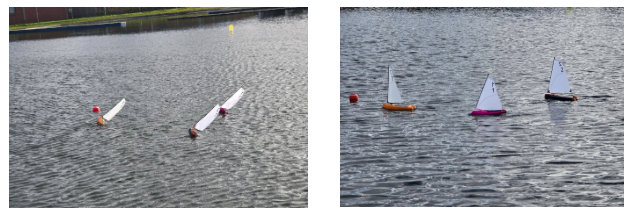
A course can be compact — perhaps 15 meters long and close to shore — and the boat needs very little water depth. That makes MiniMax particularly promising for schools, camps, small ponds, temporary shallow pools, and other places where conventional RC yachts would be impractical.

Lowering the barriers to radio sailing

Traditional RC yachts can be intimidating to newcomers. Rigging, tuning, terminology, racing rules, transportation, cost, and access to suitable water all create friction. MiniMax removes a surprising amount of it.

The boat is inexpensive enough to build as a fleet, small enough to transport easily, quick enough to assemble while enthusiasm is still high, and forgiving enough to begin racing without first mastering the full Racing Rules of Sailing. It can introduce students, parents and children, model-airplane builders, RC car enthusiasts, sailors, and complete newcomers to the same shared experience.

And although it may look like a toy at first glance, it is much more than that. In Kerim’s words near the close of the conversation: “Tiny boat. Big breeze. Sails like a big yacht.”

Watch the full conversation to hear Brett’s remarkable family story, see the MiniMax parts and rig up close, learn what it takes to print and assemble one, understand the purchasing options around the world, and discover why the San Diego Argonauts believe this little boat could have a very big future in RC sailing and STEM education.

Chapters / Sections of this conversation

[0:00] MiniMax Intro
[0:32] SD Argonauts STEM Program Introduction
[2:06] MiniMax Action
[4:31] Who is Brett McCormack?
[8:28] When Did Brett Start Building Boats?
[11:49] From Dingies to Fiberglass IOMs
[14:20] Designing Footys — and Finding the Fastest
[16:45] Why MiniMax Fits SDA’s School STEM Program
[19:30] From Moonshadow to 3D Printing
[20:35] Why Is MiniMax Exactly 22 Centimeters?
[22:37] How Ocean Mini Became Radio Controlled
[23:40] Why the First RC Conversion Wouldn’t Turn
[24:20] Which Tiny Servos Does MiniMax Need?
[25:50] The 120-Gram Weight Budget
[27:26] What Does the 25 EUR STL License Include?
[32:15] Which Battery Should Builders Use?
[33:13] Which Parts Are Made of PLA+, PETG, or TPU?
[35:00] How the MiniMax Sheeting System Works
[36:50] Naming the Tiny Rig Fittings
[39:05] How Do You Make the Sail Corners?
[40:45] How Do You Build the Keel Ballast?
[43:34] Can a School Fleet Really Cost Under $70 per Boat?
[45:34] What Else Must Builders Buy?
[48:30] Could MiniMax Become Ready-to-Sail?
[50:00] Is MiniMax the First DIY True One-Design?
[50:40] How Can You Buy MiniMax Around the World?
[52:09] A MiniMax Business Opportunity for Students?
[52:50] What Comes in a Regional MiniMax Kit?
[54:10] What Does the License and Class Registration Mean?
[56:15] Could MiniMax Become a Complete School Course?
[57:00] How Long Does It Take to 3D-Print?
[58:15] How Long Does Assembly Take?
[59:55] What Is the Hardest Part of the Build?
[1:00:47] How Much Gluing Is Required?
[1:01:10] Why Doesn’t the Rotating Rig Fall Out?
[1:02:35] Where Could MiniMax Go Next?
[1:03:22] Why New Builders Are Finishing These Boats
[1:05:07] MiniMax for STEM, Families, and Sailing Schools
[1:06:52] What Is the Best First Step?
[1:07:38] MiniMax Racing: The Sailing Version of Mario Kart
[1:10:25] Can You Race MiniMax at a School?
[1:12:28] Tiny Boat, Big Breeze

About the participants

Brett McCormack is the creator of MiniMax and the founder of Castlerock Yachtworks in Dunedin, New Zealand. His background spans dinghy racing, yacht design, traditional and composite boatbuilding, sailmaking, International One Metre competition, Footy development, and 3D-printed model yachts.

Kerim Baran is a member of the San Diego Argonauts and is leading the club’s collaboration with local school STEM and robotics programs.

Learn more

Editor’s note: Product prices, suppliers, specifications, and kit contents mentioned in the interview reflect the information discussed on August 21, 2026. Confirm current details before ordering. Correction: STL files cost 25 EUR (not $25).

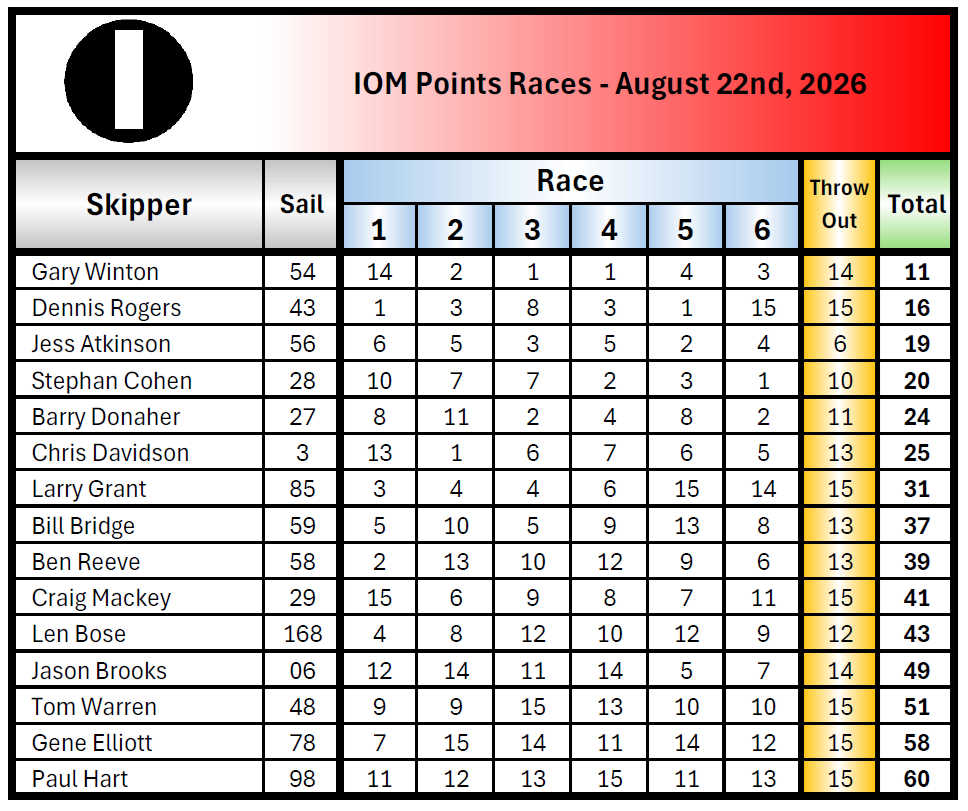
🥇IOM & DF95 Points & a Fond Farewell to Chris Davidson (August 22nd, 2026)

Saturday’s IOM and DF95 Points Racing was about much more than the results. It was also our opportunity to gather at the pond and say farewell to our good friend and fellow skipper, Chris Davidson, as he prepares to return home to Australia.

Chris has been a tremendous part of the San Diego Argonauts—an excellent sailor, a tireless helper and, most importantly, a great friend. We were delighted that so many members came out to race, watch, and help us give him a proper Argonauts send-off.

IOM Points Racing

The IOM fleet kicked off the day with Kerim & Pat as the RD’s with help from Keith.

Several skippers recorded race wins during a highly competitive session, but when the scores were tallied, the podium belonged to:

  1. Gary Winton
  2. Dennis Rogers
  3. Jess Atkinson

A special thank-you goes to Jack Calafato for lending Chris his BritPOP for the day and giving him one more opportunity to compete with the IOM fleet before his departure.

DF95 Points Racing

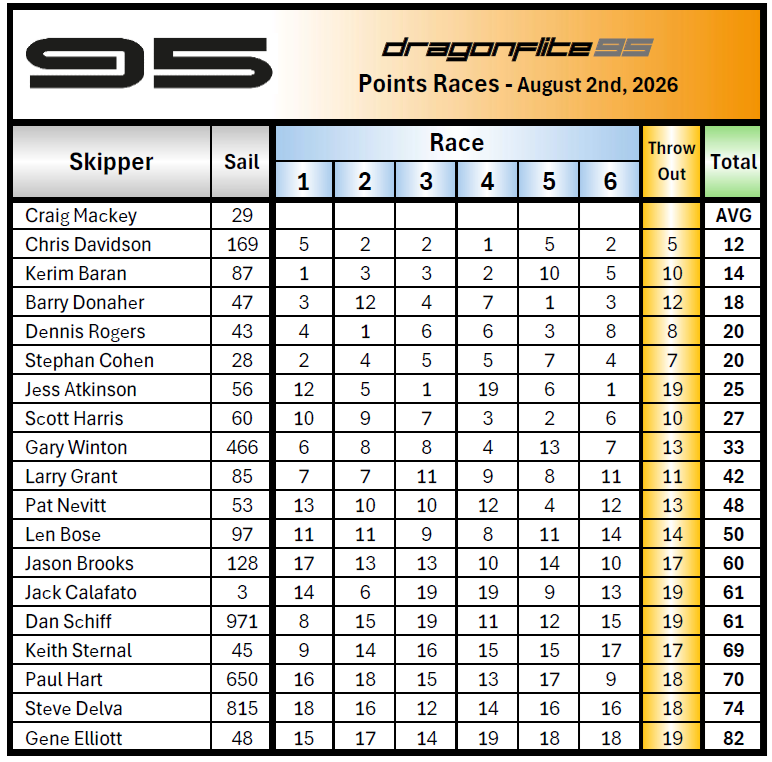
Next came the DF95s, with an impressive 18 boats on the starting line. Craig Mackey was our bad-ass RD with help from Sean O’Connor. The competition was excellent—and yes, there were even a few black flags!

The racing was incredibly close, with multiple heat winners, plenty of position changes and some wonderful examples of Corinthian sportsmanship. The competitors “kept it on the water,” allowing us to complete the day on a high note.

The final DF95 podium was:

  1. Chris Davidson
  2. Kerim Baran
  3. Barry Donaher

How fitting that Chris won his final DF95 points race with the club! Apparently, the best farewell gift we could give him was a fleet of 17 boats to beat.

Congratulations to all six podium finishers and a big thank-you to Race Directors, every competitor, our enthusiastic “peanut gallery” and the many visitors who stopped to enjoy the action.

Special thanks also go to Steve Ross for capturing and assembling videos from the day. You can watch the racing in the YouTube playlist below:

Watch the IOM and DF95 Points Racing Videos

Chris, thank you for the friendship, the competition, the laughter and everything you have contributed to the San Diego Argonauts. The pond will not be quite the same without you.

Until we meet again—and whenever you win a race back in Australia, know that your Argonauts friends will be cheering:

Aussie, Aussie, Aussie! Oi, Oi, Oi!

🎙️ Argonauts Radio – Episode 15: Why Steve Landeau Says to Always Have an Extra Boat

How do you build a thriving radio-sailing fleet?

According to longtime IOM sailor, builder, mentor, and fleet promoter Steve Landeau, one of the most effective things you can do is surprisingly simple:

Always have an extra boat.

In Episode 15 of San Diego Argonauts Radio, Commodore Jess Atkinson speaks with Steve about his decades in radio sailing and his remarkable ability to help grow strong IOM fleets wherever he goes.

Also available on Apple Podcasts:
https://podcasts.apple.com/us/podcast/why-steve-landeau-says-to-always-have-an-extra-boat/id1874110517

Steve explains that introducing someone to radio sailing becomes much easier when you can simply place a transmitter in their hands and invite them to join the next race. Rather than beginning the conversation with the cost of a competitive boat or the wait for a new build, let them experience the fun first.

“If you’ve got one in the back of your car all the time—an extra one—you hand him that transmitter and say, ‘Come on back anytime you want. I always have an extra boat for you.’ Eventually, he’s going to want to take one home.”

That philosophy has helped Steve introduce countless sailors to the International One Metre class. He frequently buys good used boats, loans them to newcomers, helps owners tune and repair them, and works to keep those boats active within local fleets.

Steve and Jess also discuss:

  • Why the DF95 is such an effective gateway into radio sailing
  • How experienced sailors can help newcomers progress
  • The importance of keeping good used boats active and available
  • Choosing a first IOM—and why the BritPOP remains an excellent option
  • The Sedici, Vickers designs, Proteus, and other competitive IOMs
  • The growing role of 3D-printed boats
  • Why sailors should actually read their boat’s tuning guide
  • Steve’s work building rigs and supplying hard-to-find parts
  • The challenges of transporting larger Marblehead yachts
  • The renewed interest in Marblehead racing on both coasts
  • What it takes to build and sustain an active local fleet

The conversation also looks back at Steve’s years sailing and building boats on the West Coast, his move to Georgia, and the impressive growth of IOM sailing across the eastern United States.

Following the interview, Jess recaps the recent Region 8 Travelers Trophy finale at Mason Regional Park, including Saturday’s DF95 fleet racing and Sunday’s fast-paced team-racing competition.

Whether you are an experienced racer, a fleet organizer, or someone considering your first radio-controlled sailboat, this episode offers plenty of practical wisdom—and an important reminder that fleets grow when established sailors make it easy for new people to participate.

🎧 Listen to Episode 15: Why Steve Landeau Says to Always Have an Extra Boat

And the next time you head to the pond, consider bringing an extra boat. You never know who might become the fleet’s next great skipper.

⛵2026 AMYA Soling 50 NCR Coming to San Diego (Aug 29-30)

The 2026 AMYA Soling 50 National Championship will be held at the San Diego Model Yacht Pond on August 29–30, 2026, with an optional practice day on Friday, August 28.

Hosted by the San Diego Argonauts, the event will bring together many of the nation’s top Soling 50 skippers for a weekend of competitive racing on Mission Bay.

Registration is limited to 20 competitors. The entry fee is $65 through August 17, increasing to $75 until registration closes on August 20. Competitors can pay online via Square at: https://square.link/u/3VbFtz1x.

We look forward to welcoming sailors from across the country to San Diego for another outstanding weekend of RC sailing.

📄 Notice of Race:

📄 Sailing Instructions:

Registered Competitors:
  1. Ben Reeve
  2. Chris Staiger
  3. David Woodward
  4. James Wondolleck
  5. Kerim Baran
  6. Ty Beach
  7. Gene Harris
  8. George Pedrick
  9. Larry Grant

** Last updated on Aug 17th, 2026.

🧜‍♀️ A Mermaid Joins the Argonauts!

The San Diego Argonauts have a new skipper — and a new Mermaid in the fleet!

Please welcome Sharman French, one of our newest SDA members and, notably, our first female member in quite a while — perhaps close to a decade!

Sharman recently picked up a brand-new DF95, and she certainly made it her own. Appropriately named Mermaid, the boat now sports a beautiful custom mermaid skin (from DragonSkinsUSA) that is going to be hard to miss on the water.

Getting a new DF95 from the box to the starting line takes a little work, and in true Argonaut fashion, it became a team effort. Steve and Pat helped Sharman rig and set up the boat, while Kerim helped apply Mermaid’s colorful new skin.

And there’s another fun twist to the story.

Sharman has spent time in Marblehead, Massachusetts — a pretty fitting coincidence for someone now getting into RC sailboat racing!

For those new to the hobby, Marbleheads are one of the oldest, fastest, and most sophisticated development classes in radio-controlled sailing — what we recently called the “Formula 1 cars of RC sailboats” in our latest Argonauts Radio episode, “Marbleheads Are Making a Comeback: Trend or Here to Stay?” If you haven’t heard it yet, check it out and learn a little more about this legendary RC sailing class.

From Marblehead to Mission Bay, perhaps Sharman was destined to become an RC sailor!

Mermaid is now rigged, skinned, and ready to go. The next step is getting Sharman out on the starting line with the rest of us.

We also hope Sharman’s arrival inspires more people of all ages, backgrounds, and genders to come discover the San Diego Argonauts. RC sailing is a sport and hobby that truly can be enjoyed by just about anyone — whether you’re an experienced sailor, a lifelong maker, or someone who has never touched a sailboat before.

There’s always room for another skipper at the pond!

Welcome to the San Diego Argonauts, Sharman — and welcome to the fleet, Mermaid! 🧜‍♀️⛵

We look forward to seeing both skipper and boat crossing tacks with us at the pond!